A Bengaluru Home Built Using Its Own Demolition Debris
Featured in Buildofy's coffee table book, 10 Homes Bengaluru, this residence reimagines urban waste as a precious resource.
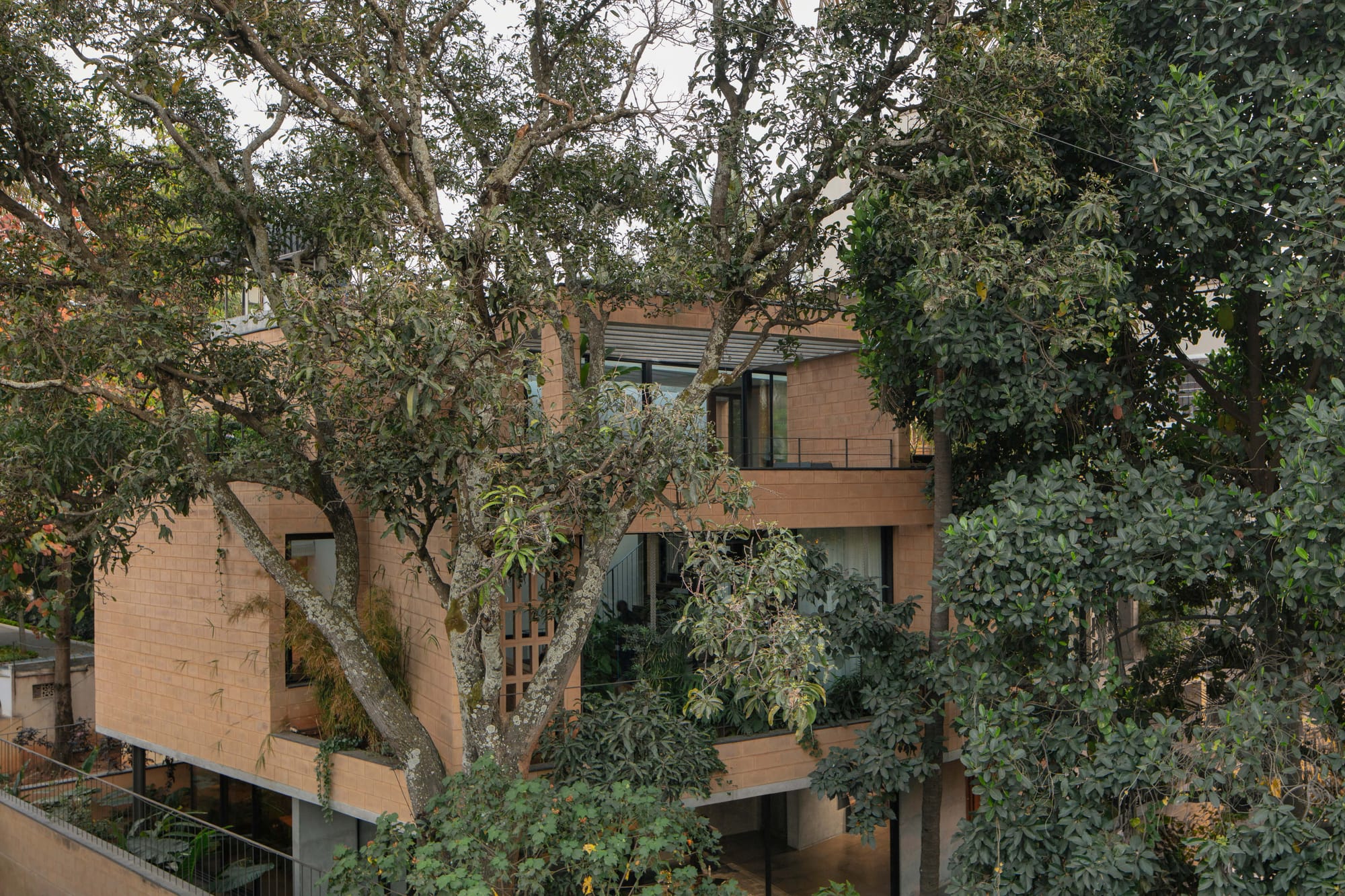
Cities today are growing fast—but hardly turning out to be thoughtful. As reflected by the architects, Cyrus Patell & Eliza Higgins, the Principal Architects at CollectiveProject, “Old houses come down, new ones go up, and what’s left behind often ends up dumped into lakes and waterways. Debris becomes waste, and waste quietly reshapes the city in damaging ways.”
This reality shaped the starting point for the Debris Block House.
The team began by rethinking the fate of what we usually discard. As they explain, “We questioned if building demolition debris could be considered a resource, instead of generating waste, to create new components for construction.” Over five years of research and making by the architects, the debris slowly found its place again, shaping walls, surfaces, and finishes—crafted with care rather than concealed. The rubble was broken down by hand, mixed back into a mud-concrete blend, and pressed into custom molds to form sun-dried blocks. These reclaimed blocks became the primary building units for the new house, turning what would have been waste into structure.
Settling into the Landscape
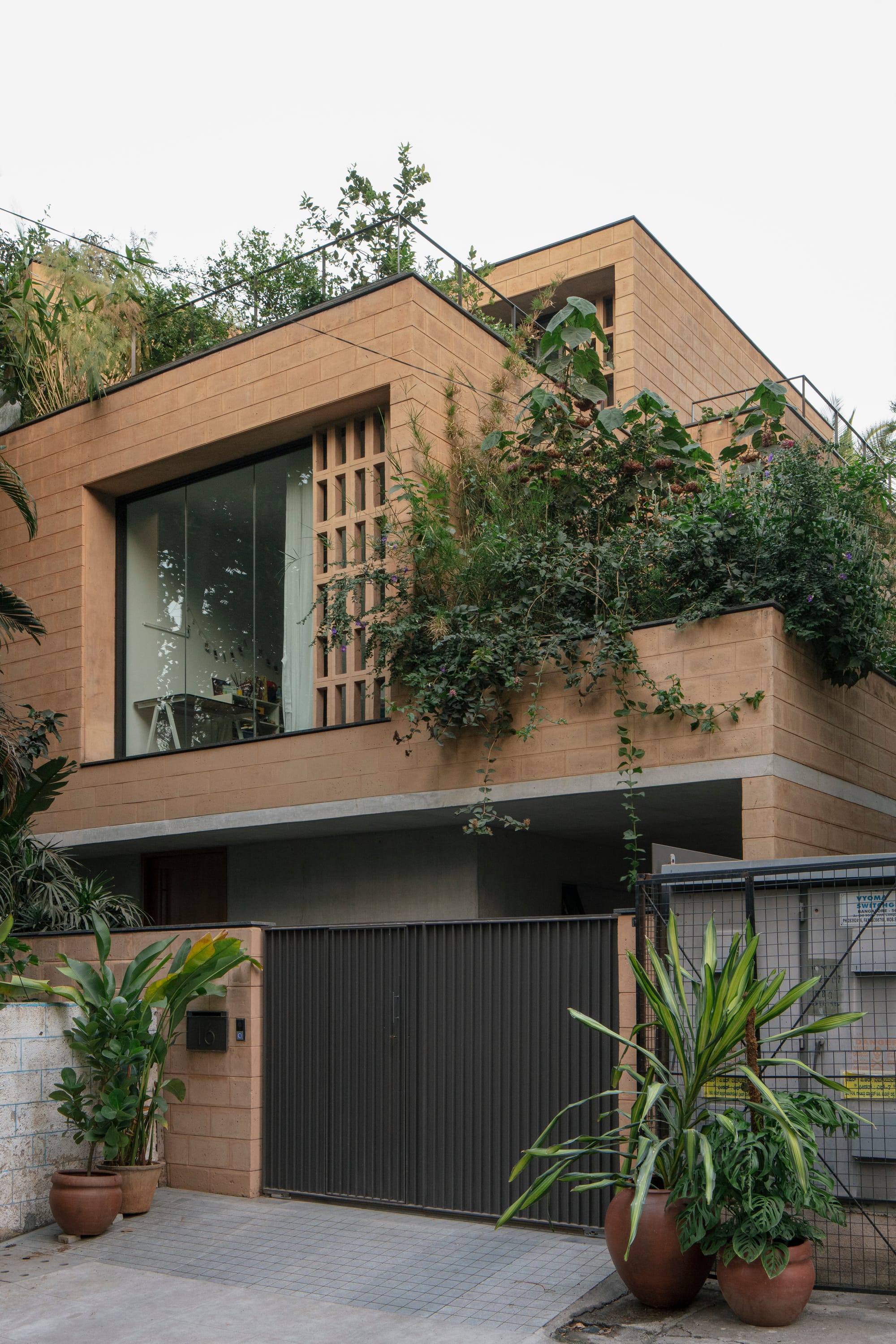
Designing for a 3,000 sq. ft. plot in a dense urban fabric, in Bengaluru’s city center, requires a delicate balance of footprint and foliage. Except for one strategic setback carved out to respect a massive, pre-existing Mango Tree, the building extends to the allowable limits. However, the architects resisted the urge to build a "concrete box".
Instead, large planters were integrated into the architecture at every level, serving as a vertical garden that compensates for the limited ground-level green space. As these planters spill over with local flora, the building begins to disappear, blending into the surrounding greenery and offering the family a sense of secluded privacy amidst the city's buzz. This “disappearing” facade quietly responds to the city’s unregulated sprawl and environmental encroachment that have historically plagued Bengaluru.
Unfolding around a Common Heart
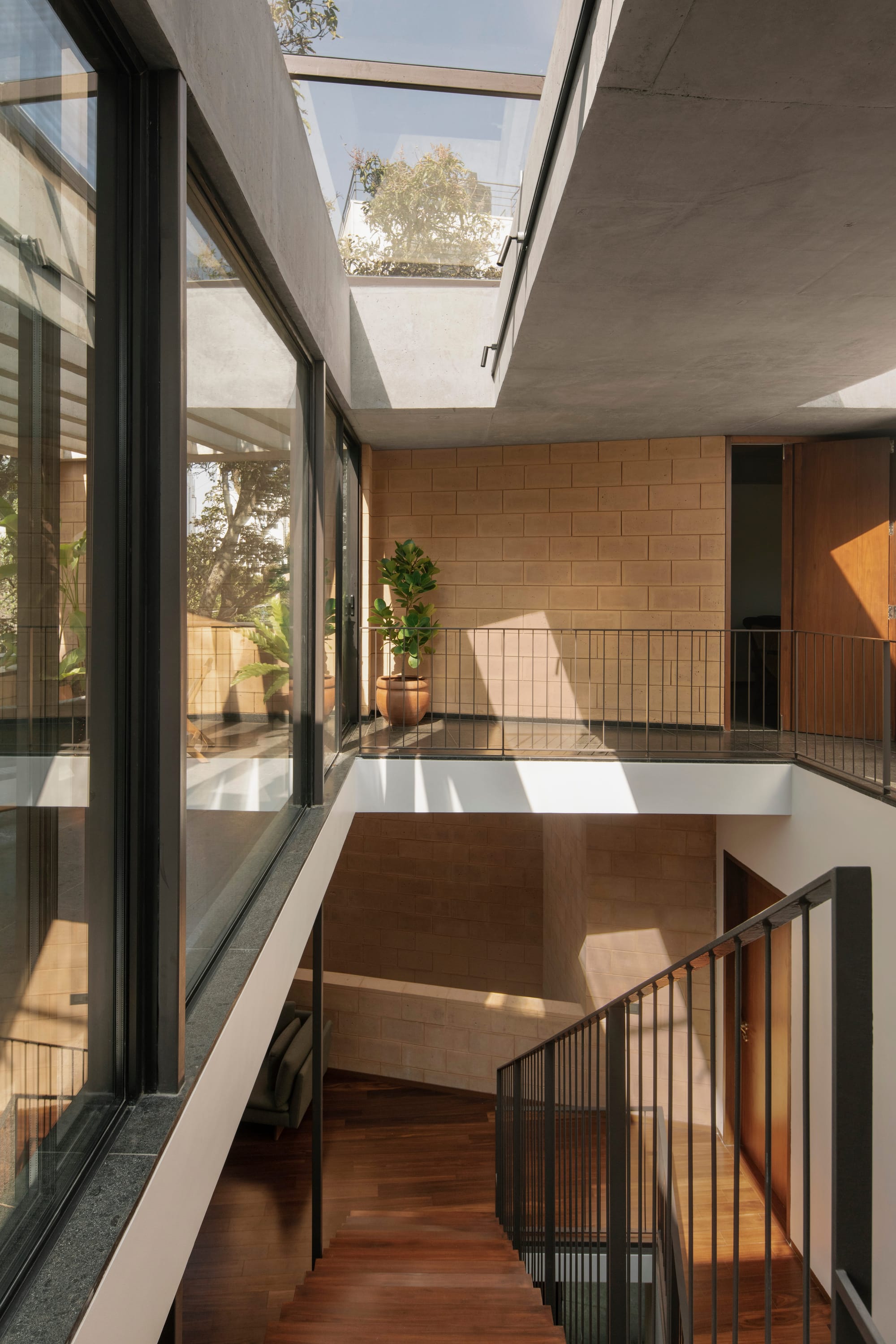
Inside, the home is organized around a dramatic central atrium that serves as both a physical and visual anchor for the family. At its core is a sculptural staircase, an architectural element that feels more like a piece of art than a functional necessity. Strategically placed skylights at multiple levels wash this central void with natural light, ensuring that even the deepest parts of the house feel airy and connected to the sky.
For the clients and their young daughters, proximity was a cornerstone of the brief. On the first floor, the bedrooms open directly onto a communal TV room and library, creating an intimate hub for shared family life. As the atrium ascends to the second floor, it reaches its widest point, bridged by a walkway that connects a small music room to a personal office.
Built in Layers of Material and Memory
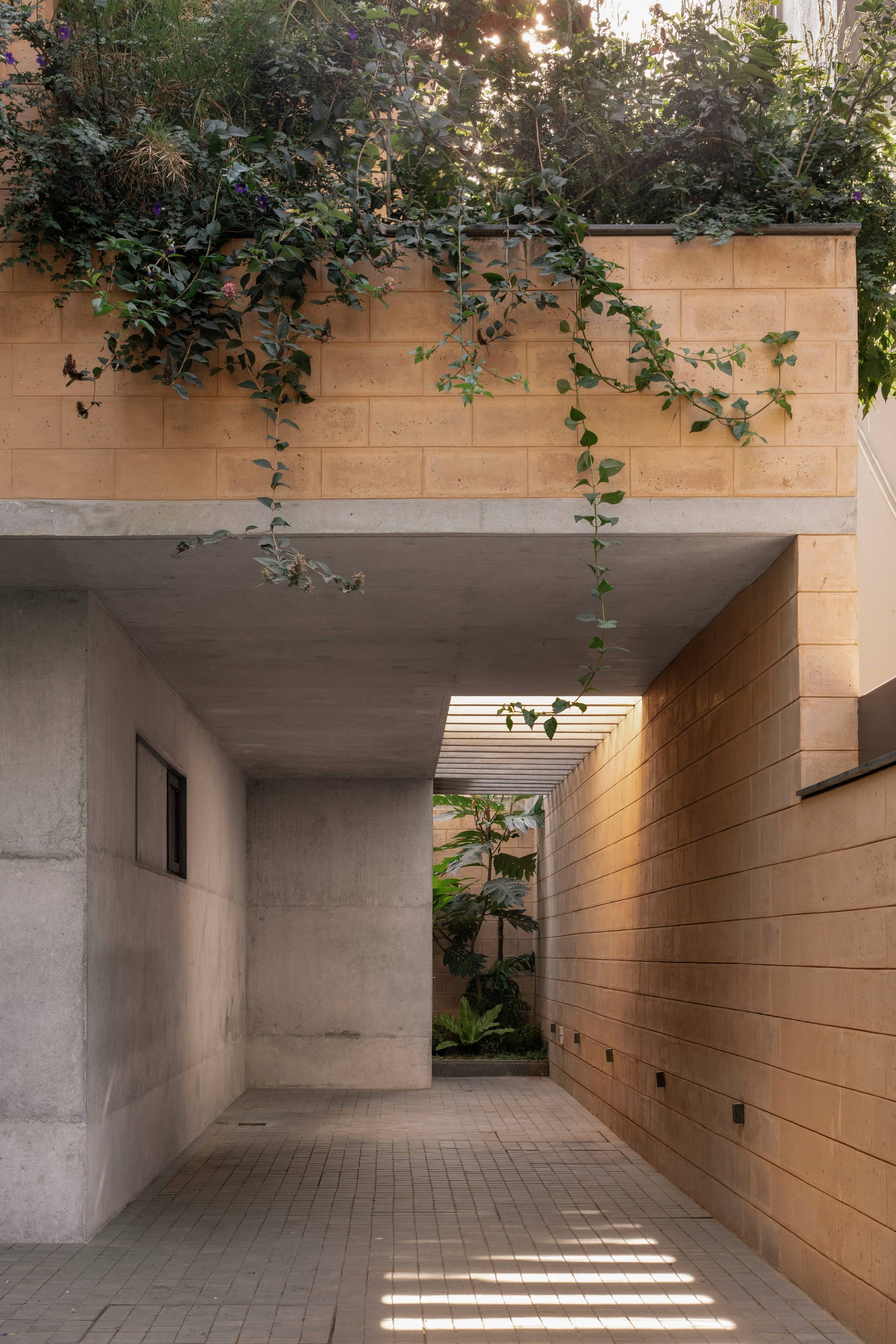
The materiality of the home tells a story of two halves. The ground floor is cast in raw, exposed concrete, creating a sturdy and neutral base for the more textured levels above. Here, the living, dining, and kitchen areas flow seamlessly into the landscape through expansive sliding glass panels. This openness ensures that the ground level feels less like an interior room and more like a sheltered extension of the garden.
Ascending to the upper levels, the aesthetic shifts to the warm, tactile surfaces of the debris blocks. These units are left exposed, celebrating the irregular beauty of the hand-broken demolition waste. To balance this solidity, porous jaali screens are woven into the facade, allowing for natural cross-ventilation and a poetic play of light and shadow.
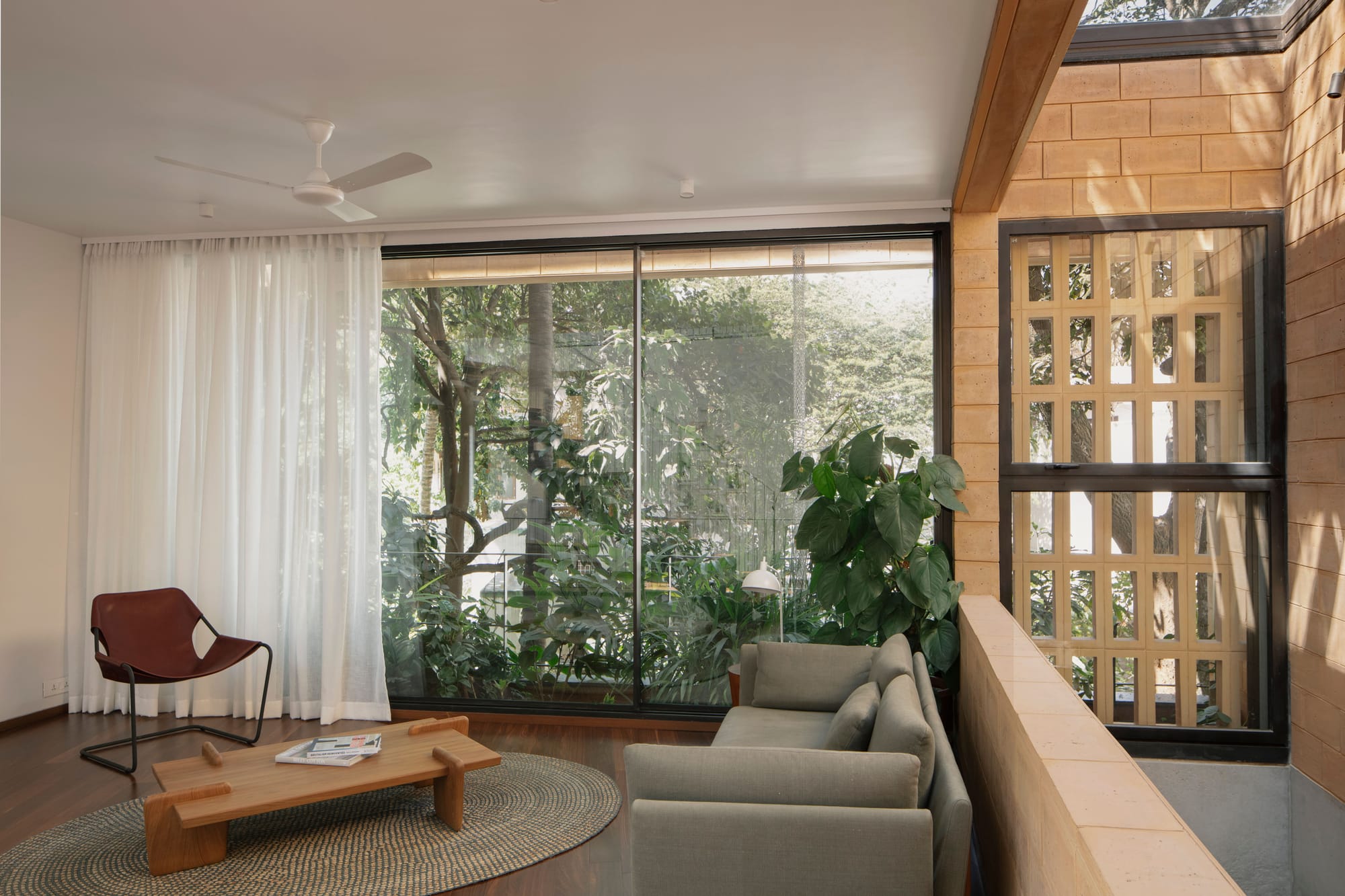
In a landscape like Bengaluru, where rapid urbanization often comes at the steep expense of the natural environment, Debris Block House offers a poignant alternative to the relentless cycle of demolition and dumping. By capturing the physical history of the site and transforming it into something fundamentally new, architects Cyrus and Eliza have proven that construction waste is not an environmental liability to be hidden away, but a vital resource to be celebrated through high-fidelity design.
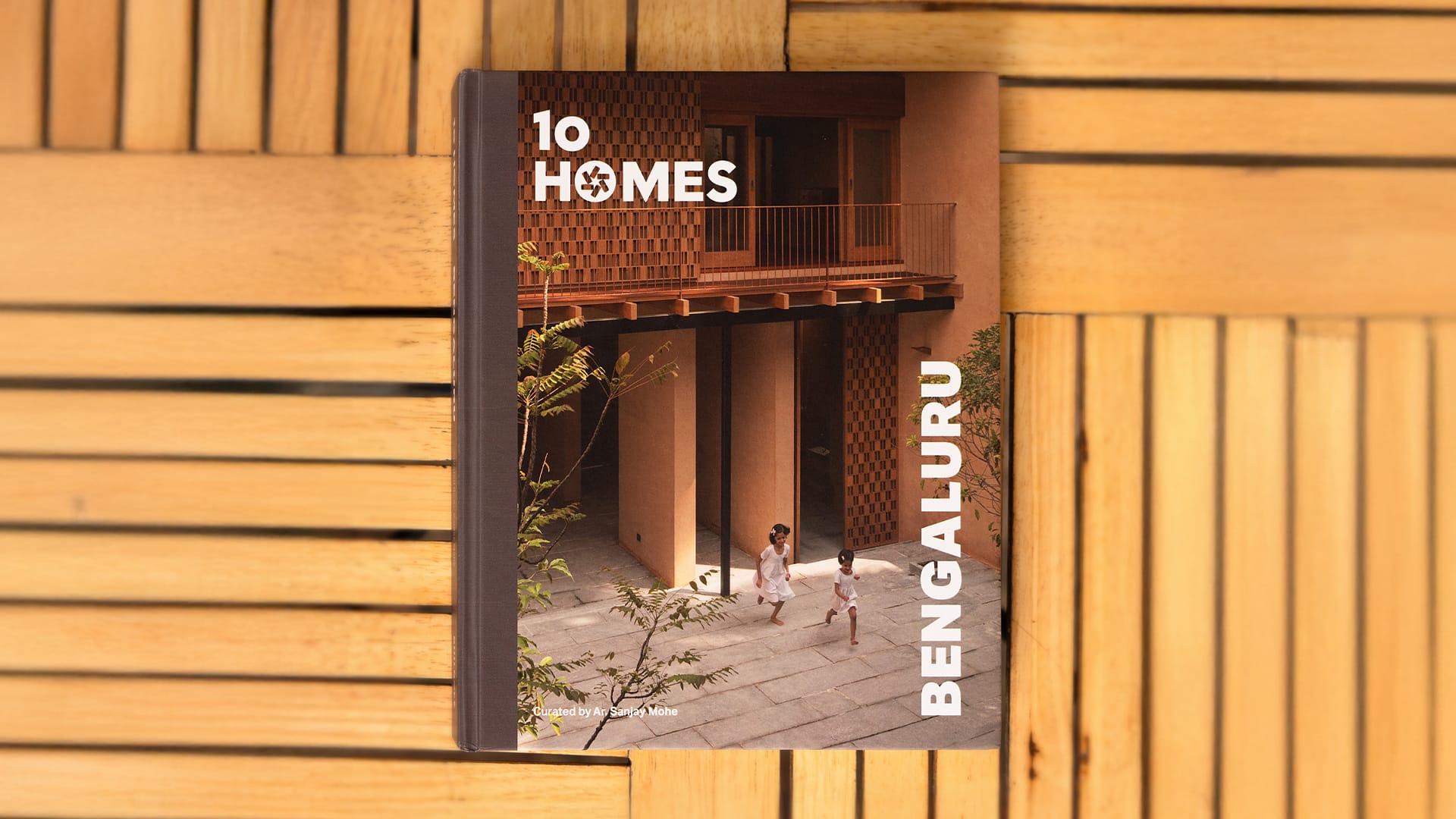
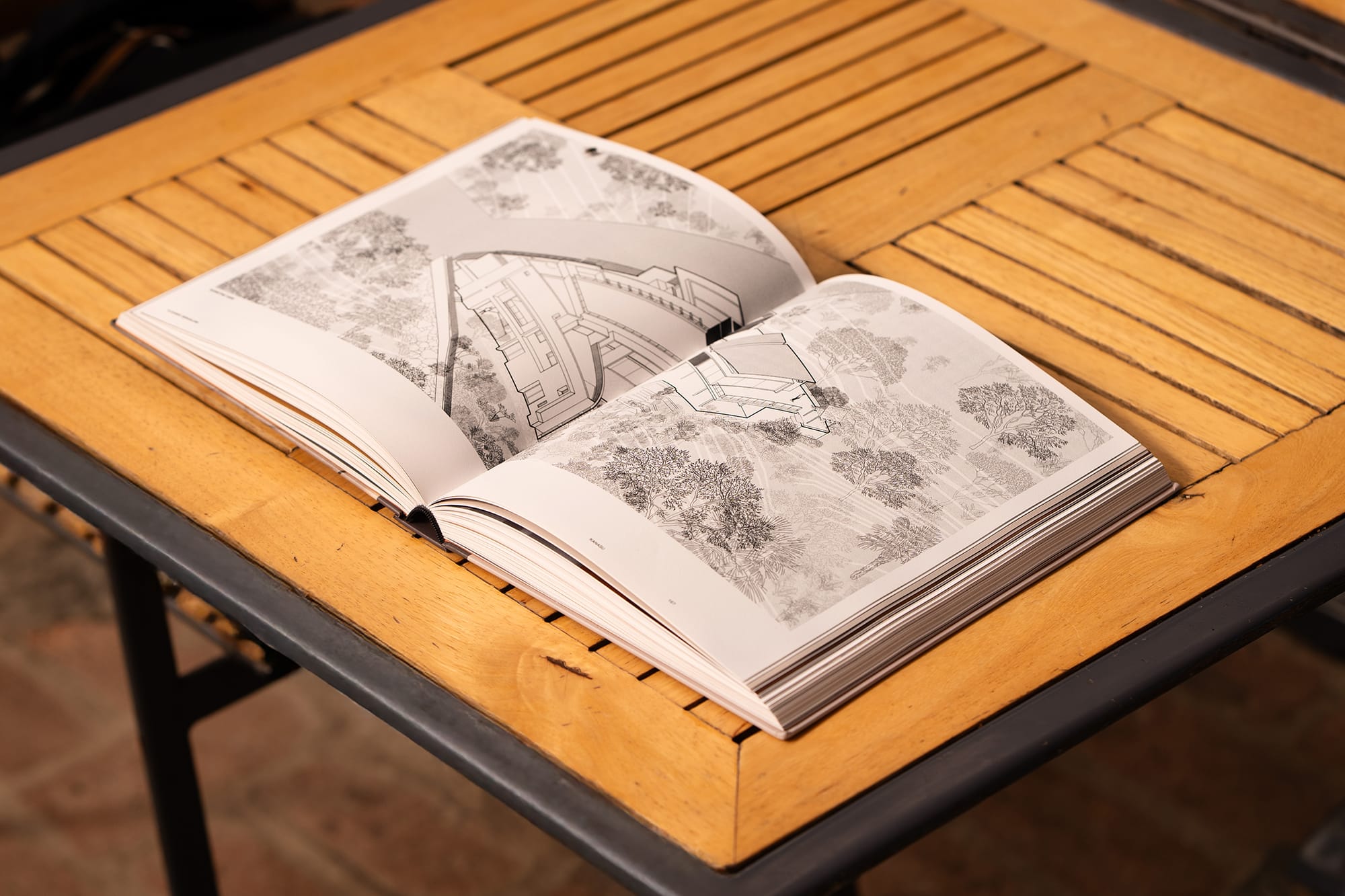
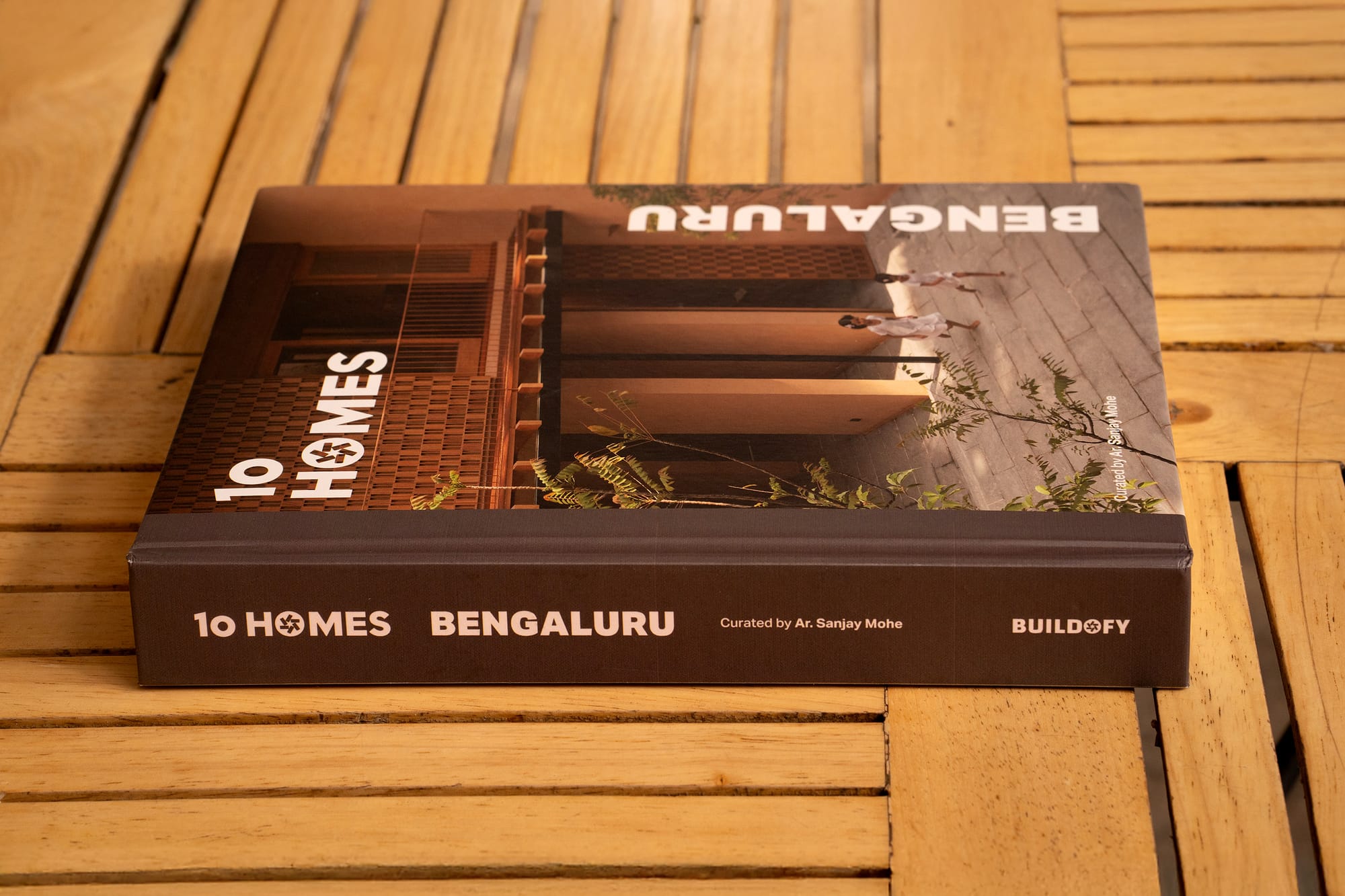
Buildofy is celebrating 10 Years of Architecture Storytelling with the introduction of a limited edition coffee table book - 10 Homes Bengaluru. Pre-Order Your Copy on Buildofy.