Discover A Stepped Chennai Home Bridging Context, Heritage And Layered Materiality
Conceived by D.L.E.A, this compact residence of staggered terraces, oxide flooring and a triple-height core is an ode to vernacular craftsmanship.

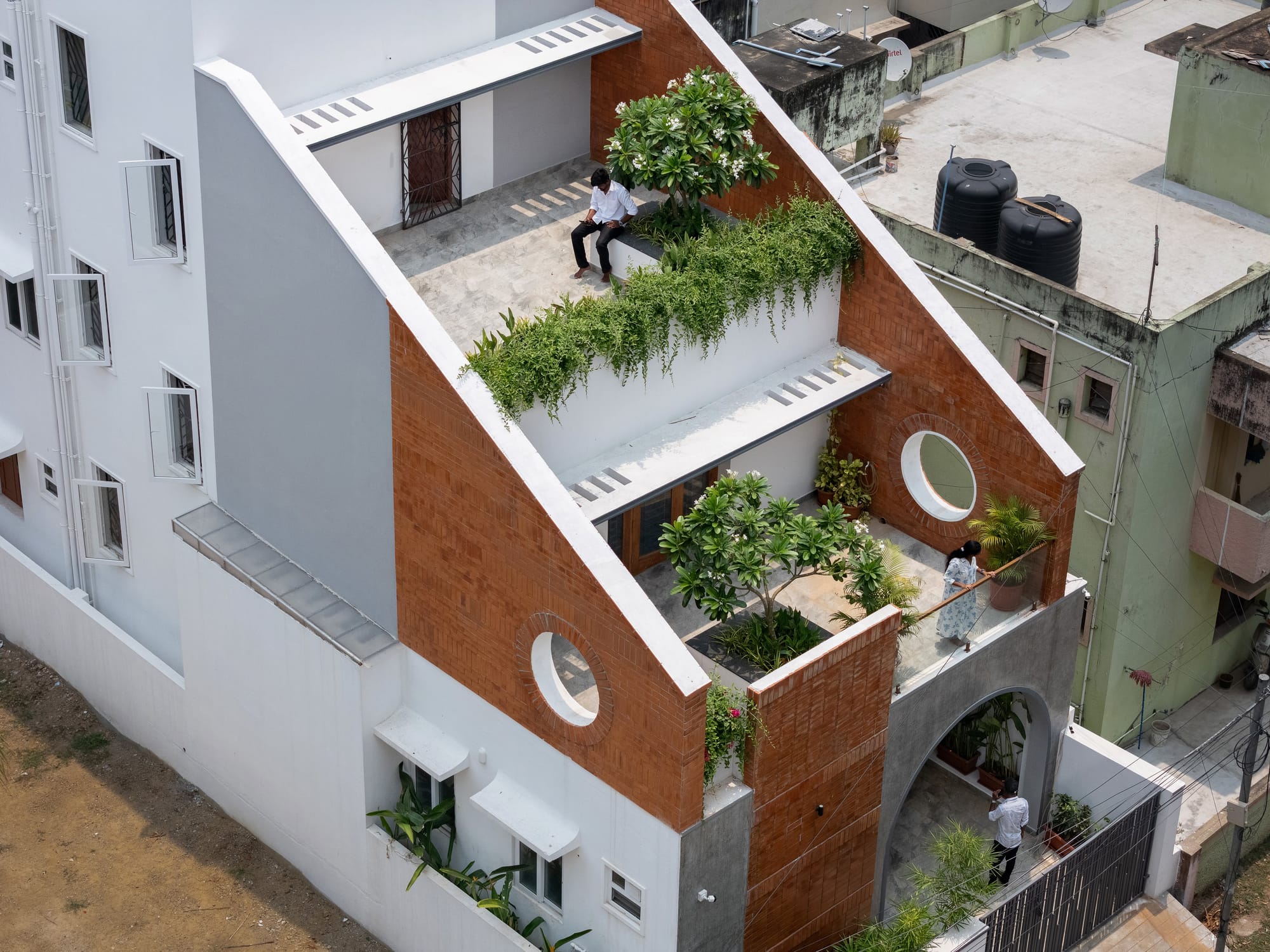
Protruding from the first-floor bedroom terrace, a knobbly stick nudges the backyard mango tree’s overladen branches to give up their bounty. As the equatorial sun rises, light dribbles down the home’s east-facing, staggered façade. Amid the din of cycle bells, grazing cows, and early morning temple chimes, the 2,640-square-foot Suvadu – Annai Sita Illam slowly awakens to the neighbourhood of Ullagaram in Chennai.
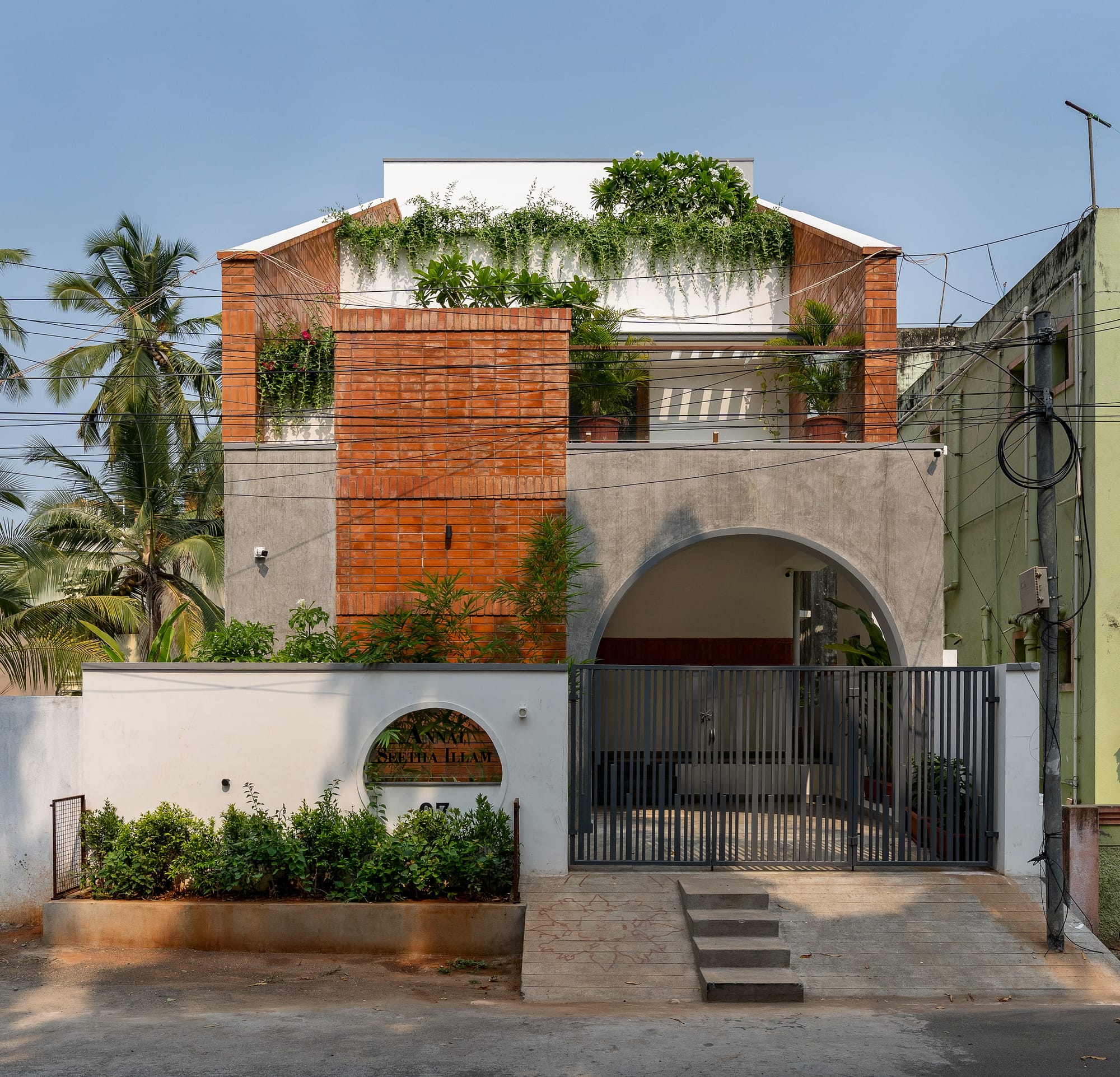
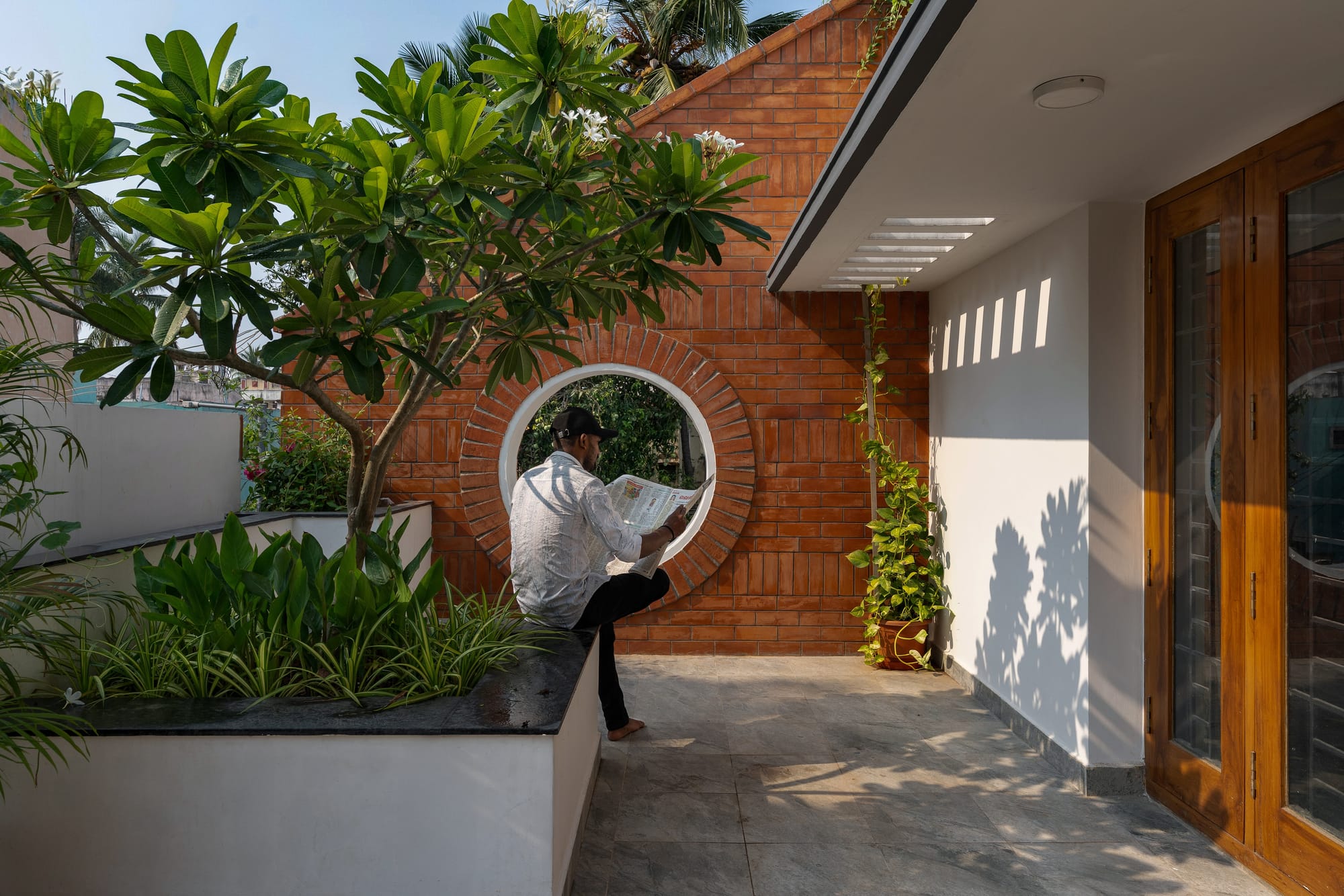
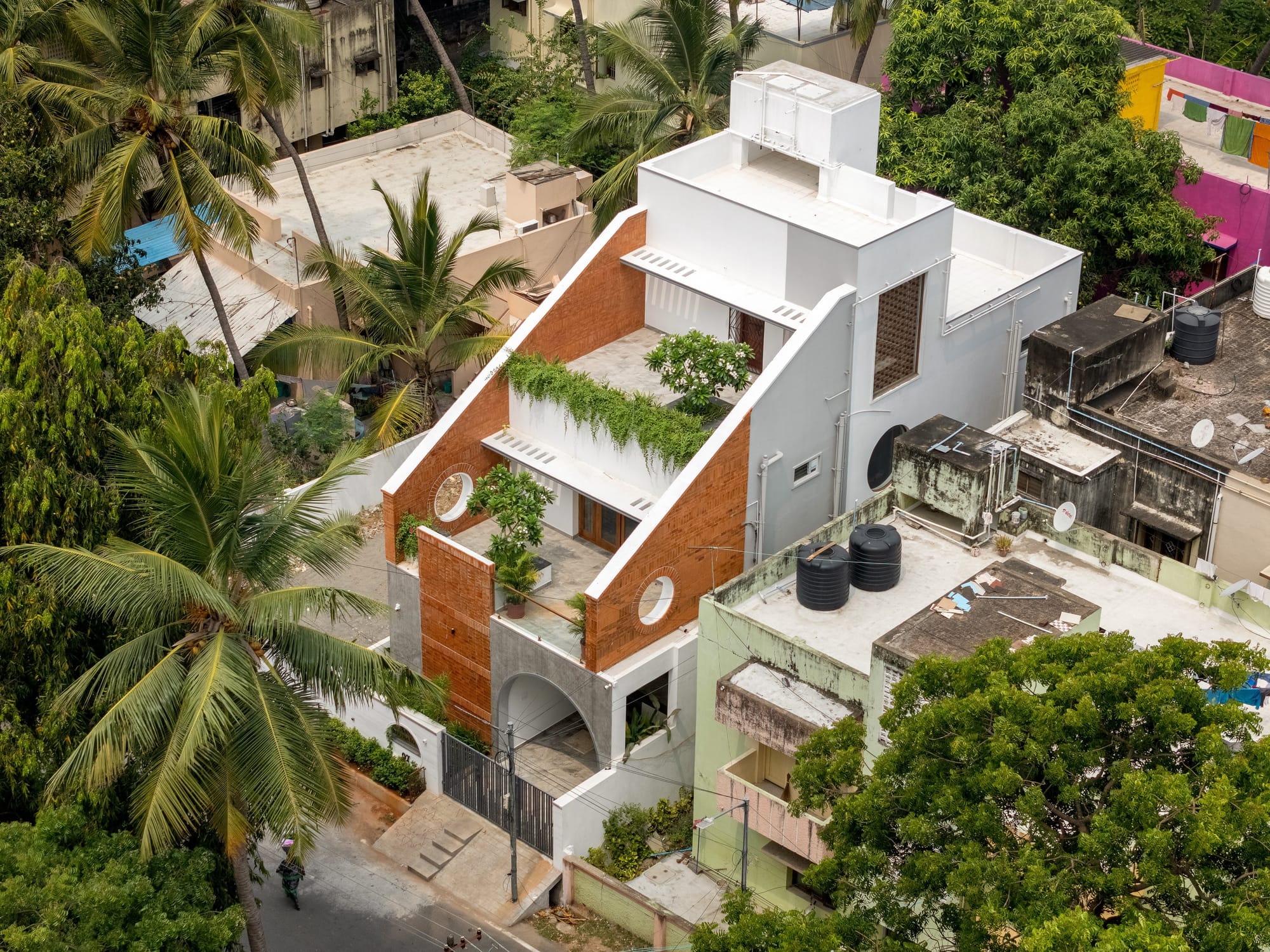
“To recreate the openness of the old home, a sequence of stepped terraces has been designed along the front façade; these layered outdoor volumes encourage intergenerational bonding and provide a resort-like experience for visiting family members,” shares Ar. Dhayananth G., Principal Architect at D.L.E.A.
FACT FILE
Standing upon the shoulders of Chettinad, coastal, and context-driven architecture, this residence by the multidisciplinary design firm D.L.E.A is unfettered by the spatial limitations of its narrow 26’ x 87’ plot. The design language veers towards functional minimalism, with ruddy brick-clad walls and private thinnai-like terraces, while the interiors remain in constant dialogue with the homeowners’ personal landscape of memories through evocative ceilings, nostalgic oxide floors, and sculptural arches.
Of Area, Ancestry, and Alignment
The land that the seventy-something grandmother remembers, a sprawling ancestral plot, was once far larger than what remains today, now hemmed in by the city’s dense fabric. It held thickets of mango trees, alive with the hullabaloo of squirrels, parrots, and garden lizards. A hand-dug well still lingers on the site.
“The architectural challenge was to preserve the emotive quality of the old house while adapting to the spatial demands of urban Chennai,” explains principal architect Ar. Dhayananth G. His firm foothold in the South Indian way of life and a deep affinity for neo-vernacular typologies, where the past is not a forgotten relic but an active participant, made the house a conduit of uninterrupted lineage. “Suvadu is a cultural bridge,” Dhayananth says, “a living archive, and a space where memory is built into architecture, layer by layer.”
Like Branches of the Family Tree
If the tiered façade is anything to go by, it follows naturally that the interior spatial planning preserves continuity in eyelines as well. The home’s east-facing orientation guides the dawn’s first rays inward, while a triple-height stairwell atrium along the northern periphery acts as the visual backbone, ensuring that family members remain connected. The rationale behind this was simple yet profound: the atrium serves as the core ‘trunk’, while the bedrooms and common areas radiate outward. “These connections are more than spatial,” Dhayananth maintains, “they are emotional threads that link generations under one roof.”
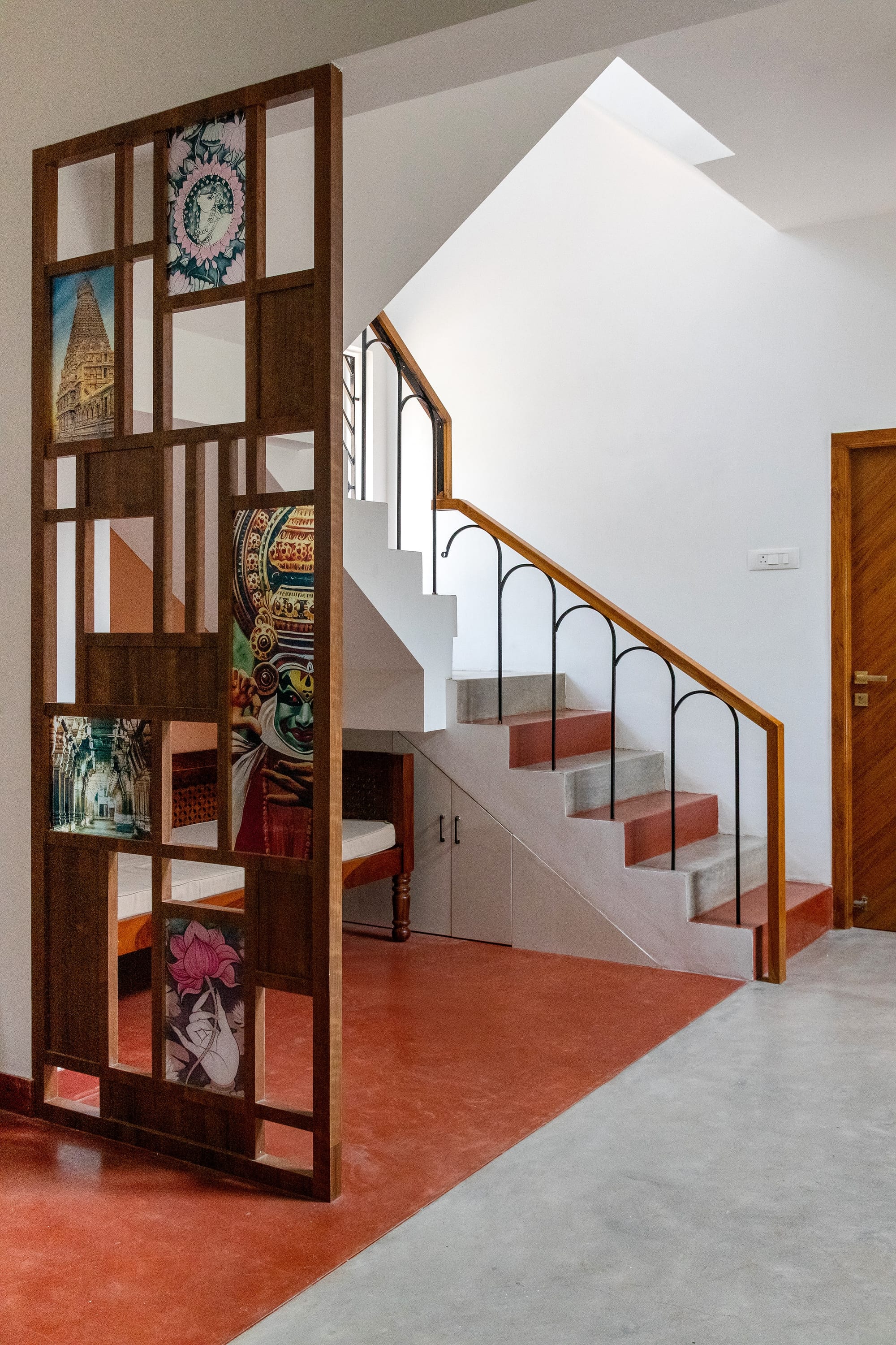
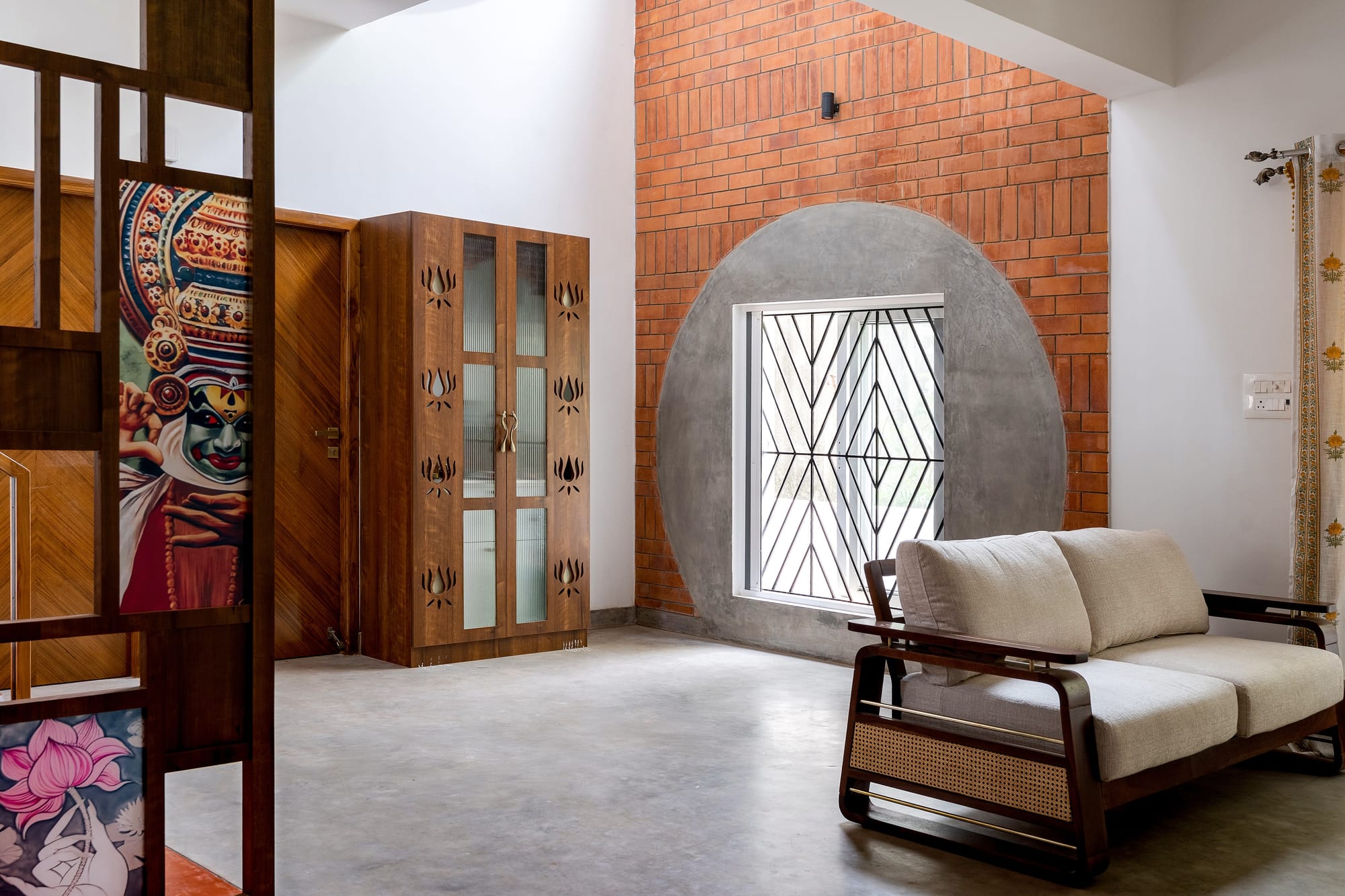
With most of her family and grandchildren dispersed across Singapore and other distant parts of the world, the matriarch’s homestead opens its arms through a traditional entrance porch featuring a thinnai, an intentional gesture of homecoming and a fitting reminder of rural living. Inside, the ground floor unfurls with the enduring craft of oxide flooring. The living room, visually contiguous with both the dining area and the stairway, is anchored by a large rectangular grille window that frames the suburbia beyond. A standout feature is the custom partition, with pastel glass inserts depicting scenes from Malayali heritage that honour the daughter-in-law’s ancestry, alongside motifs drawn from Chennai folklore that subtly acknowledge the son’s family roots.
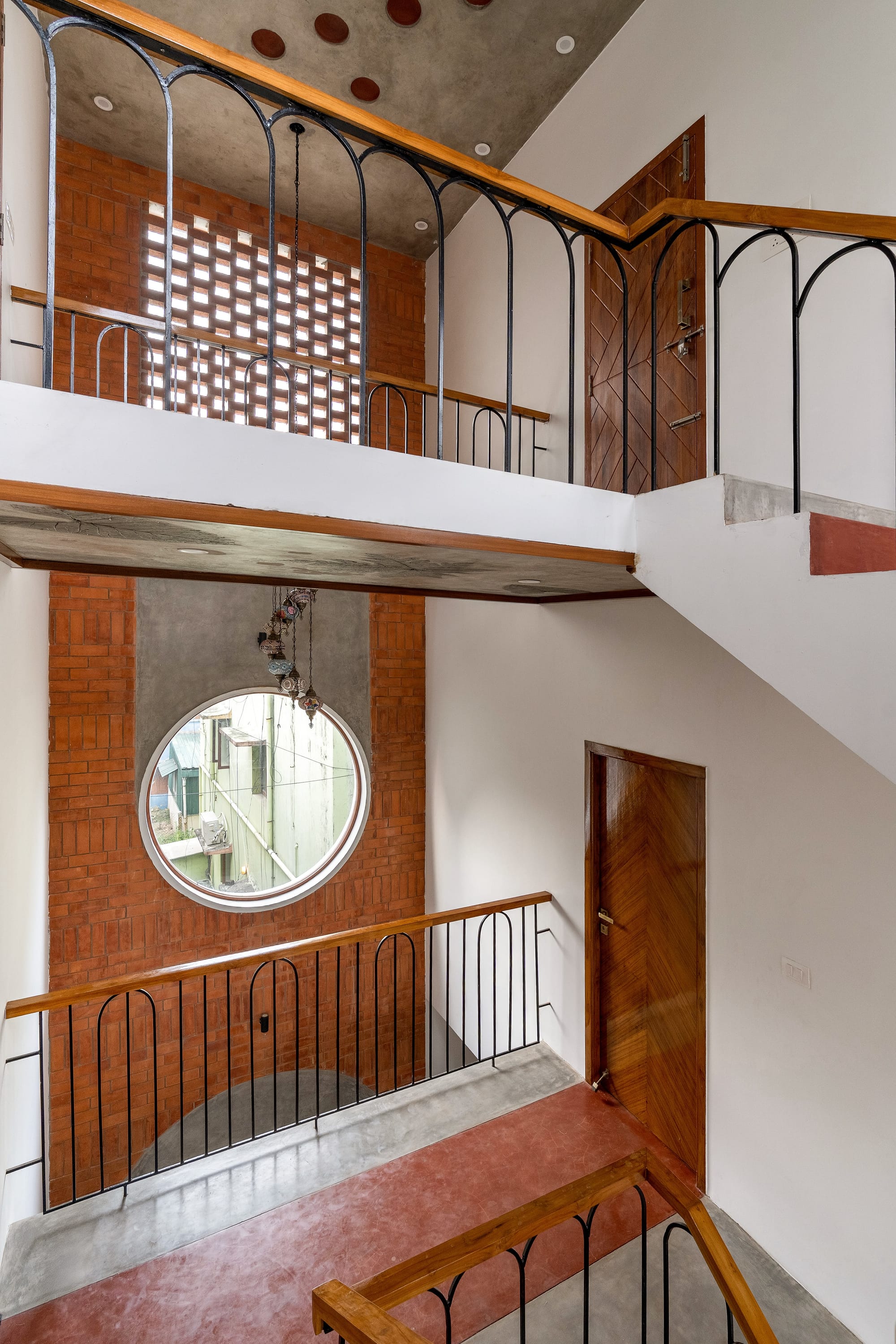
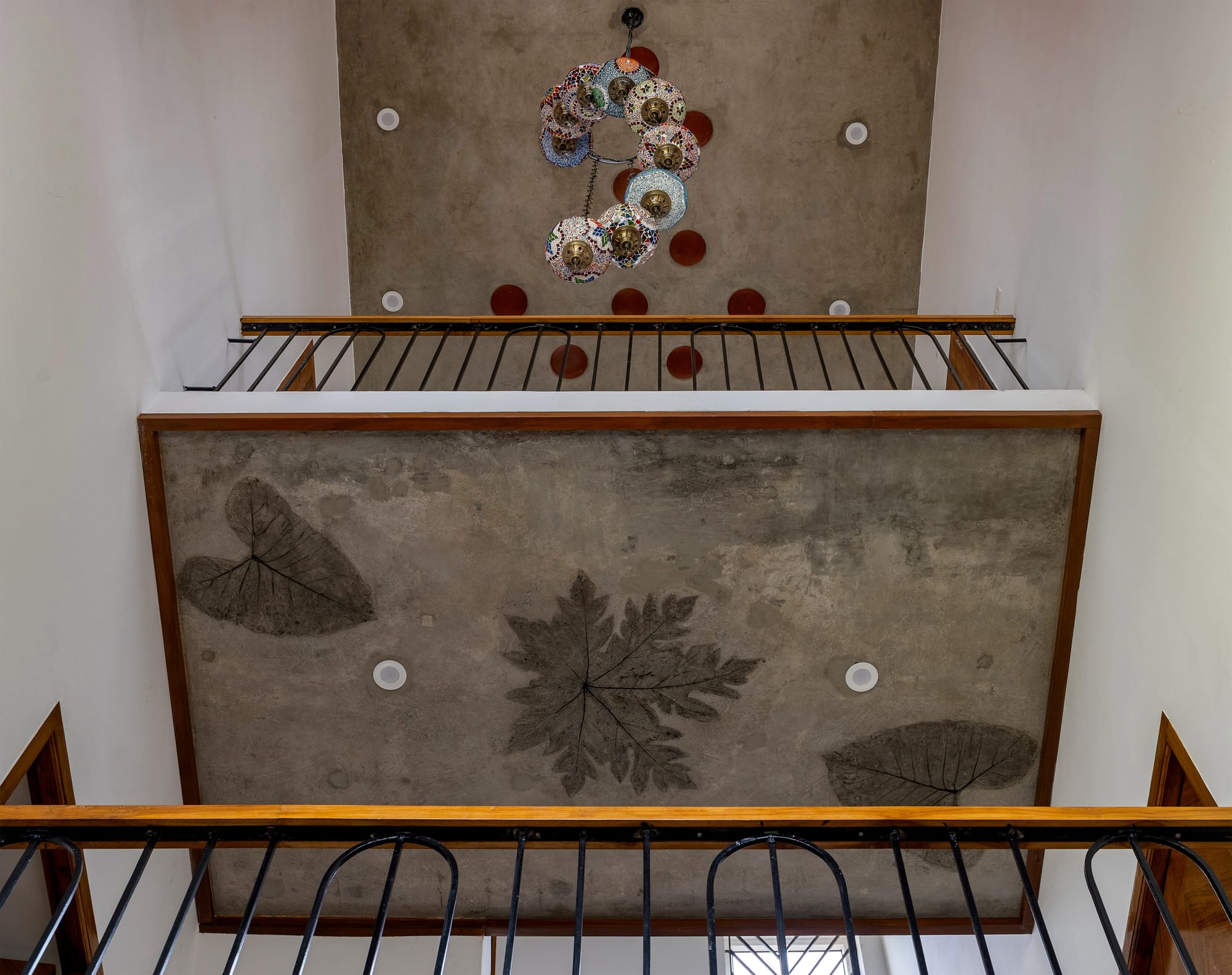
The individual bedrooms are kept tastefully restrained in ornamentation, with attention drawn instead to the cloudy, mineral-green oxide flooring underfoot, which comes alive in abundant natural light and thematically ties in with views of the surrounding vegetation. As the eye moves up the stairs, the first-floor walkway ceiling reveals a startling detail: leafy fronds and lily pads imprinted directly onto the concrete, lending site-specific wisdom and a dash of storytelling. Higher up, the topmost ceiling is a masterclass in the filler slab technique, with clay pots embedded within the cement slab to mitigate heat gain while lending a subterranean feel to the otherwise bare interiors.
Merging Ritual with Rationality
One of the most sensitive gestures in the house is an artisan-like approach to openness, layered outdoor volumes, and cost-effective indigenous craftsmanship. Here, the architecture delivers a quiet yet assured performance, creating contemporary spaces that accommodate the impressions of past lives. “The ancestral well, once central to the household’s daily rhythm, has been carefully retained and restored, transforming it into a meaningful focal point in the backyard,” Dhayananth points out.
Crafting a multi-generational abode, Dhayananth summarises, is akin to traversing an emotional corridor through the family’s heritage. As he puts it, “materiality reinforces this narrative of rootedness,” within a vernacular framework that ages gracefully between visits, “marking time and memory on the skin of the house.” Filler slab construction, brick cladding, and weather-resistant oxide finishes form the skeleton of the palette, an alchemy designed to endure the harsh tropical climate. Although the lives of this family traverse remote countries, Suvadu’s sensibilities remain embedded in the homeland where they grew up, and this subtle truth binds them closer than ever.