More Than Shelter, This Bengaluru Home Is a Living Archive of Memory
Featured in Buildofy's Coffee Table, 10 Homes Bengaluru, 'Hira' by Fulcrum Studio restores the past with a contemporary expression.
How does one translate a memory of love shared with a grandmother, rooted in a place lived in for years—into architecture? This was the question architect Husna Rahman, Principal Architect of Fulcrum Studio asked herself while imagining the residence and office that now stand where her childhood home once did. “What took its place had to bring an energy of its own,” she answered. And hence, the renewal carried forward the emotional residue of the past, while establishing its contemporary expression. Named after her grandmother, Hira rises from recollection rather than typology.
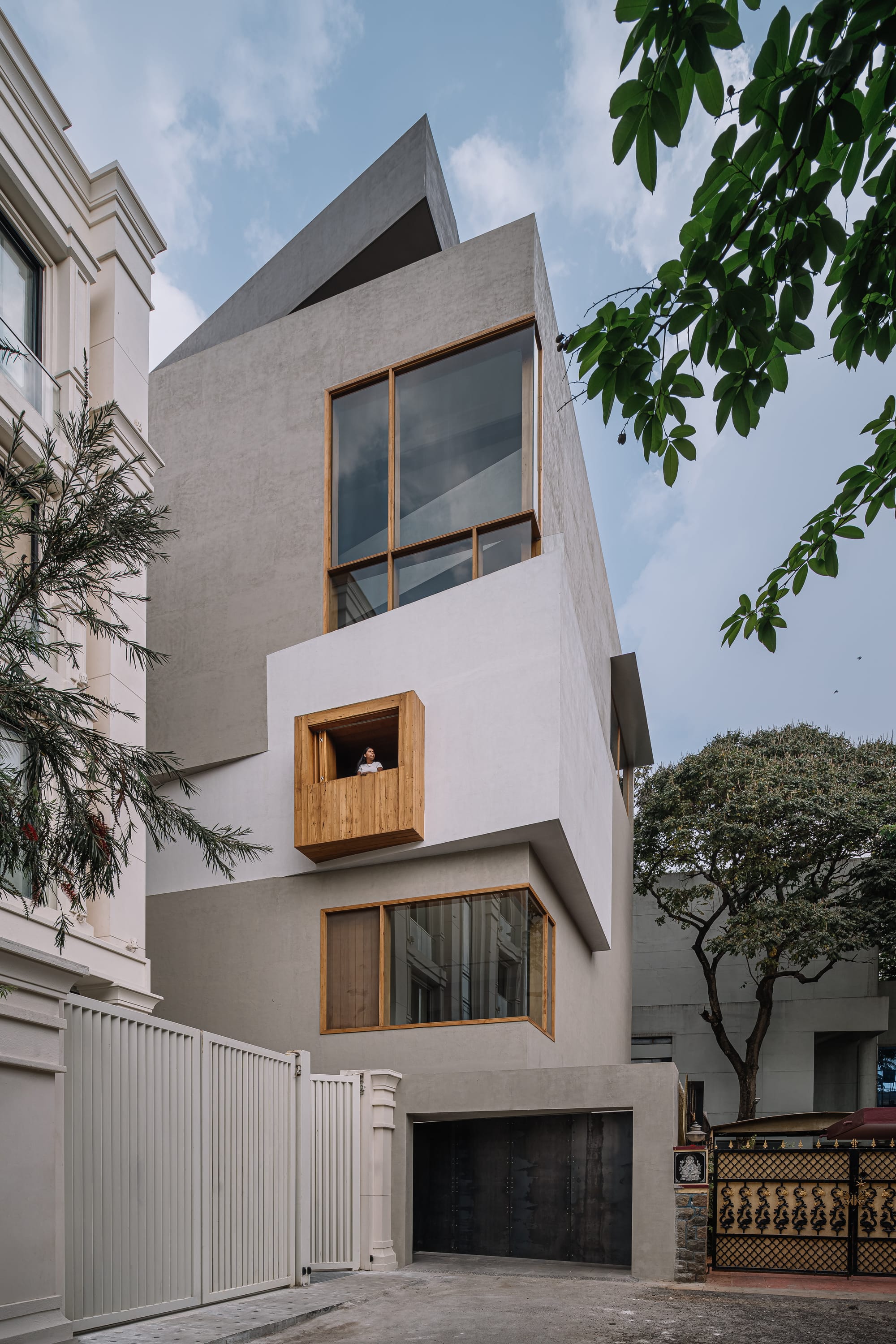
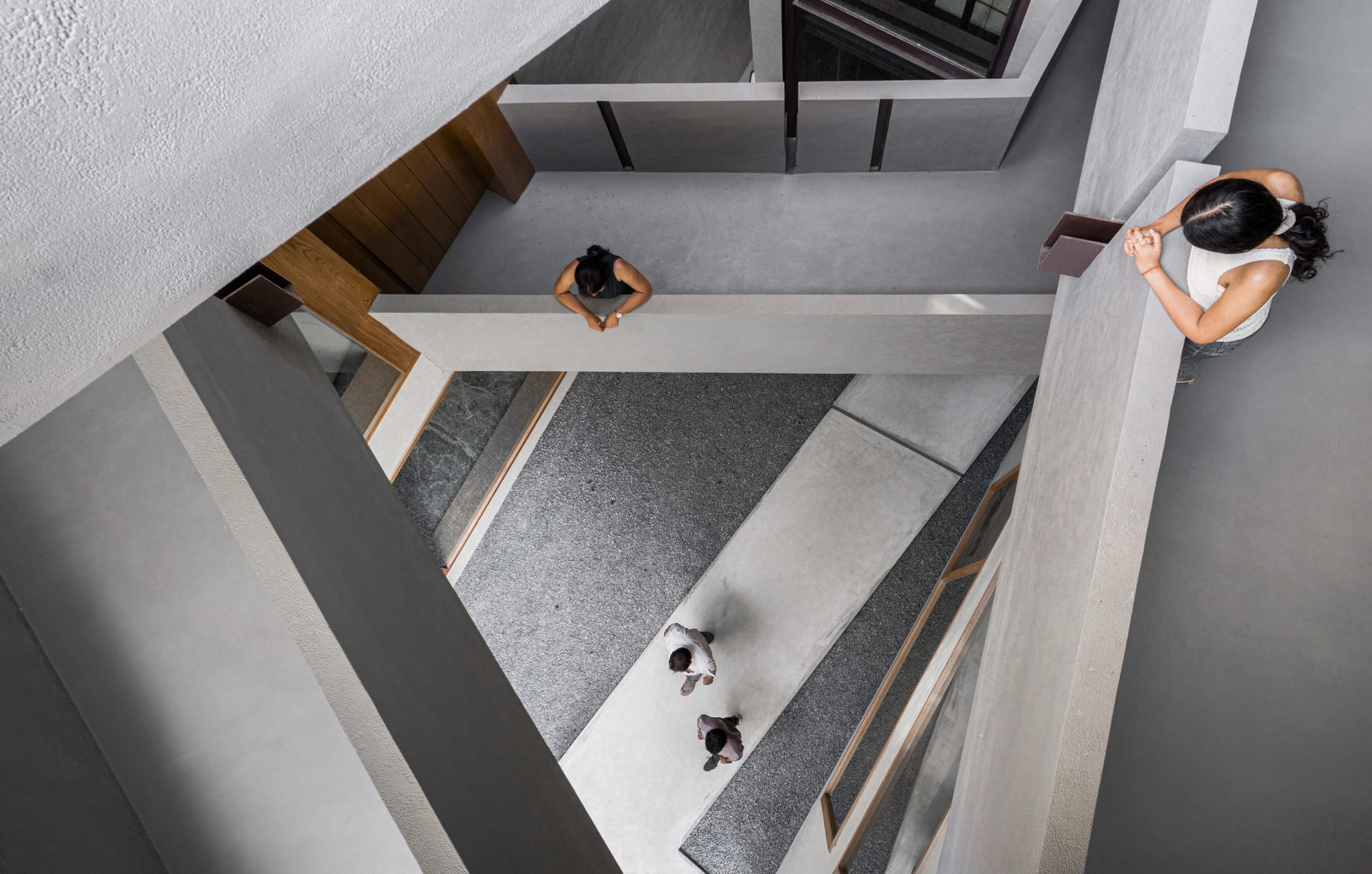
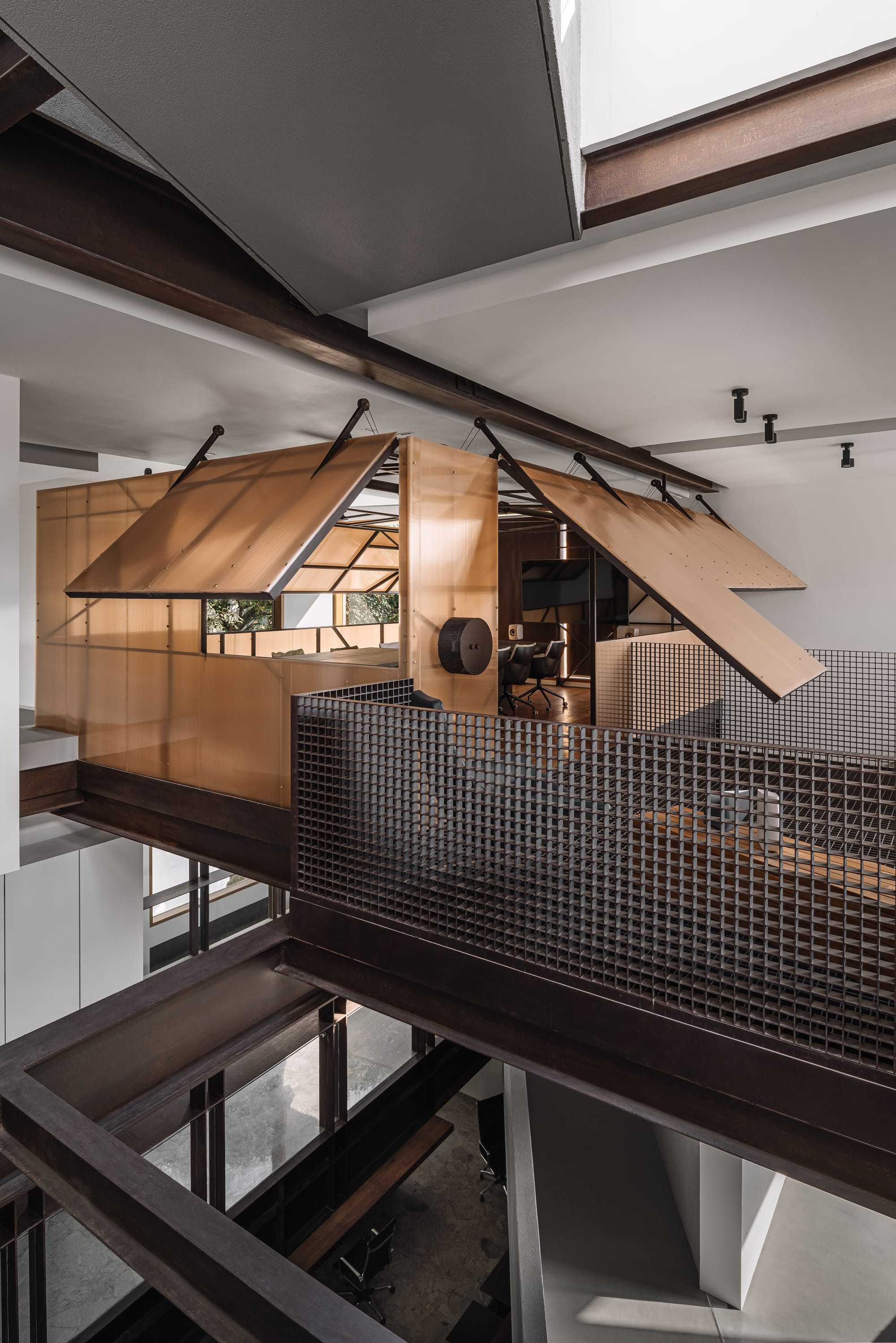
Located in the dense urban fabric of Bengaluru, the 5,500 sq. ft. plot called for a different way of building. Instead of spreading across the ground, the home grows upward, allowing parts of it to be carved away rather than filled in. Four levels are stacked one above the other, shaped around a sunlit open space at the center. Across this space, a series of bridges emerges, bringing the two halves of the home together while blurring the line between inside and outside.
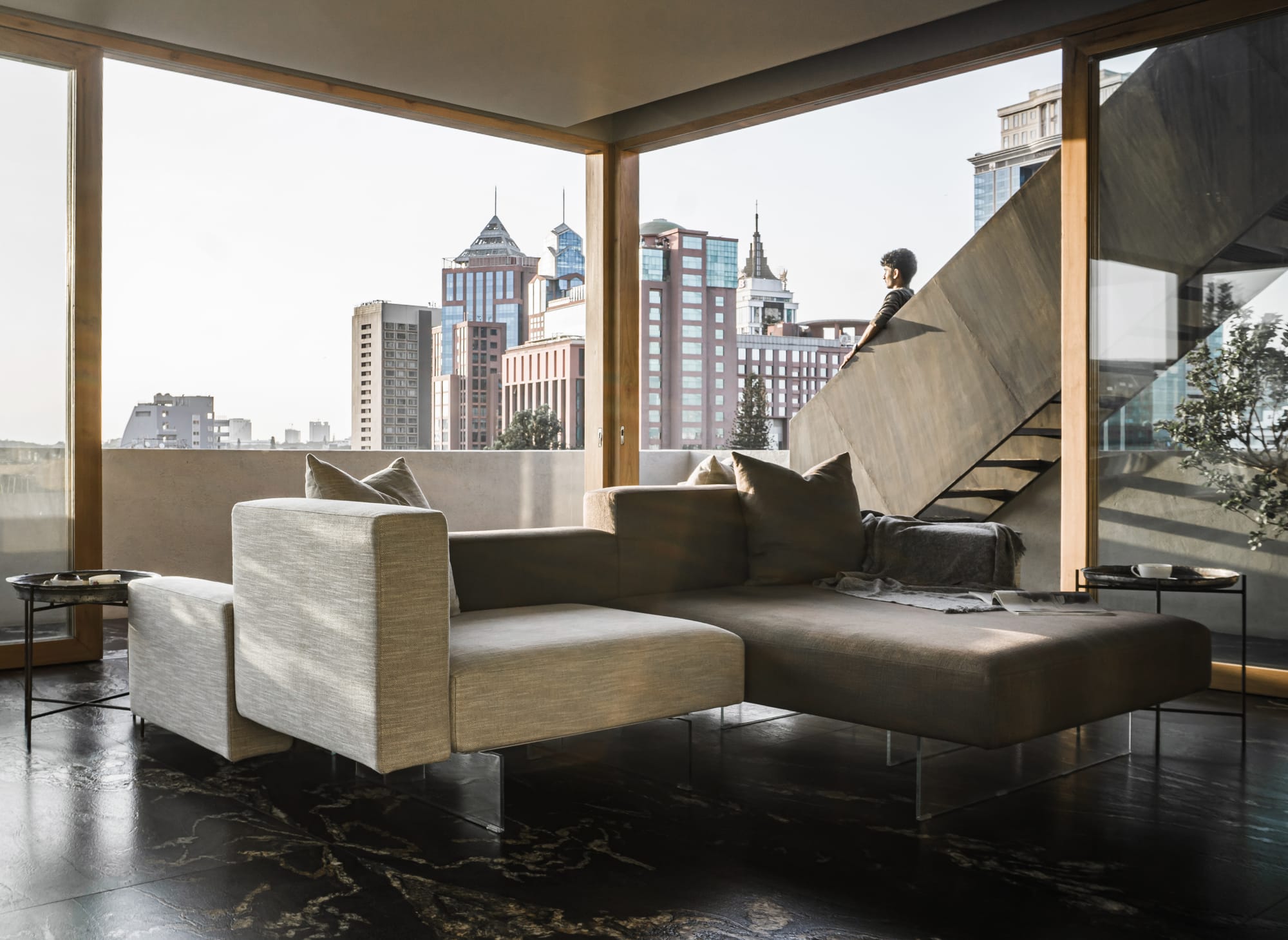
The process of building, however, was far from simple. “If you actually look at the site, it couldn’t have been more challenging,” architect Husna explains, referring to the difficulty of realizing a structure of this scale on such a constrained plot. With shifting floor plans and a structural system that consistently resisted convention, the project demanded a continuous rethinking of how the house could stand, move, and hold together—much like the memories it was meant to carry.

Objects of Past and Present that Create Character
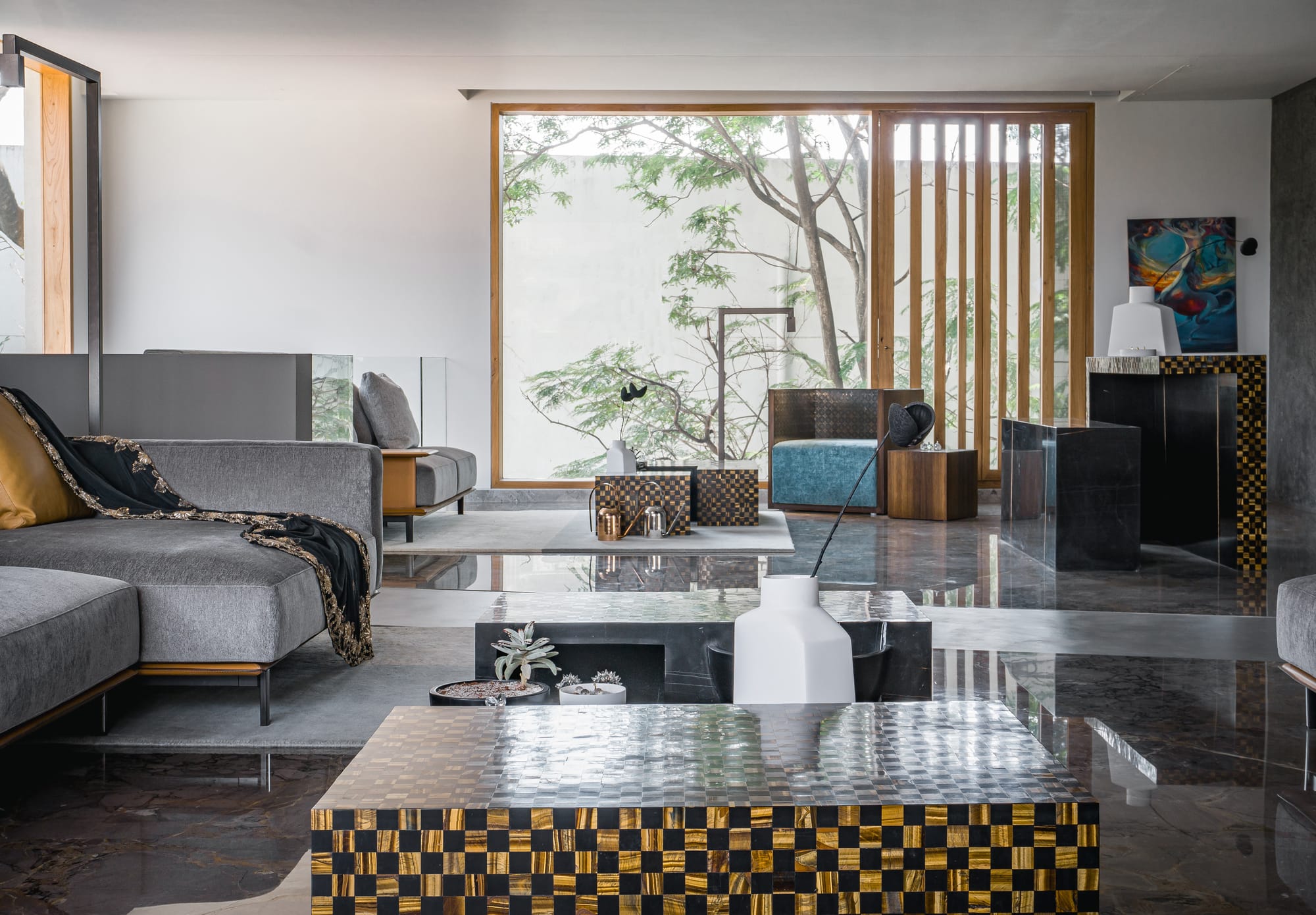
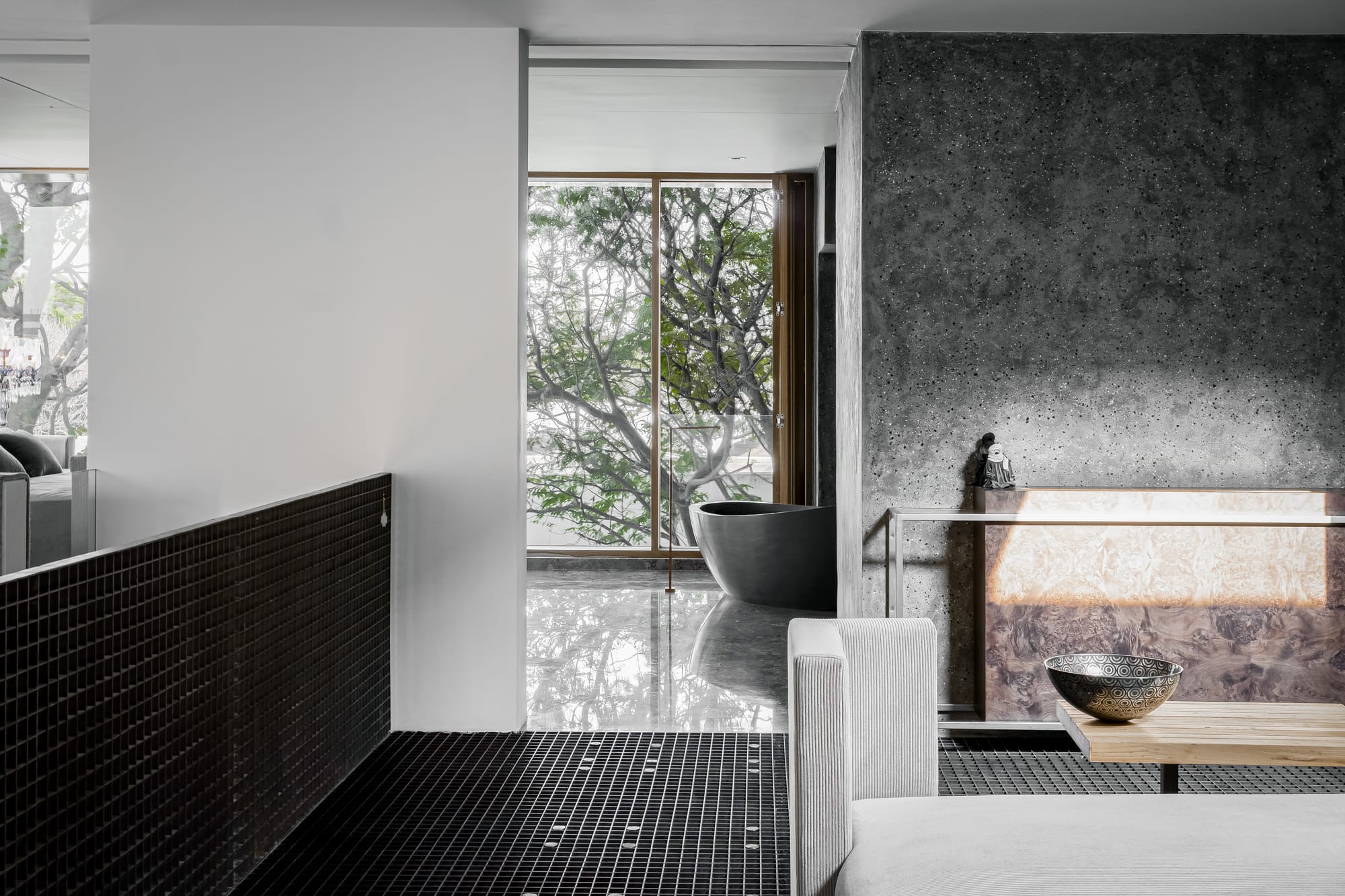
Antiquity, for the architect, is never meant to announce itself. “It’s a really special part, and it’s dotted in places you would least expect,” she shares, pointing to secret drawers set into the floor, small discoveries that reveal themselves only to those who slow down and look closely. To match the character of the space, an amber line embedded in the floor subtly guides movement toward a tiger’s eye inlay set within a black marble checkerboard, framed by rugged concrete and raw metal ceilings. Among these carefully placed memories—is her grandmother’s heirloom fabric, once worn at her wedding, now finding a renewed presence within the home. Draped over the sofas, the fabric rests against sleek grey surfaces that fade quietly into the background. “I would never have known that I would be part of this room, this time, this space, that a story about me would be told,” she reflects, a quiet pride underscoring the act of giving physical form to family memory.
Private Spaces as Personal Retreats
Approaching the private spaces, a perforated metal mesh acts as a threshold, marking a subtle pause between public and intimate realms. Here, the room feels as though it is nestled within the treetops, oriented toward the existing trees just outside the window. A framed blue silk scarf beside the bed and a Sufi painting within view bring a note of color and nostalgia to the space. This material sensibility continues into the children’s room.
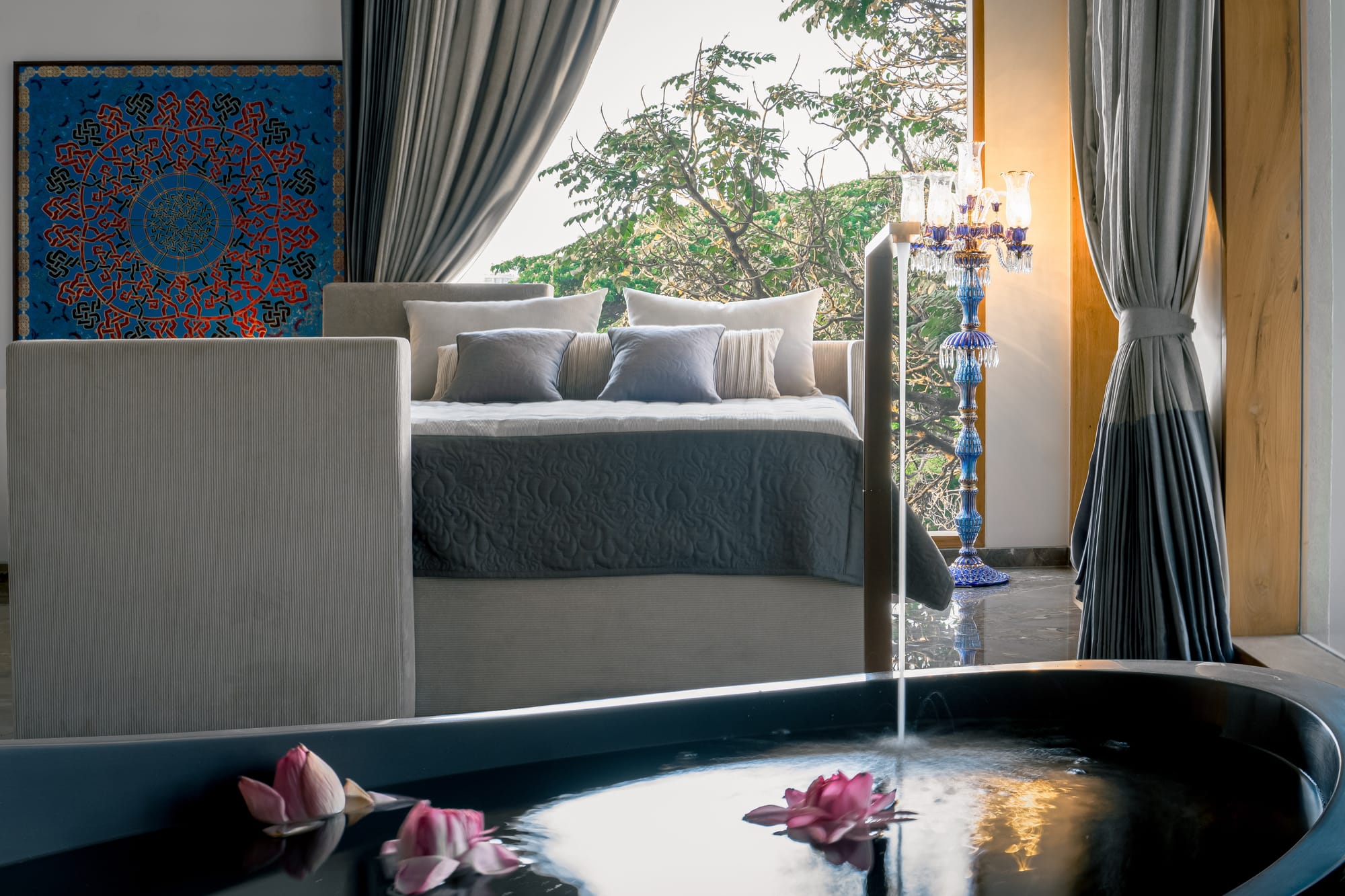
The bathing areas are carved from blue-grey marble, lending the rooms a sculptural calm that feels expressive. Even the bathtub is angled outward, turning toward the trees and introducing a gentle sense of motion, an invitation to slow down and settle into the surroundings. Conceived as spaces of comfort and self-care, they quietly celebrate the everyday rituals of inhabitation.
Spaces Between Memory and Meaning
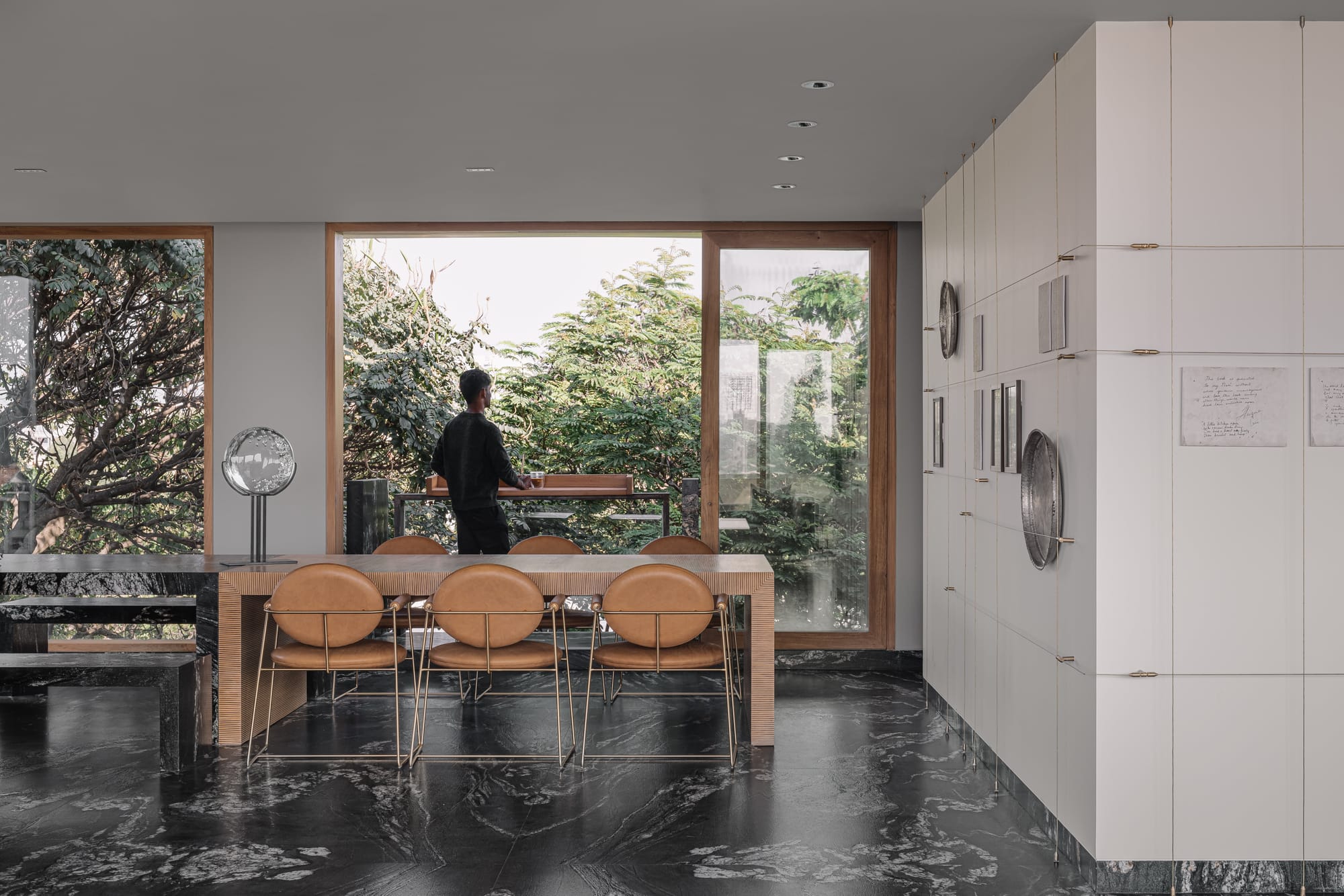
“So, the building reaches its crescendo at the dining space,” the architect reflects. “And what better place could there be to hold Hira’s recipes—recipes of life for life—my grandmother’s cherished cookbook”. The wall becomes a quiet memorial to her grandmother, who continues to live on in spirit, displaying pages from her cookbooks alongside her circular antique thalas, keeping her presence close and deeply felt.
The long dining table set beside this wall carries the same layered meaning. Defined by a two-material composition, a larger portion is crafted in wood, while a smaller section is formed from the same flamed granite as the flooring. With the option of benches or chairs, the space remains flexible, allowing its character to shift with each occasion—sometimes ceremonial, sometimes everyday—much like the memories it holds.
“Across the bridges, the office reveals itself in layers, fluid and dynamic,” the architect explains. “It challenges the idea that architecture is fixed; here, even walls can move.” As the conference room opens and closes, the space transforms, altering how it is used and experienced. In this way, the workspace reconsiders what it means to “go to work” after the pandemic, shaped by an understanding of how space influences both mental and physical well-being, and how this, in turn, affects the way we think and focus.
“Well, the office culminates in what I call a ‘nothing space,” the architect reveals. Shared by both the studio team and the residents, it becomes an informal meeting ground, one that belongs equally to work and to everyday life. The space resists a fixed function and remains open to interpretation. In its deliberate openness, the “nothing space” encourages chance encounters, allowing the space to be shaped by the people who inhabit it rather than by a prescribed use.
At its core, Hira Residence creates a breathing threshold, not just for the structure, but for the people who live. Designed to slow movement, the home brings people together through shared moments in the in-between spaces. In doing so, the residence becomes less about fixed rooms and more about connection—between past and present, work and home, people and place.