Palinda Kannangara Brings a Slice of Serenity into this Courtyard Home in Koramangala
Featured in Buildofy’s coffee table book, 10 Homes Bengaluru, Courtyard Home by Palinda Kannangara, swaps the city’s mechanical roar for the luxury of silence.

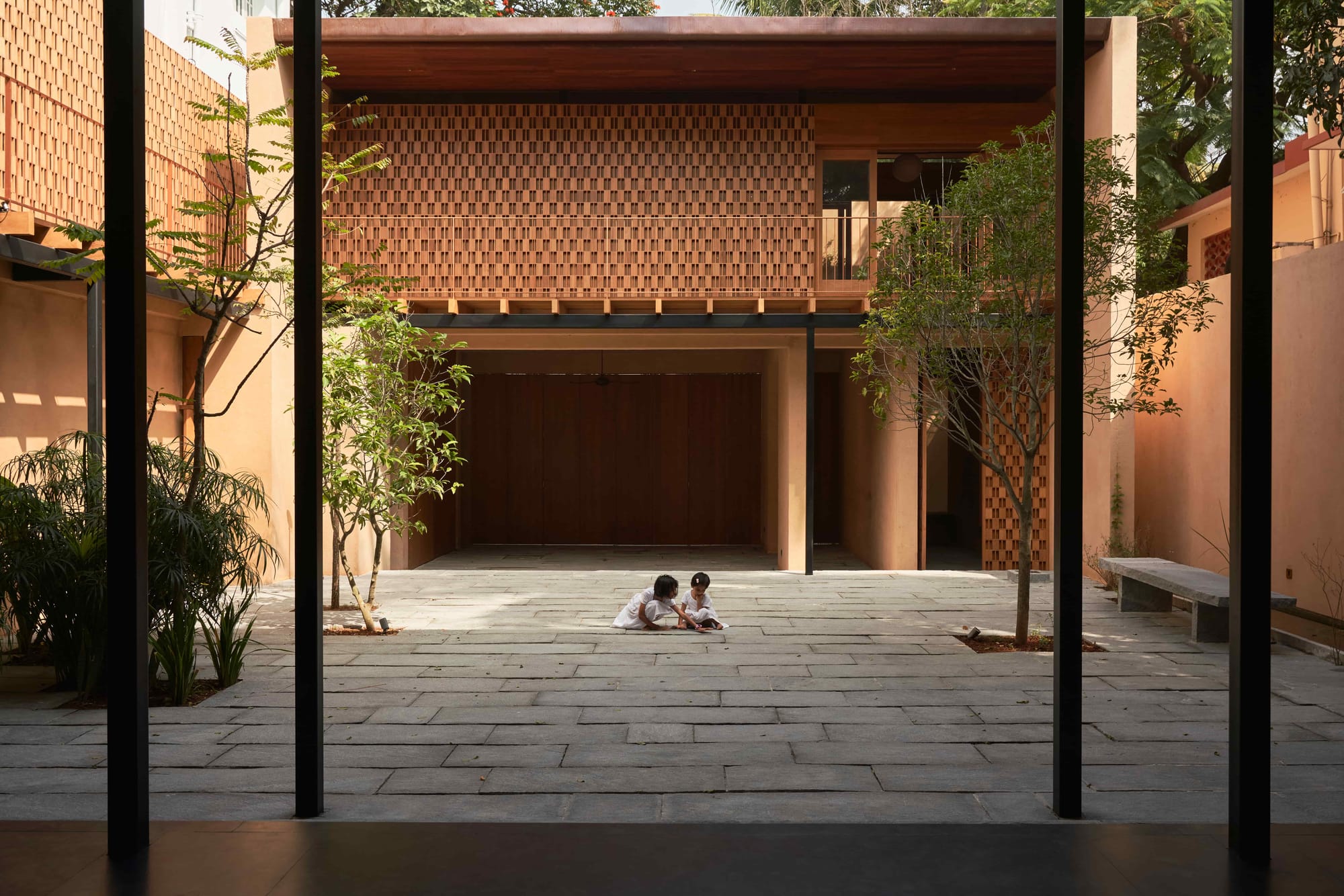
In the frantic, high-decibel heart of Bengaluru—a city defined by its forever high-velocity and the unrelenting pace —there exists a threshold where the city’s cacophony simply ceases. To step into the Courtyard House at Koramangala is to enter a space of profound, almost monastic silence. Designed by the acclaimed Sri Lankan architect Palinda Kannangara, this project marks his first foray into the Indian residential landscape. For a family of five—an urban designer, an entrepreneur, their two daughters, and an elderly mother—the brief was simple yet deeply philosophical: a home that prioritizes the "luxury of space" over the "luxury of display." And hence, the home speaks grandeur in stone, timber, light, and experience.
FACT FILE
The Echo of Palaces and Gardens
The design language of the house finds its origin in a surprising, yet deeply local, historical anchor: Tipu Sultan’s Summer Palace. Located just a few kilometers away, the 18th-century palace is built around tropical resilience, characterized by its rhythmic timber columns and breezy, open verandahs. Kannangara has not mimicked this history, but rather distilled its essence.
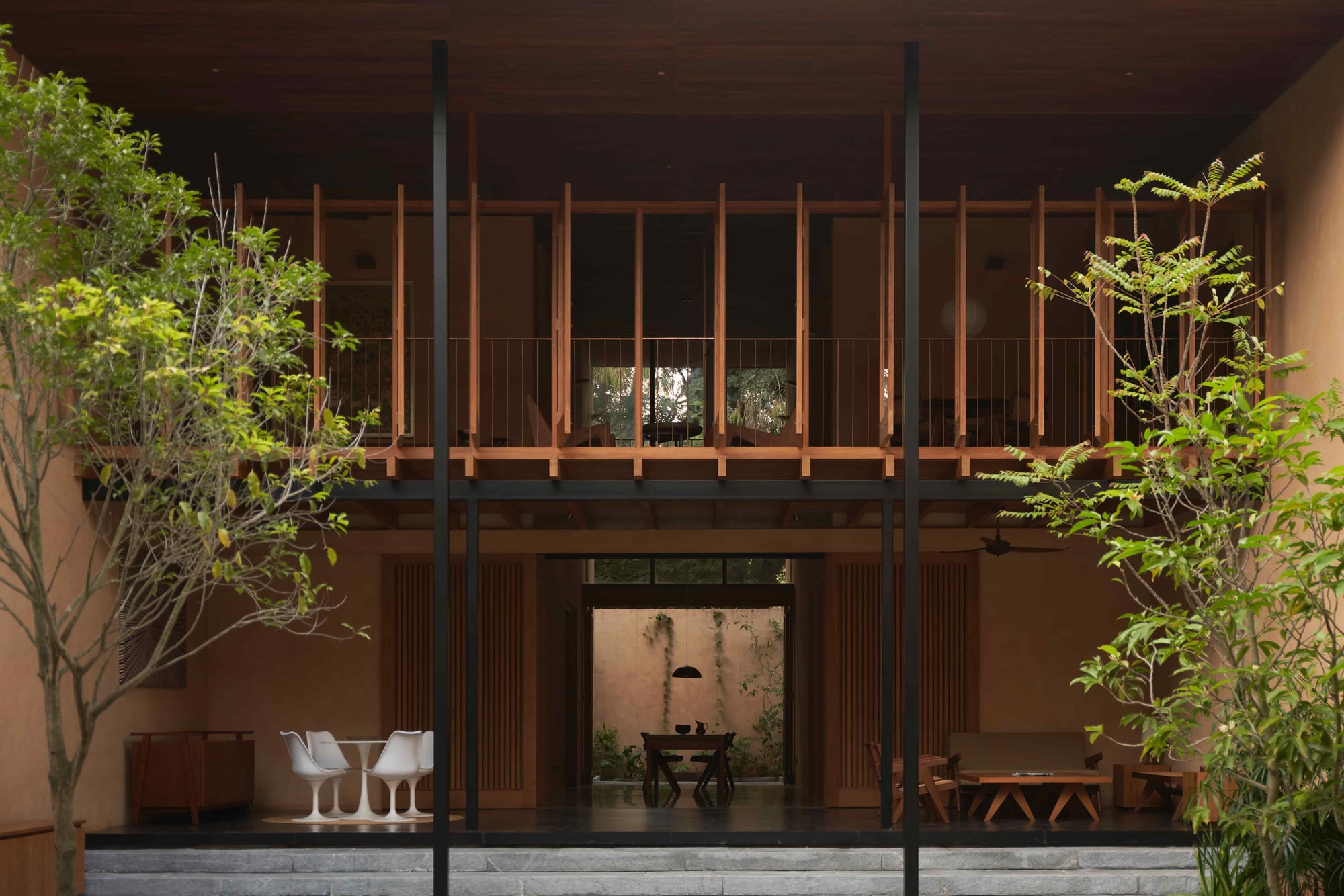
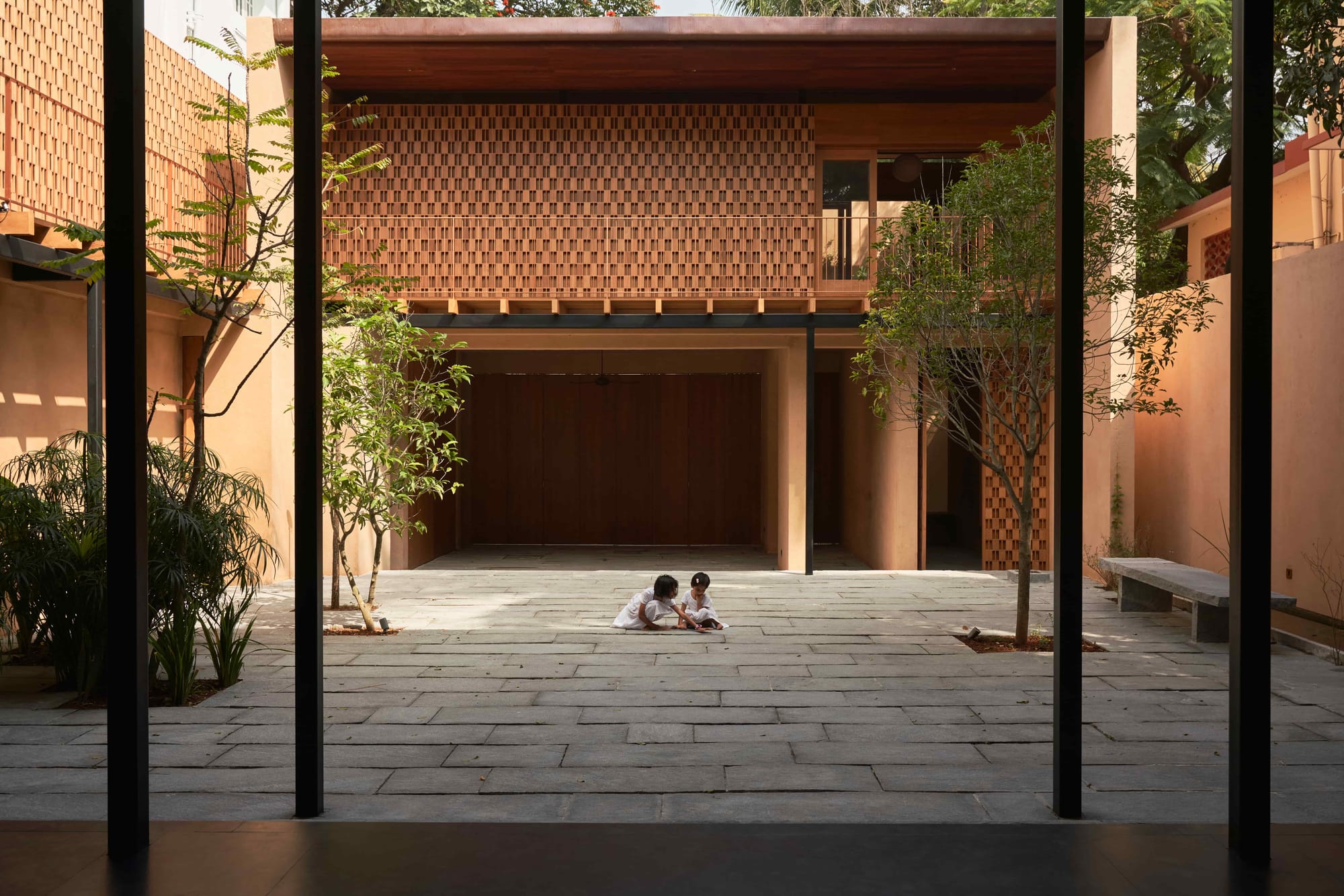
Where Tipu’s palace used massive teak pillars to support its grand halls, this home employs slender steel columns that disappear into the shadows, creating a ‘floating’ effect. While Bengaluru's modern architecture often leans toward the hermetically sealed and the air-conditioned, this home breathes through gardens and greenery. It draws inspiration from the city’s moniker as the ‘Garden City,’ not by merely planting greenery, but by allowing the house to become an extension of the earth itself.
The Measured Unfolding
The site is a linear stretch, a combination of two plots that could have easily become a claustrophobic urban block, in a commercial context like Koramangala. Instead, Kannangara has divided the program into two distinct pavilions: a public guest area and a private family wing. These two volumes are tethered together by the Angala, a central courtyard that serves as the home’s spiritual and thermal lungs.
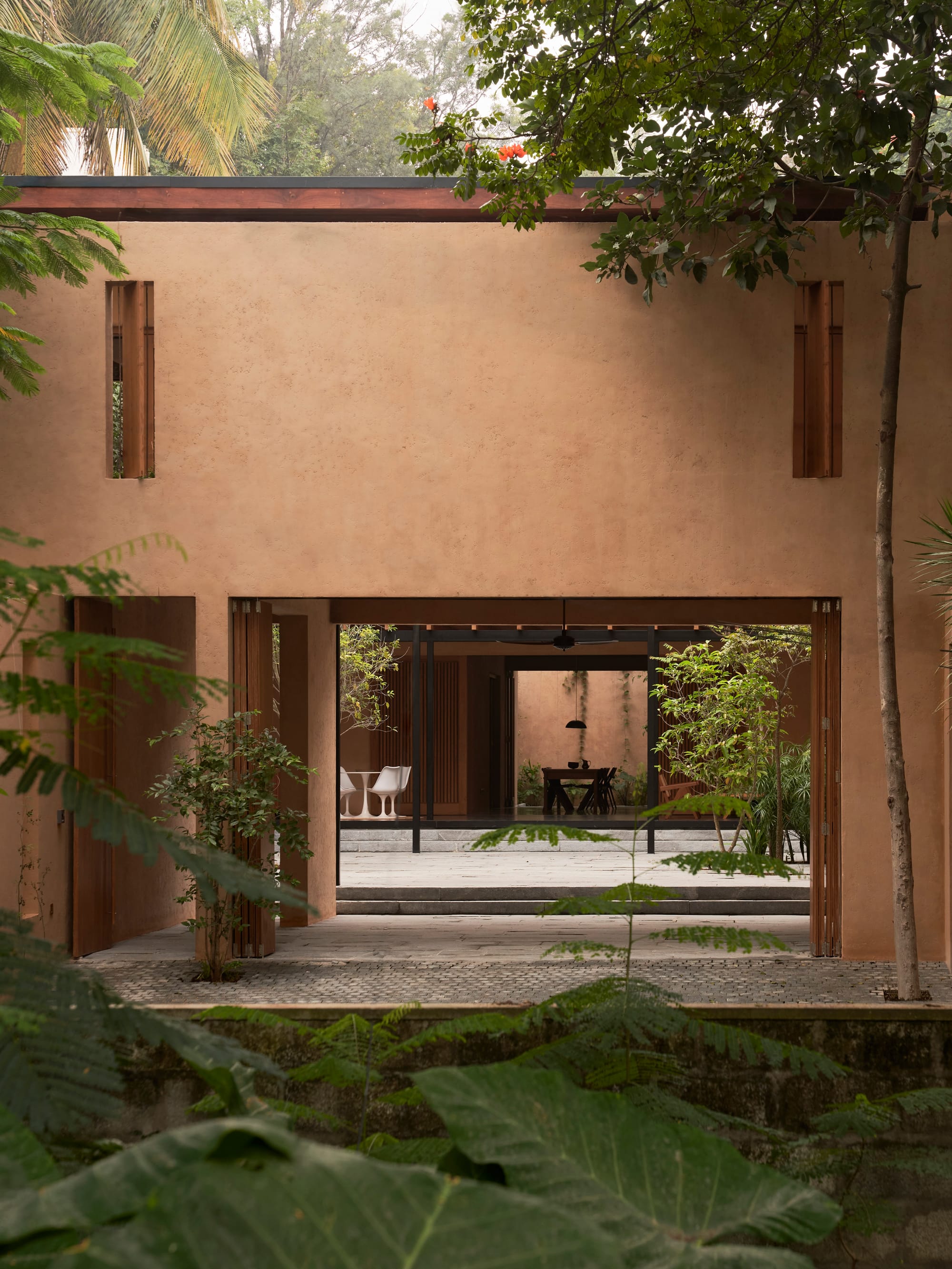
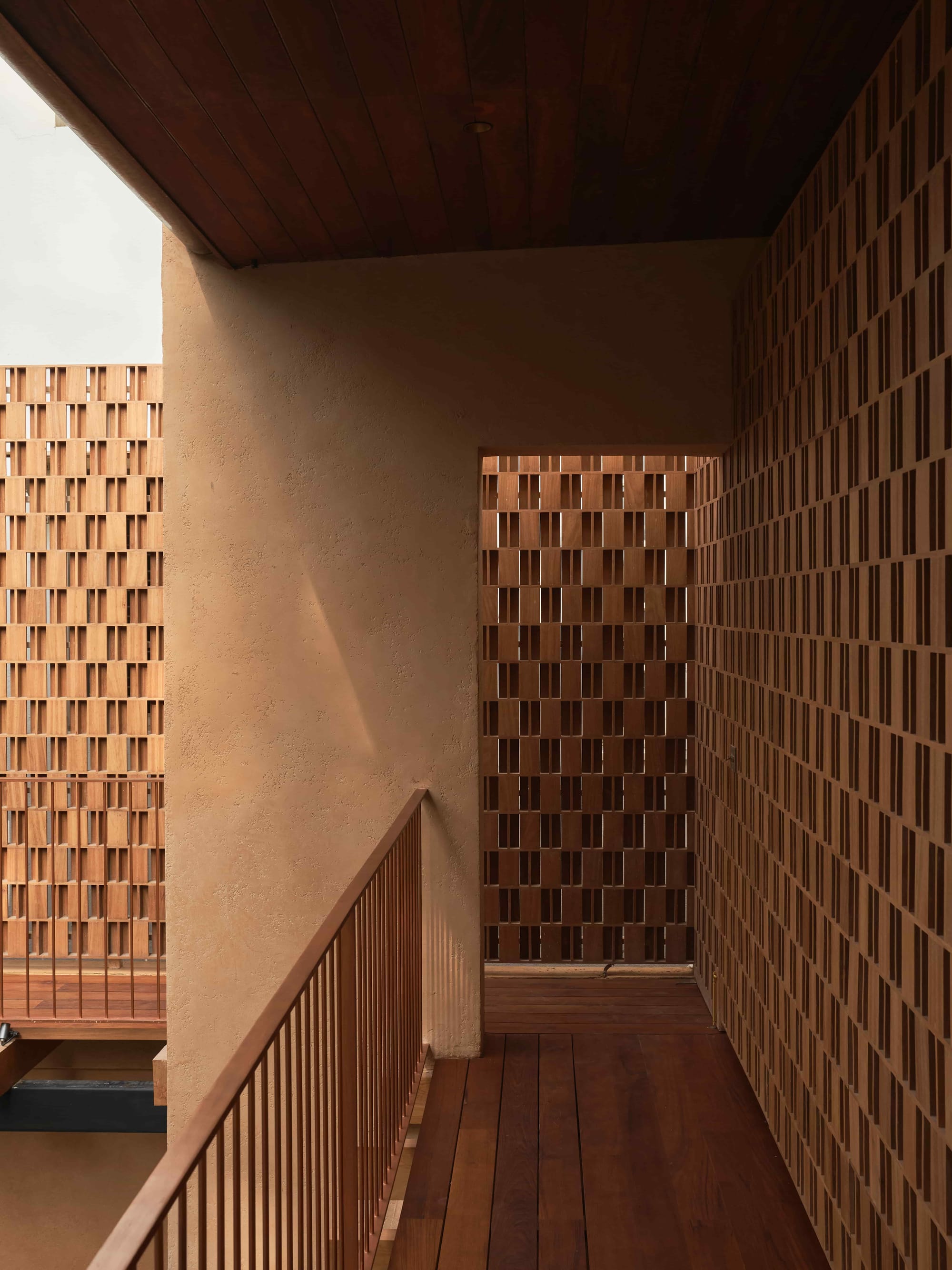
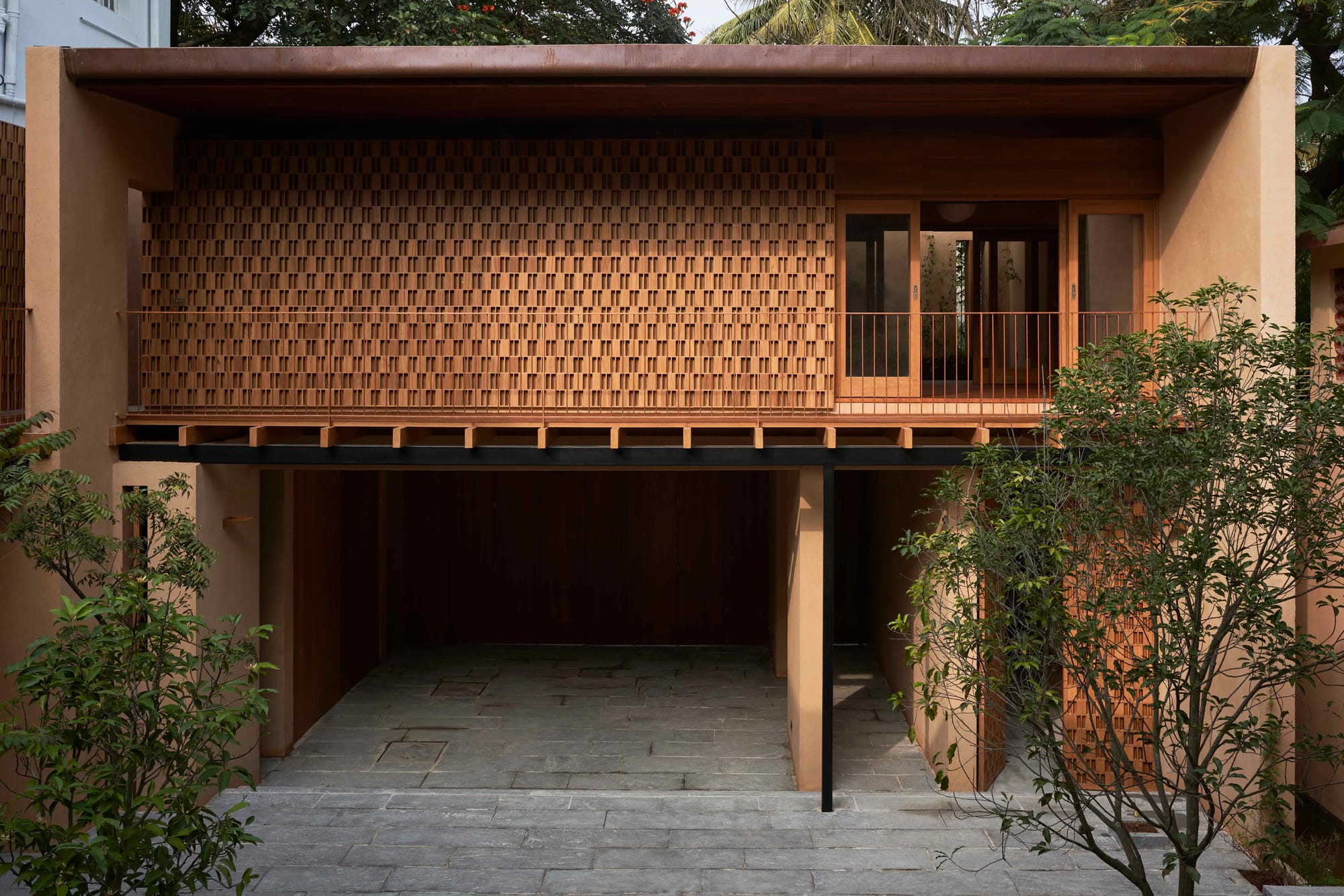
The facade, finished with earth-pigmented plaster and brick, offers little to the street, acting as a protective husk. But as one crosses the threshold, there is a "measured unfolding." The transition from the dusty urban surroundings to the inner sanctum is choreographed through a series of verandahs and semi-open spaces. Here, the boundaries between inside and outside are intentionally blurred. Timber shutters and jaalis (lattices) provide privacy from neighboring buildings, yet they allow the Bengaluru breeze to filter through, carrying the scent of stone and jasmine.
The Soul of the Home: The Angala
At the heart of the residence lies the Vala Angala—the central courtyard. Inspired by traditional temple courtyards, it features a reed and lily pond that cools the air as it moves into the living spaces. For the family, this space is the site of daily ritual. The pooja room, a serene volume of light and shadow, opens directly onto the courtyard. Flanked by sacred Tulsi and Bakula trees, this space is integrated with both the sky and the earth. The sound of water dripping into the pond and the rustle of the Oushadi garden—a dedicated patch of Ayurvedic medicinal herbs—reiterate the monastic quality of the home. It is a space designed for pause, for the slow sipping of morning coffee, and for the quiet observation of the sky.
A Materiality of the Earth
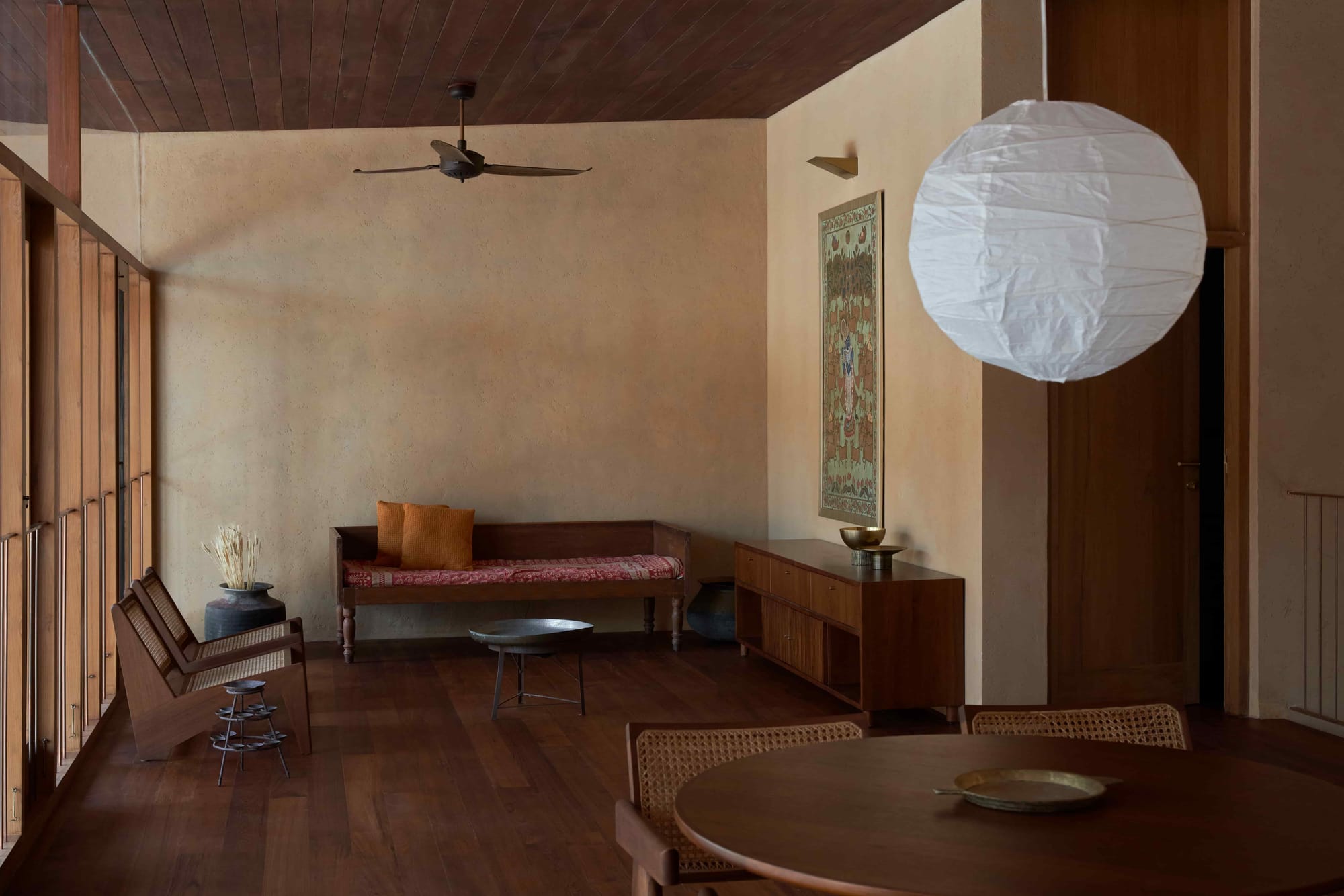
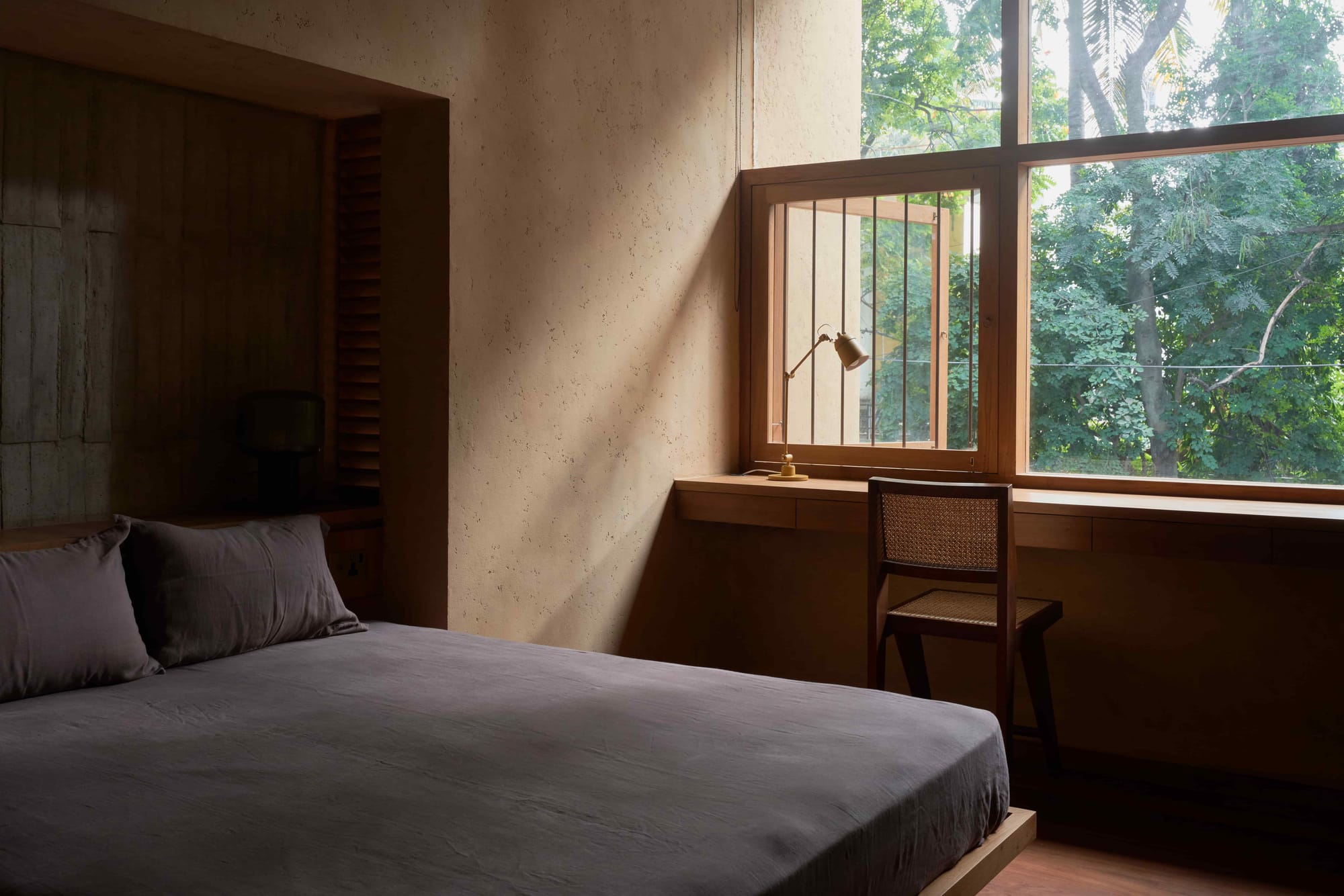
The material palette is a tactile tribute to the Deccan landscape. Kannangara has eschewed the polished, sterile finishes of contemporary luxury in favor of materials that age gracefully. The floors are laid with Chappadi stone and river-bed granite, their rough-hewn textures grounding the soaring heights of the ceilings.
In the more intimate areas, the texture shifts. Polished cement and warm teak timber take over, accented by delicate brass inlays that catch the stray beams of sunlight filtering through the light shafts in the bathrooms. The "skin" of the house—a combination of timber jaalis and trellis work—is perhaps its most ingenious feature. It provides a layer of 'breathing' insulation, protecting the interiors from the harsh midday sun while maintaining a visual connection to the surrounding greenery.
Passive Wisdom
In an era of climate crisis, Kannangara’s reliance on natural light and cross-ventilation is a radical return to common sense. Lean-to roofs provide heat insulation, while the strategic placement of voids ensures that every corner of the home, including the family lounge on the upper floor (the "Upper Pause"), remains illuminated by soft, indirect light. The construction itself was a labor of love, involving local craftsmen and daily-wage workers who brought traditional techniques to a modern silhouette.
The Courtyard House at Koramangala creates a new climate in this context—one where the clock slows, and the spirit finally exhales. While the city outside remains locked in its pursuit of the "next," this home stands still, proving that the ultimate architectural feat isn't building a shell to keep the world out, but crafting a void that invites the self back in. It is a space that understands that in the deafening hum of a modern metropolis, the most radical thing a home can offer is not just a room, but a resonance—the rare, meditative permission to finally, and fully, arrive.
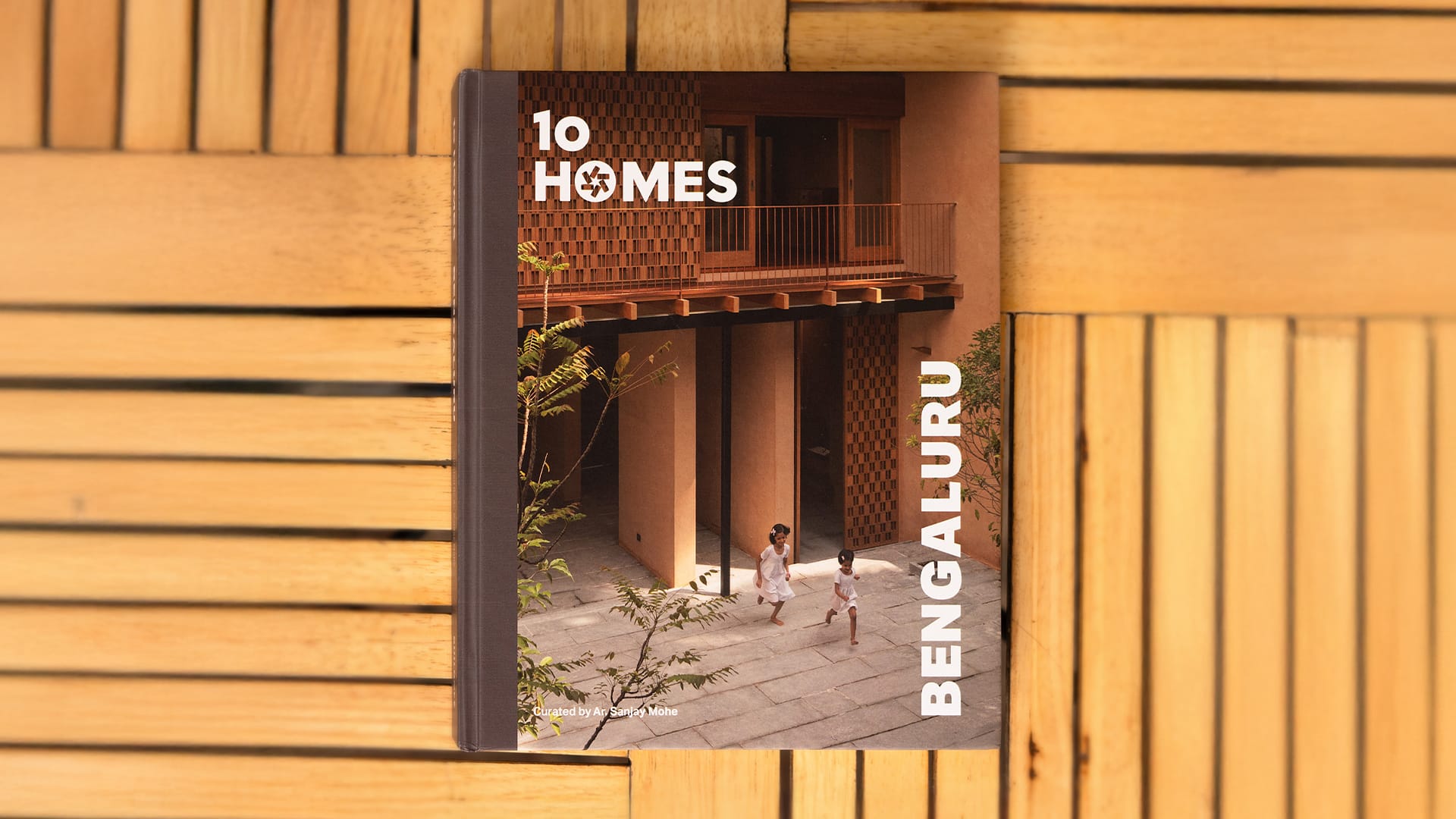
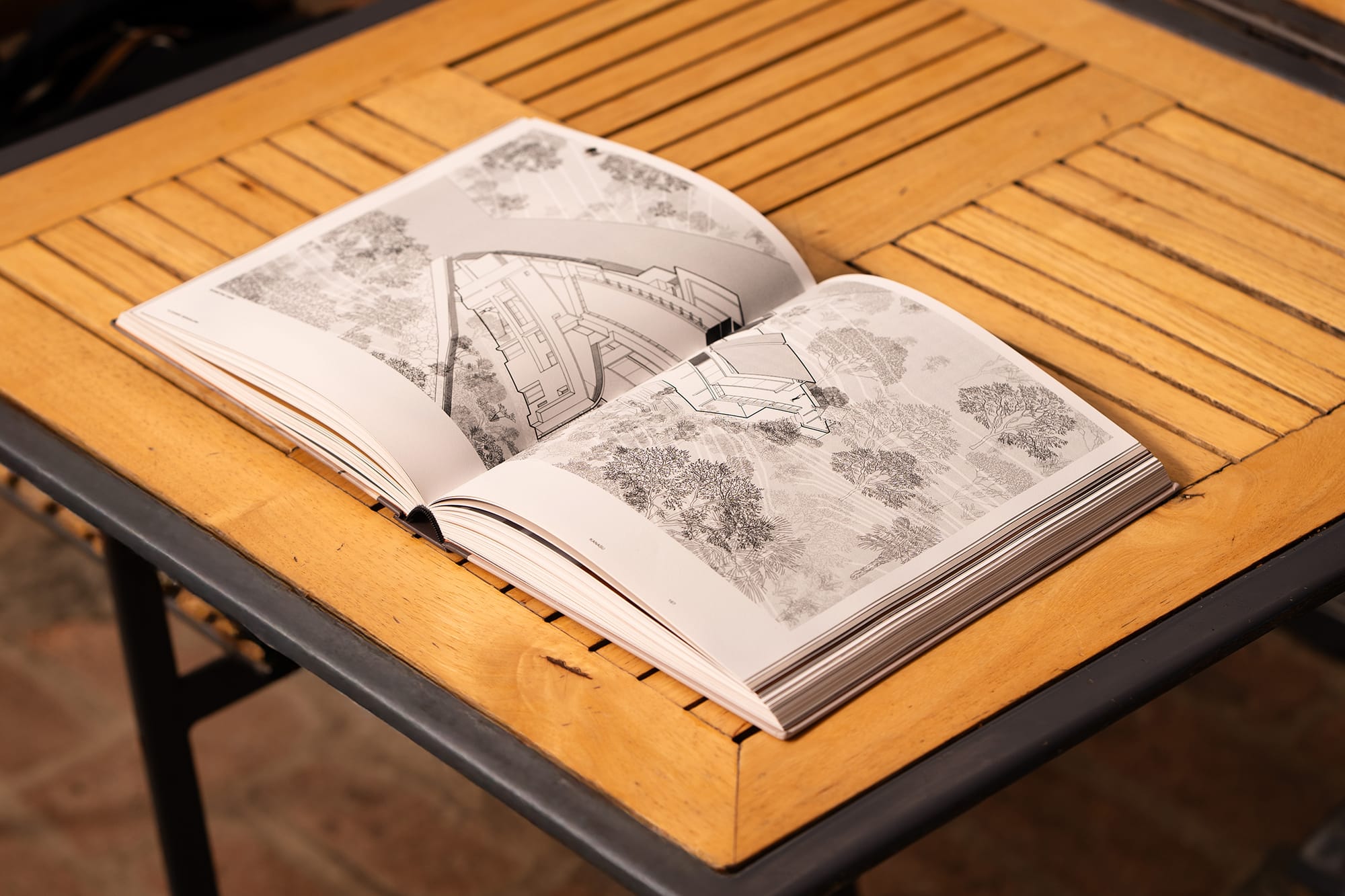
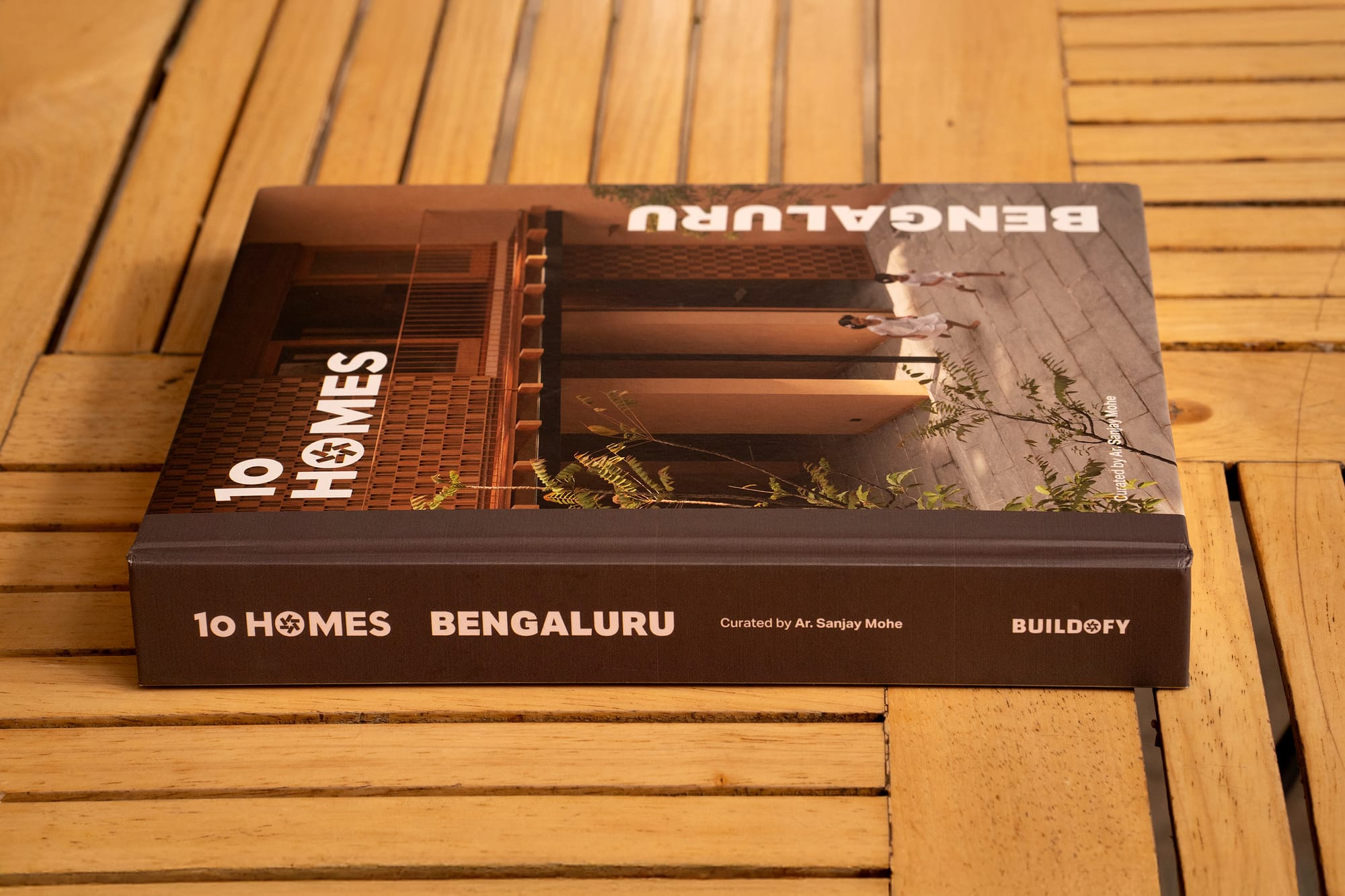
Buildofy is celebrating 10 Years of Architecture Storytelling with the introduction of a limited edition coffee table book - 10 Homes Bengaluru. Pre-Order Your Copy on Buildofy.