This Gorakhpur Farmhouse Breathes Through Porous Walls And Slow Architecture
Set within a mango and teak orchard, this low-impact retreat by W5 Architects is rooted in climate, material honesty and local craft.

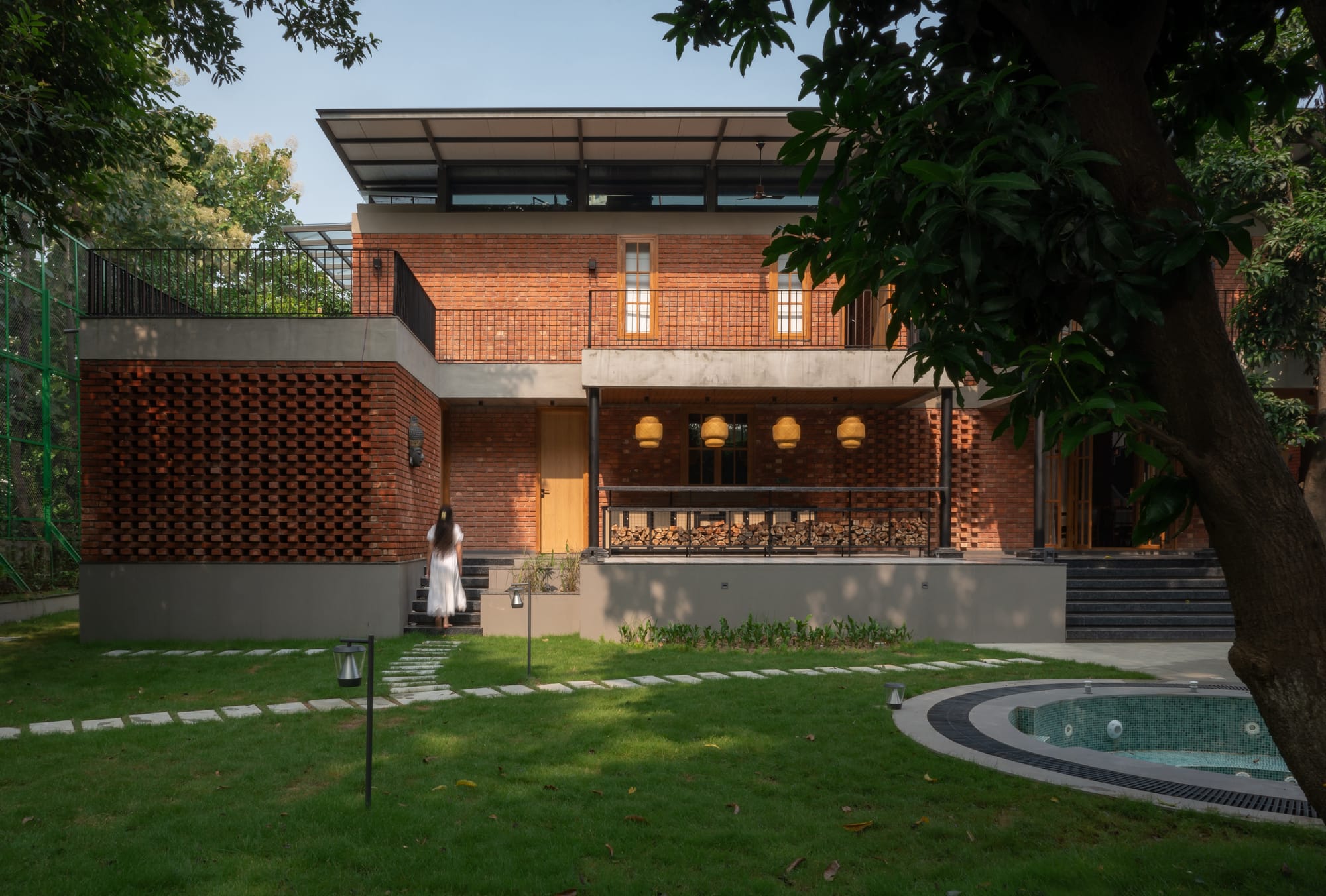
If one were to look at the prefabricated modular residences emerging across present-day Uttar Pradesh, the decision to return to a permeable baked-brick and exposed concrete structure might strike the layperson as slightly unusual. For Ar. Prakhar Ranjan of W5 Architects however, crafting a home is an intentional, immersive process that “allows the design to evolve organically with its surroundings.” This becomes ostensible in the 5,500 sq. ft. Gorakhpur Farmhouse right from the living room, where bare-brick walls, Kota stone flooring and wooden accents all contribute to an unpretentious, site-responsive tableau grounded in traditional masonry techniques.
“Situated in a mango-teak orchard, the architecture does not impose; instead, it meanders around existing trees, forming courtyards, shaded verandahs, and light-filled volumes that breathe with the land,” shares Ar. Prakhar Ranjan, Principal Architect at W5 Architects.
FACT FILE
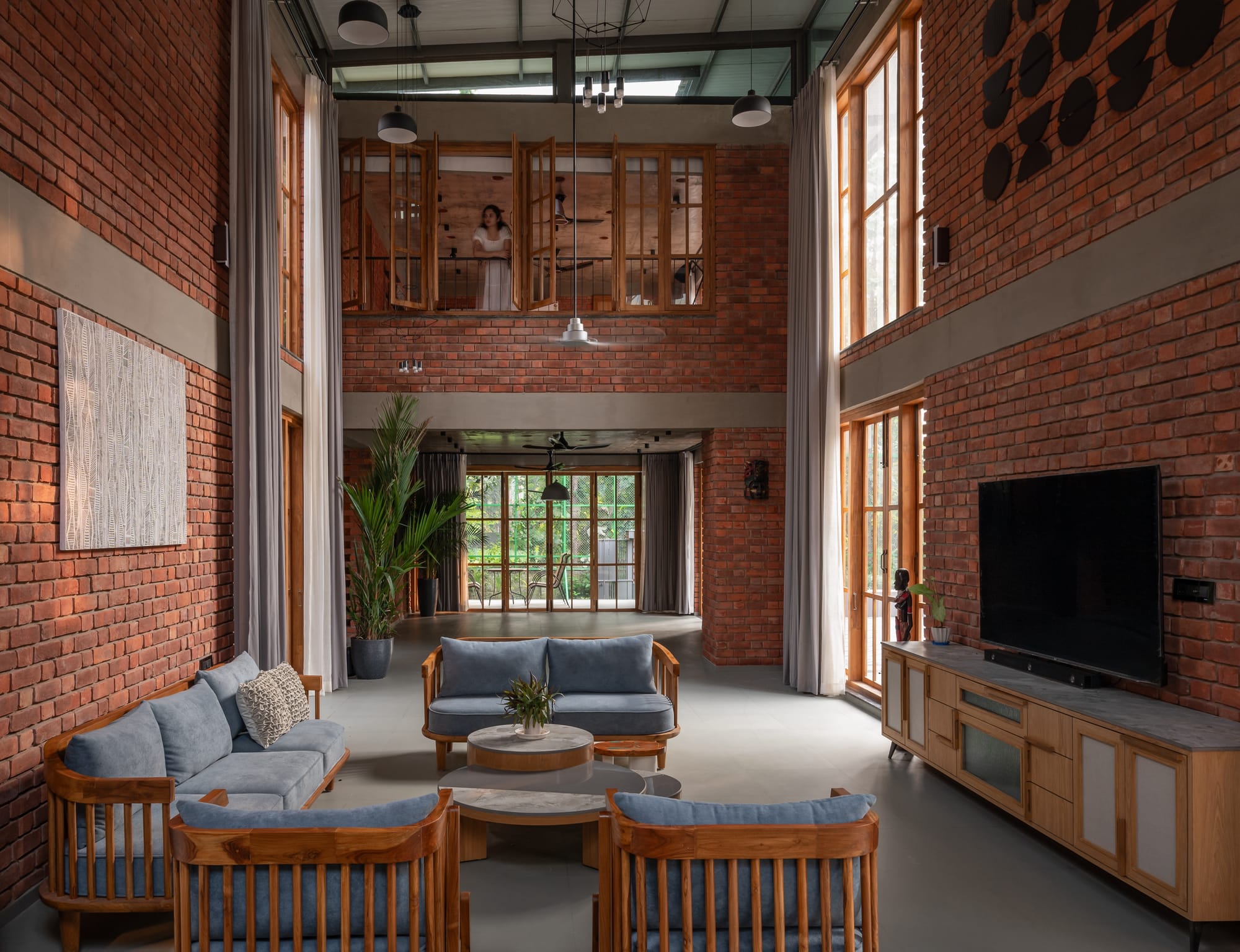
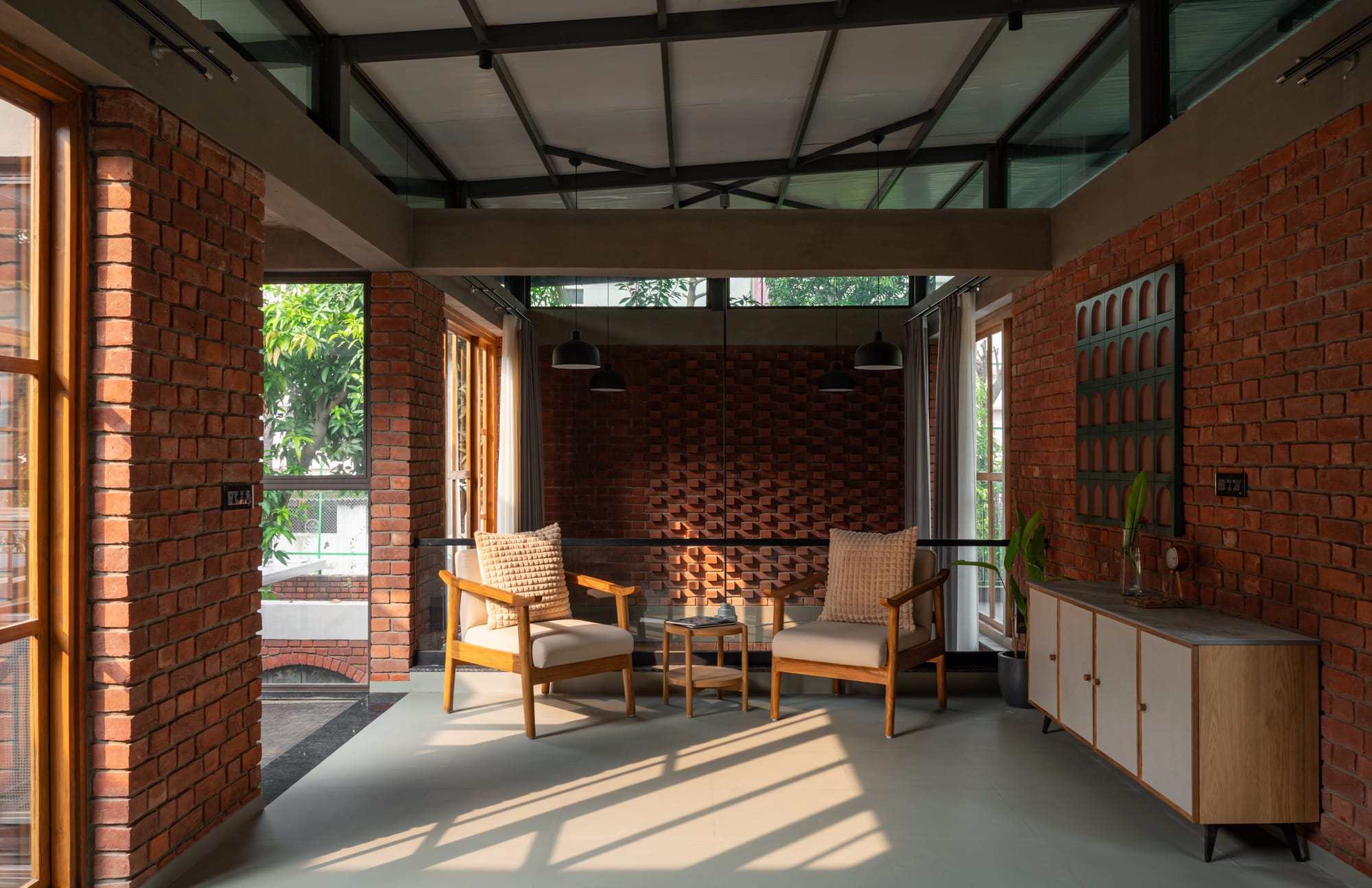
Prakhar’s ingenuity lay in recognising the potential for ‘stack-effect’ ventilation within the introverted, double-height living room, where warm air trickling in could find instant release through gaps beneath the sloping PUF ceiling. “The architectural language is one of porosity and connection,” the architect continues. “Double-height spaces act as breathing volumes, allowing vertical interactions between floors, where sightlines, air, and light traverse seamlessly.”
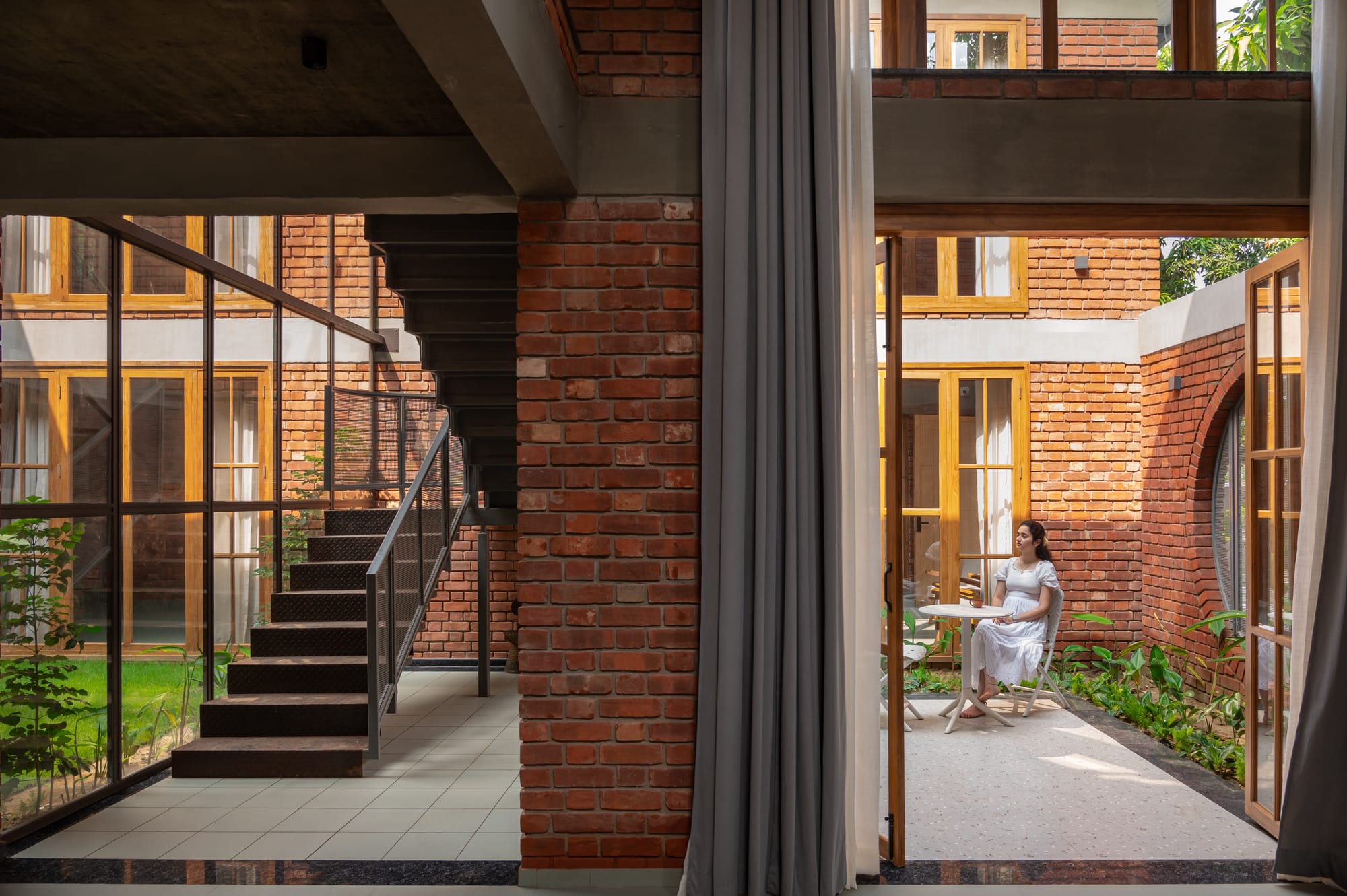
Every room gravitates towards the outdoors. At the home’s cynosure is an open-to-air courtyard, around which the rest of the house magnetically orbits, following a fluid progression from the living room to the dining area and kitchen, which spill into the utility spaces. “This home does not aspire to be a statement; rather, it invites discovery,” says Prakhar. “It is a place where the wind moves freely through porous walls, where light and shadow sketch their ephemeral patterns.”
Low-Impact, Regionalist Architecture
At the heart of The Gorakhpur Farmhouse flourishes what Prakhar calls “slow, patient craft”, which honours material experimentation and a salt-of-the-earth, raw aesthetic rather than hiding it. Exposed bricks characterize the façade, its country-fired burnt tones invoking the region’s rustic landscape. The ceiling is left fascinatingly bare, with concrete beams running at a uniform level along the wall perimeter, eliminating the need for individual lintels above each door and window opening. The way light falls upon the rust-coloured brick walls and dusty grey concrete further reinforces this tenuous bridge with the earth, creating an ever-changing chiaroscuro of shadows throughout the day.
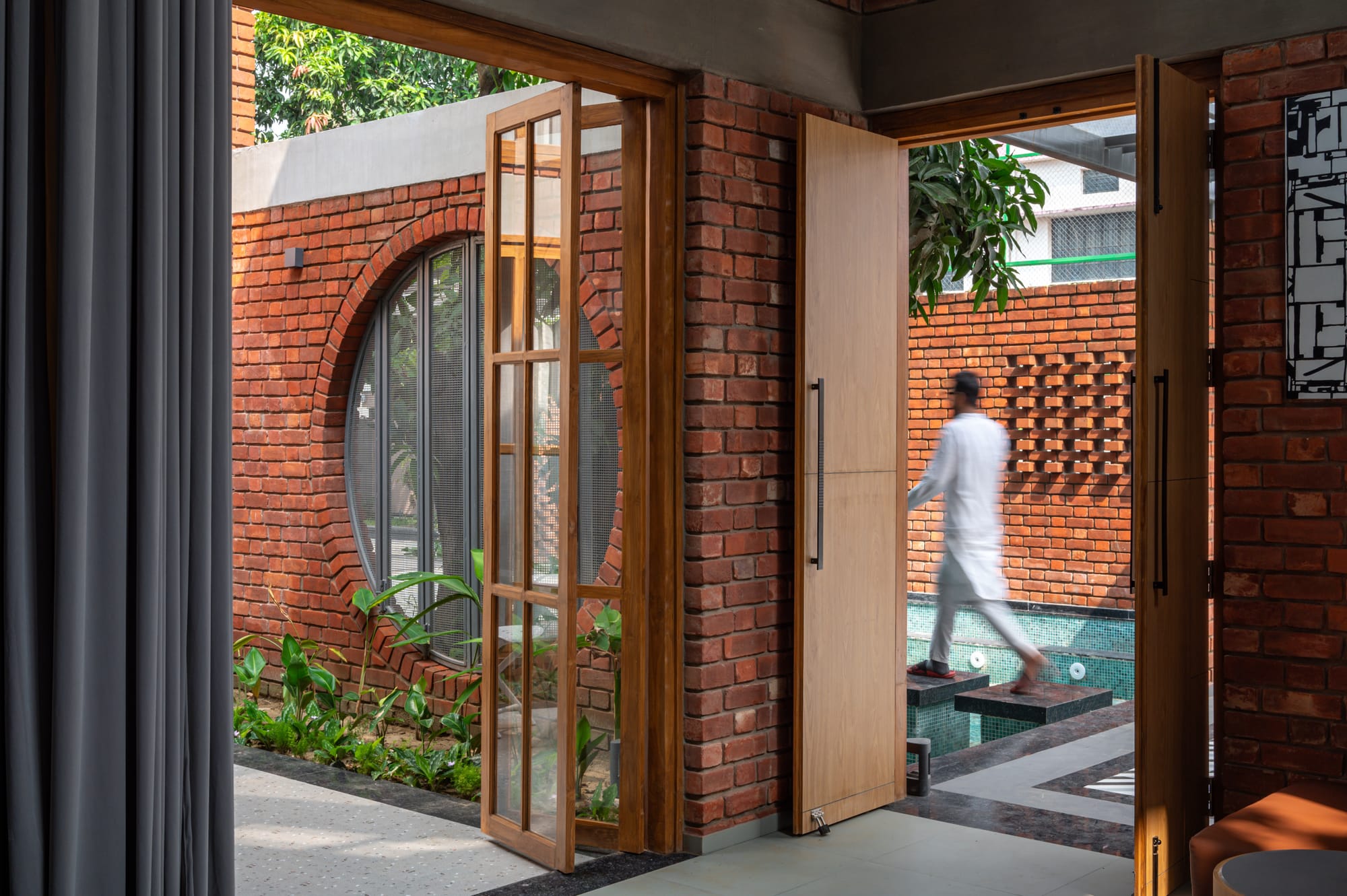
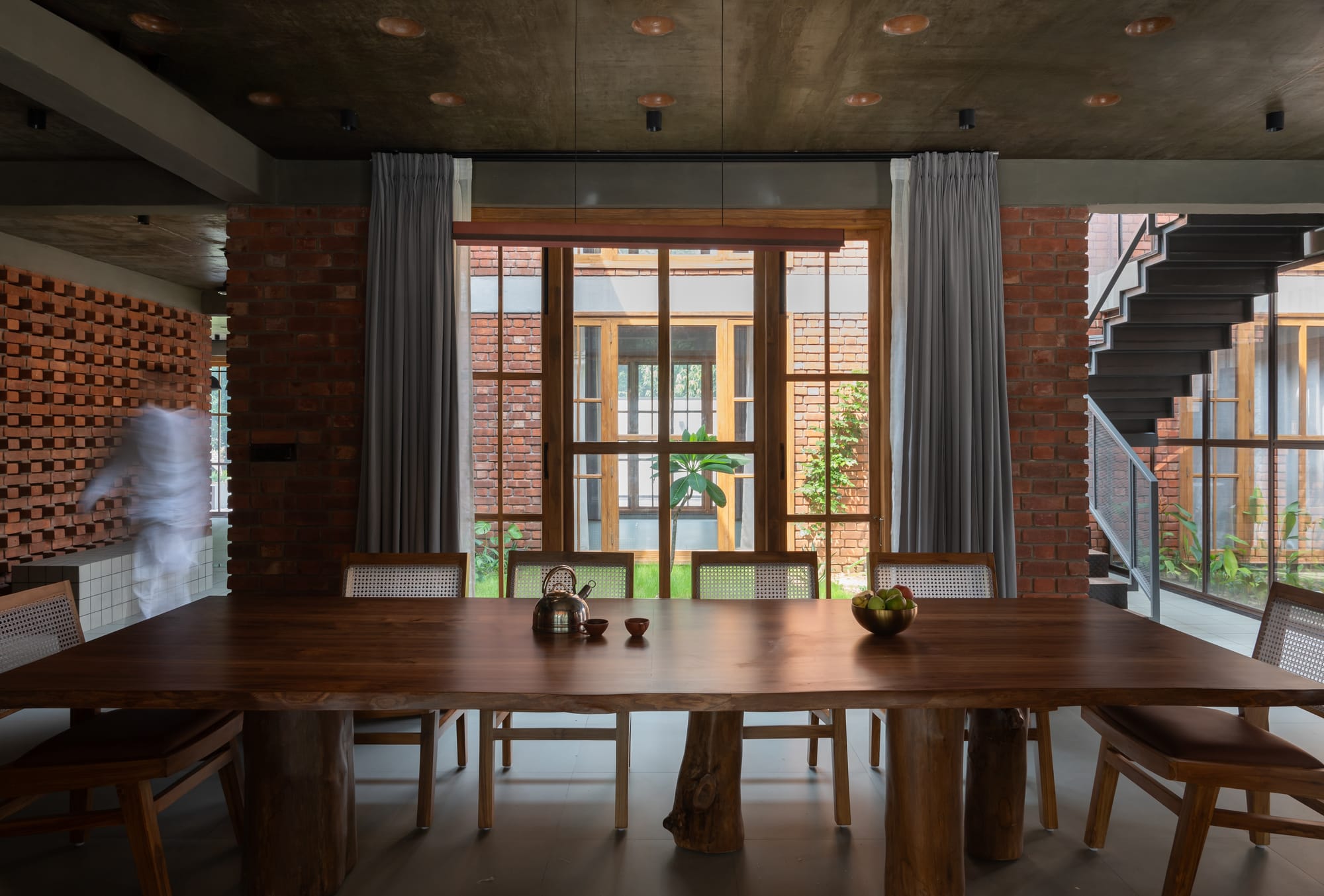
Bypassing the environmental concerns associated with illegal, old-growth logging and mass-production, almost all the furniture is crafted on site using wood from trees that grew on or near the property. This approach forges a direct visual and physical connection between the architecture and its idyllic setting. Hints of this teakwood appear across doors, windows, bed frames and cabinetry, its tawny golden-brown tones lending domesticity to an otherwise unembellished character.
Form Follows Function
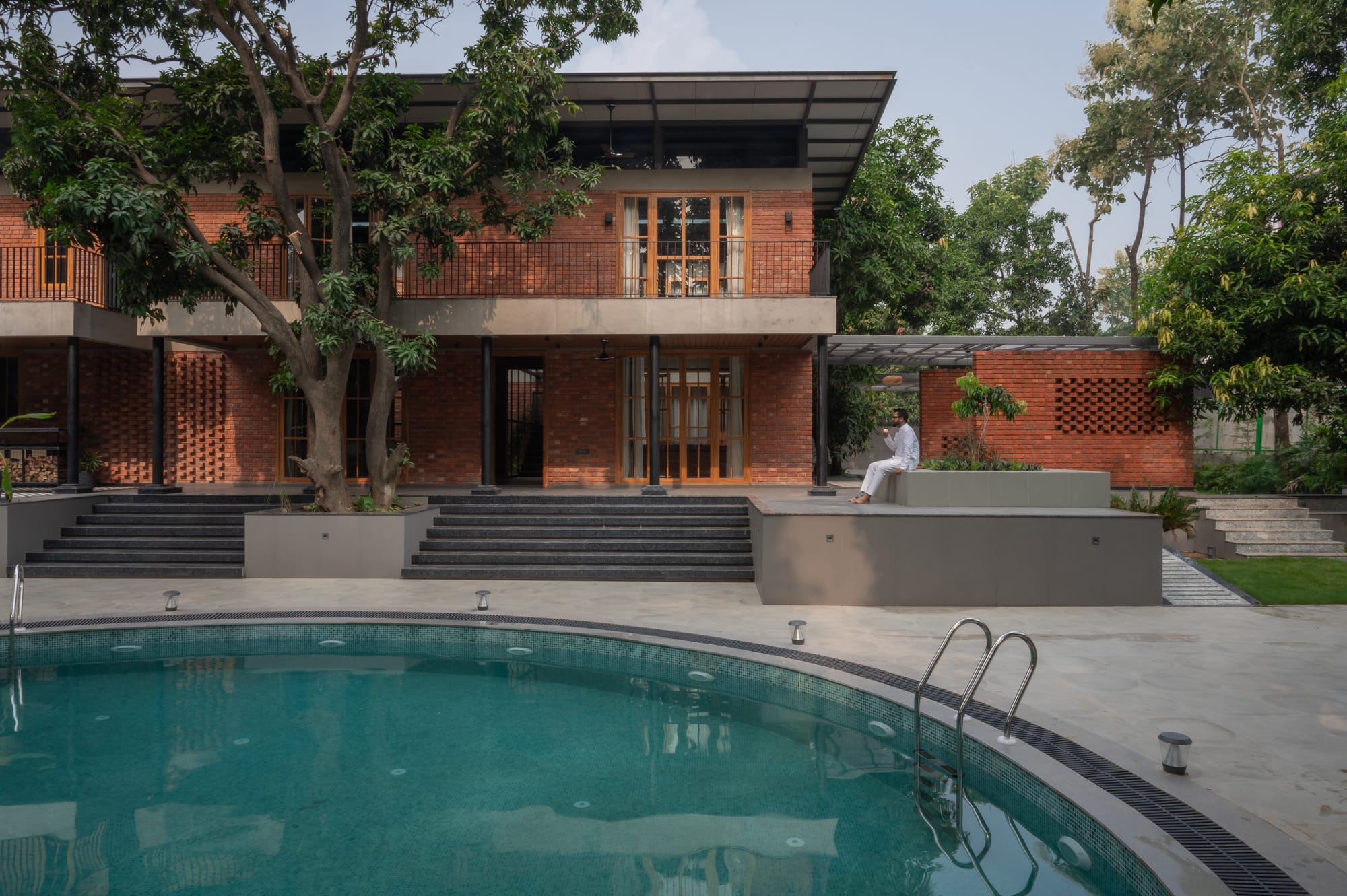
As one wanders through the central courtyard, the rooms align around an instinctive floor plan, with the natural landscape acting as the lodestar guiding the design. Foldable wooden-framed French doors, pivoting windows and whimsical, circular apertures leave the boundaries wide open—for fresh air, sunlight, and the great outdoors to smuggle their way in.
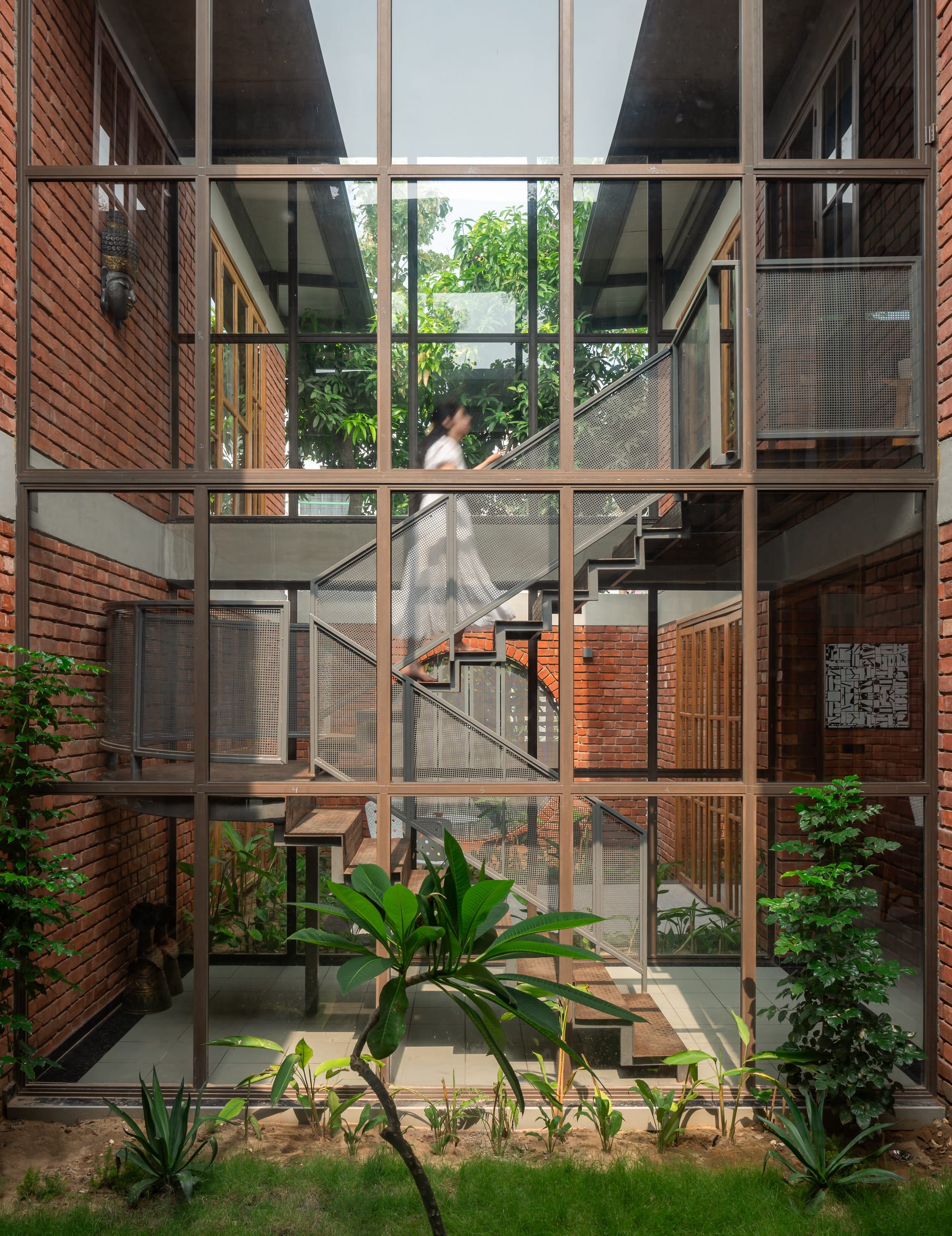
The farmhouse is configured in a sequence of distinct wings and sections that feel almost utilitarian. The ground floor is organised into clear zones: the western wing functions as a double-height public drawing room for guests, while the eastern wing is dedicated to family life, with a lounge, dining area and kitchen. On the first floor, the spaces become more intimate, housing a family lounge and bedrooms. From the recessed balconies, the view opens out to sweeping vistas of Gorakhpur and the shimmering, shape-shifting highway that leads all the way to Nepal.
Context, Craftsmanship and the Slow Life
Most prominently, the artwork that adorns the walls is not mere ornamentation; it represents a second life for discarded wood scraps and construction debris, reincarnated so that nothing goes to waste. Architecture, after all, is not just about space; it is about people. “The farmhouse became a platform for local artisans,” Prakhar adds, “with women laborers engaged in fine masonry work, intricate brick pointing, and surface texturing.” This spirit of collaborative making is not confined to shared spaces alone, but actively extends into the home’s more private realms.
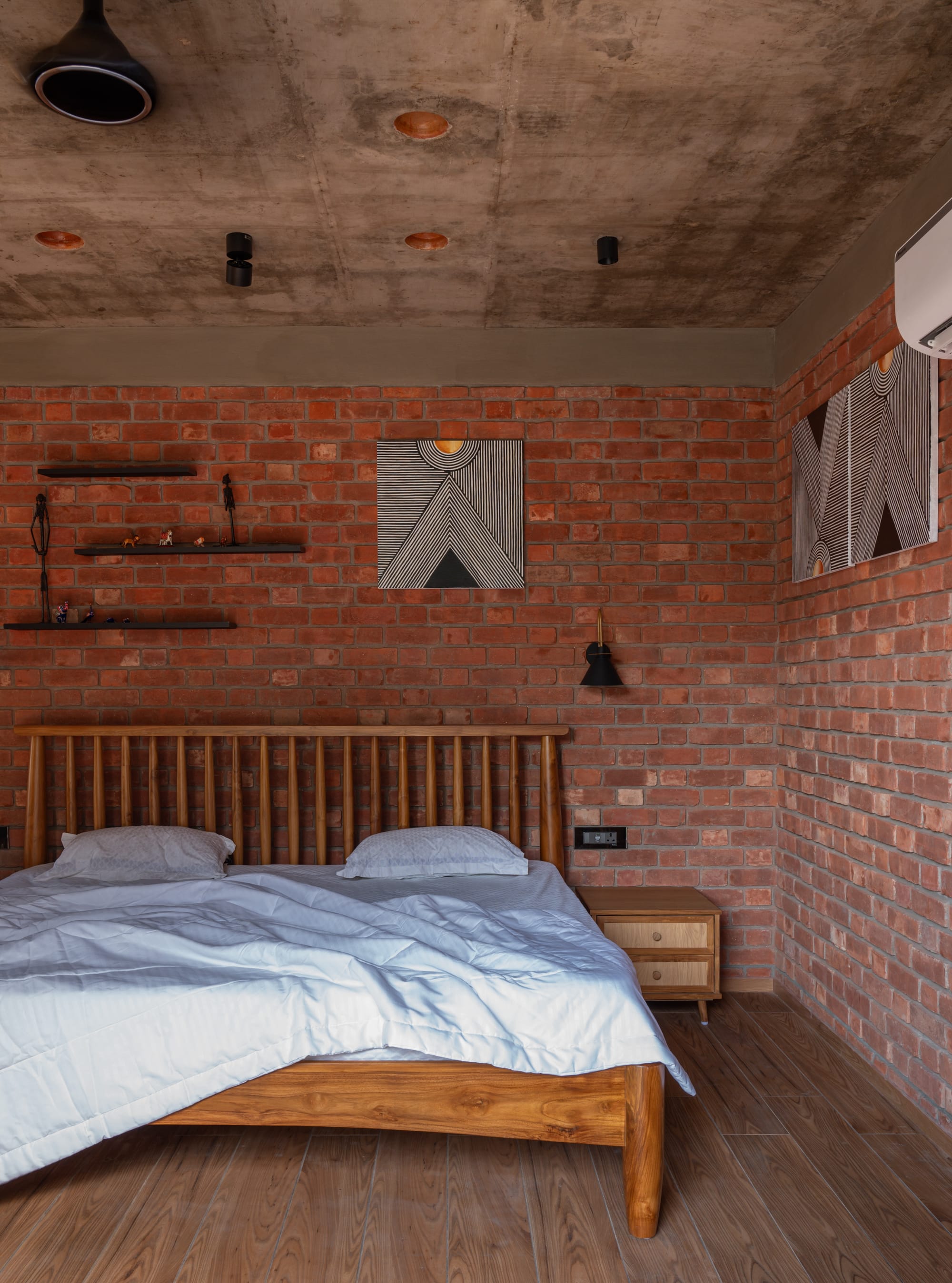
The bedrooms, insulated from the torrid climate through recessed balconies and strategically placed bathrooms that absorb harsh southern sunlight, offer seclusion without being severed from the orchard. Matte black shelves and accent lighting work alongside wood-grain furniture to create a palette that feels unmistakably refined, yet understated enough to recede into the rhythms of daily life. Restraint shapes the experience, allowing comfort to emerge without excess.
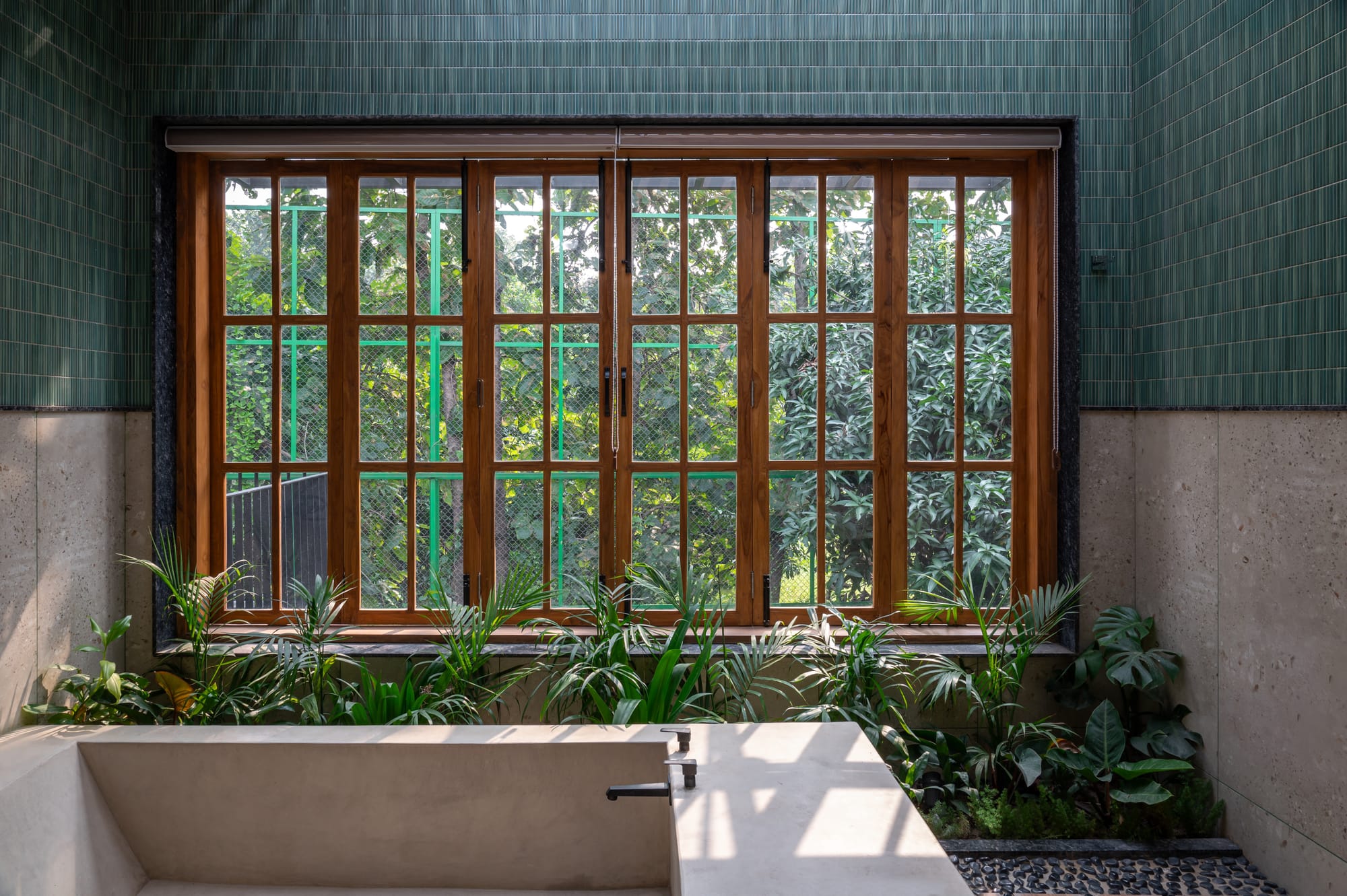
This sensitivity to people and place is ultimately rooted in a profound respect for the site itself. Rooted firmly in principles of sustainability, it was crucial that the teak and mango orchard that had occupied the site for over two decades remained entirely unperturbed. “Every tree on site remains untouched, guiding the home’s spatial layout, shaping courtyards, and framing views.” says Prakhar, “This home is an unwritten dialogue between architecture and nature—an intuitive response to land, climate, and craft.” Envisioned as a tranquil sanctuary for a family of doctors, The Gorakhpur Farmhouse reflects an unhurried pace of life. It is a place that gently lulls you into stillness, asking you to observe more and demand less.