This River-Facing Navsari Home Makes Nature The Main Character
Ikshhana Design Studio mediates between earthy minimalism, vernacular-modern sensibilities, and a profound connection to the surrounding riverine landscape.

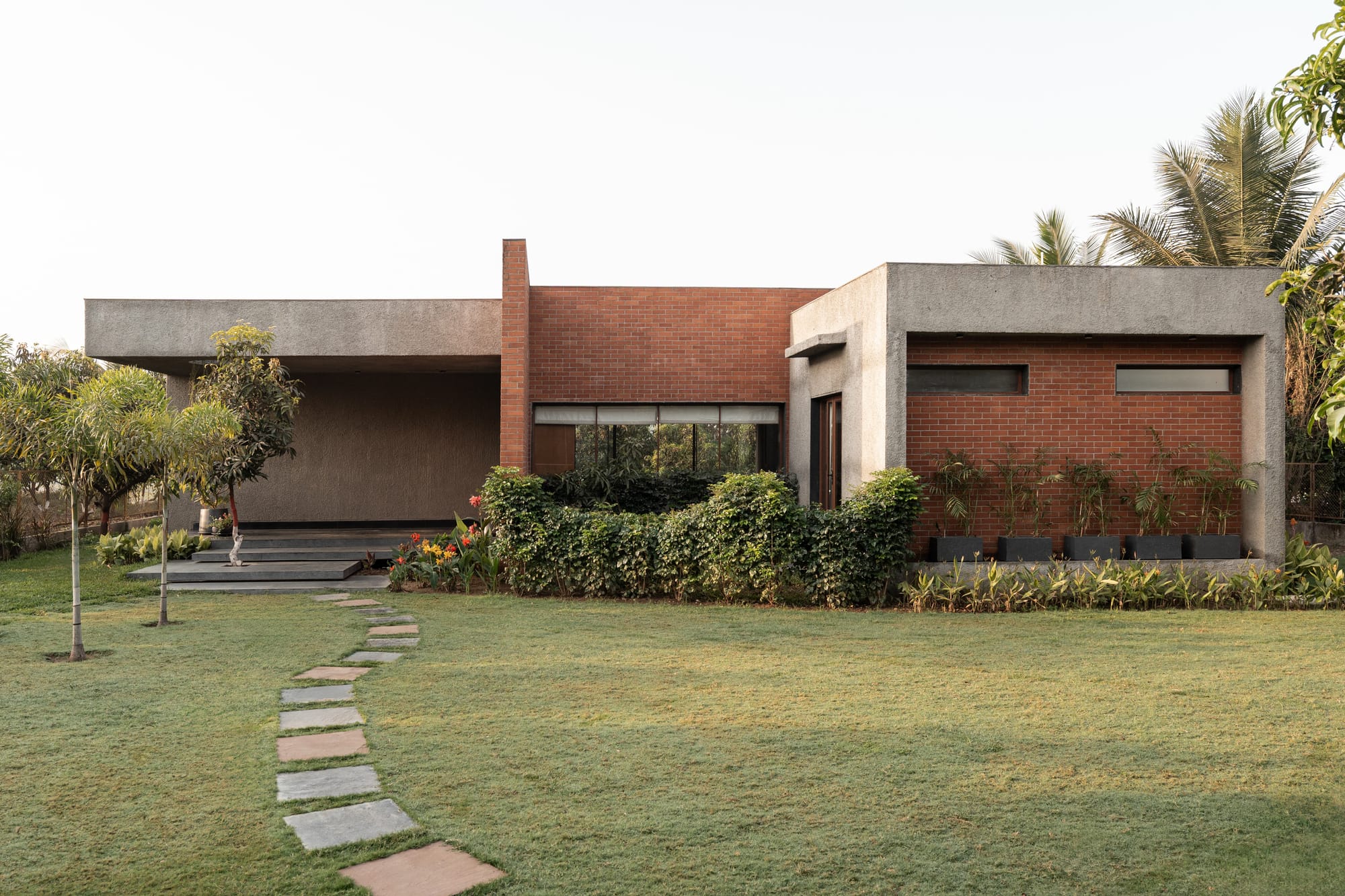
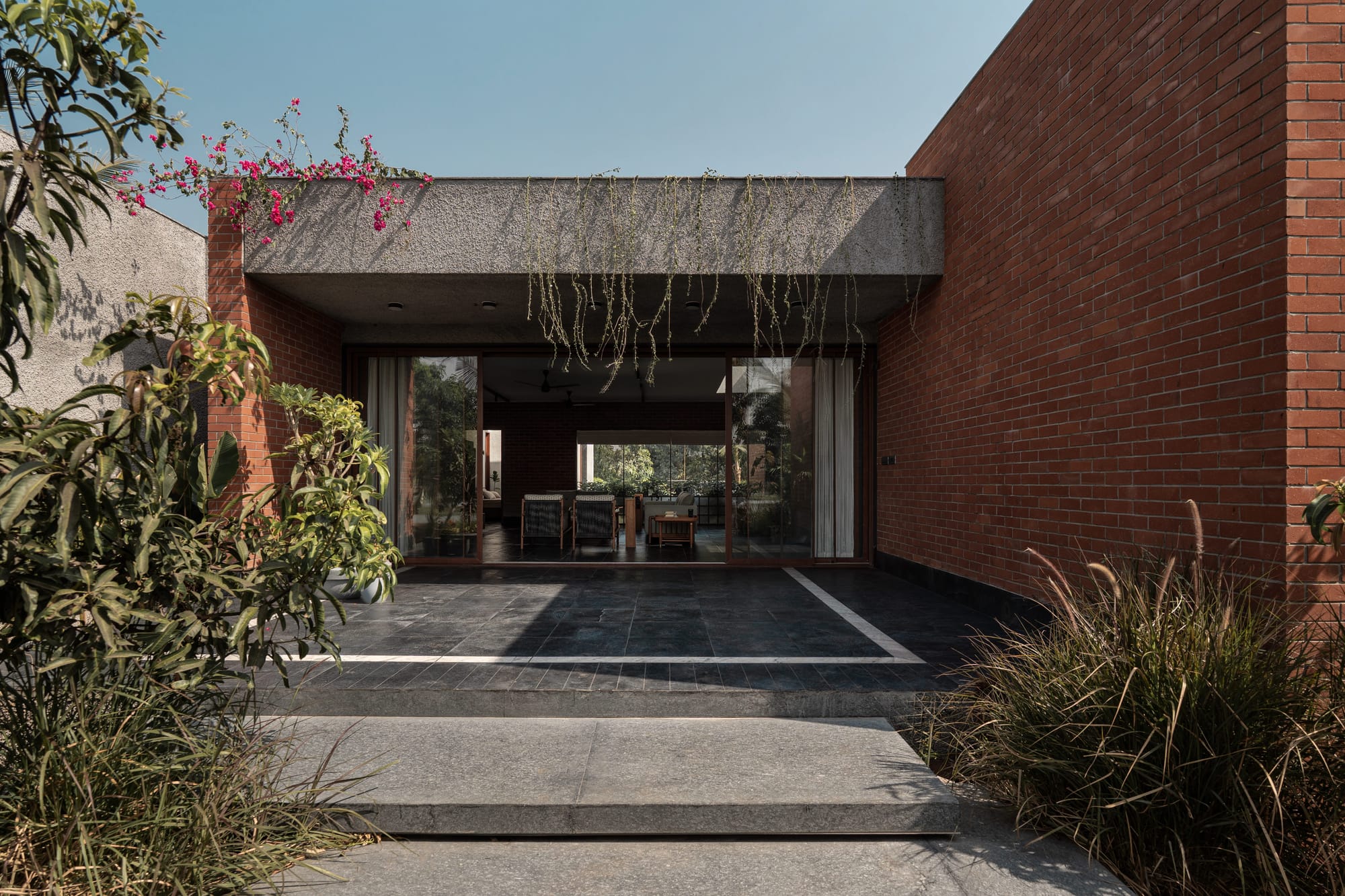
If exposed brick and concrete homes have been trending in design lately, this Navsari villa by Ikshhana Design Studio stands as a reminder that they are, in fact, contemporary reincarnations of climate-responsive typologies embedded in our culture since time immemorial. “Nestled amidst a lush Amba and Chikoo Vaadi, the design prioritizes preserving the existing trees, ensuring a harmonious blend with the natural landscape,” begins Ar. Devansshi Shroff, the principal architect who shaped Vishram Vadi Nu Ghar as a serene, vernacular-modern oasis, allowing the homeowners to surreptitiously fold their lives into the fertile coastal lowlands irrigated by the Purna River.
“Green pockets, open-to-sky spaces, and strategically placed glass skylights allow natural light to flow freely, fostering a profound connection to nature,” shares Ar. Devansshi Shroff, the Principal Architect of Ikshhana Design Studio.
FACT FILE
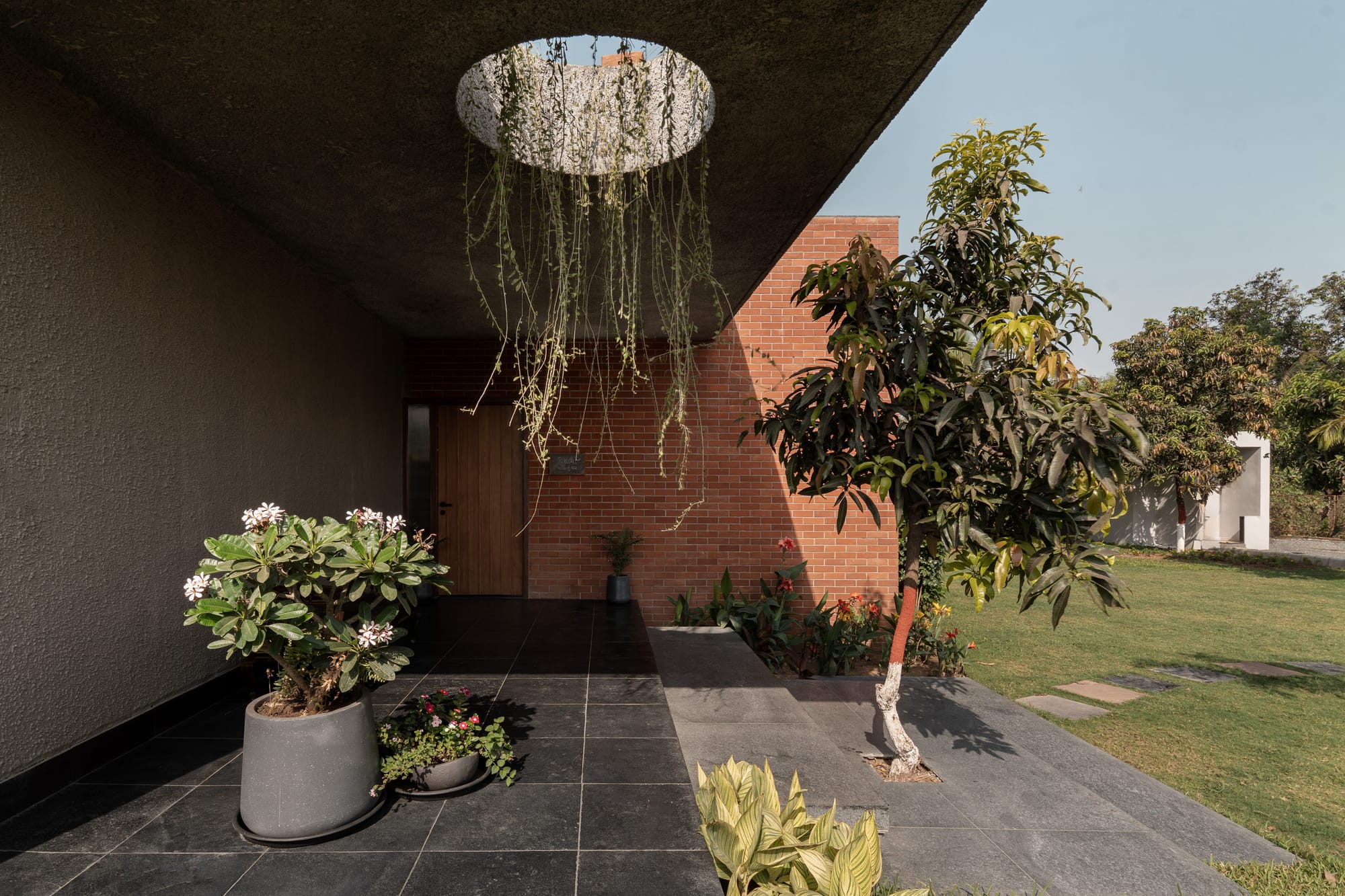
Though firmly grafting the 3,015 sq. ft. villa to the present, the design team had no qualms about rooting around in the archives. They revived the ‘otla’ as a romantic homage to the pol-style cluster dwellings found in Gujarat since the 15th century, where a raised stone plinth mediates between private interiors and the public realm, fostering everyday camaraderie. Before insular urban settlements replaced vibrant, chowk-centred communities, most Gujarati homes were porous and in easy dialogue with the street, their quotidian lives entwined with washing, water-filling, and midday gossip exchanged across thresholds. It is this sense of collective life the architect sought to reawaken, even as the home sits enveloped by trees and birdsong, with the river as the homeowners’ closest neighbour.
A Ploy To Bring Nature Indoors
Spread across 15,605 sq. ft., the property unveils itself languidly. A pathway crafted from natural stone winds through a manicured lawn and flowering gardens. Mango trees, canna lilies, chikoo, radermachera, and frangipani are lovingly stitched into the landscape, with a keen cognisance of Navsari’s regional biodiversity. From the very inception, Devansshi was careful that the vegetation remained contextually rooted, ensuring not a single mature tree was felled.
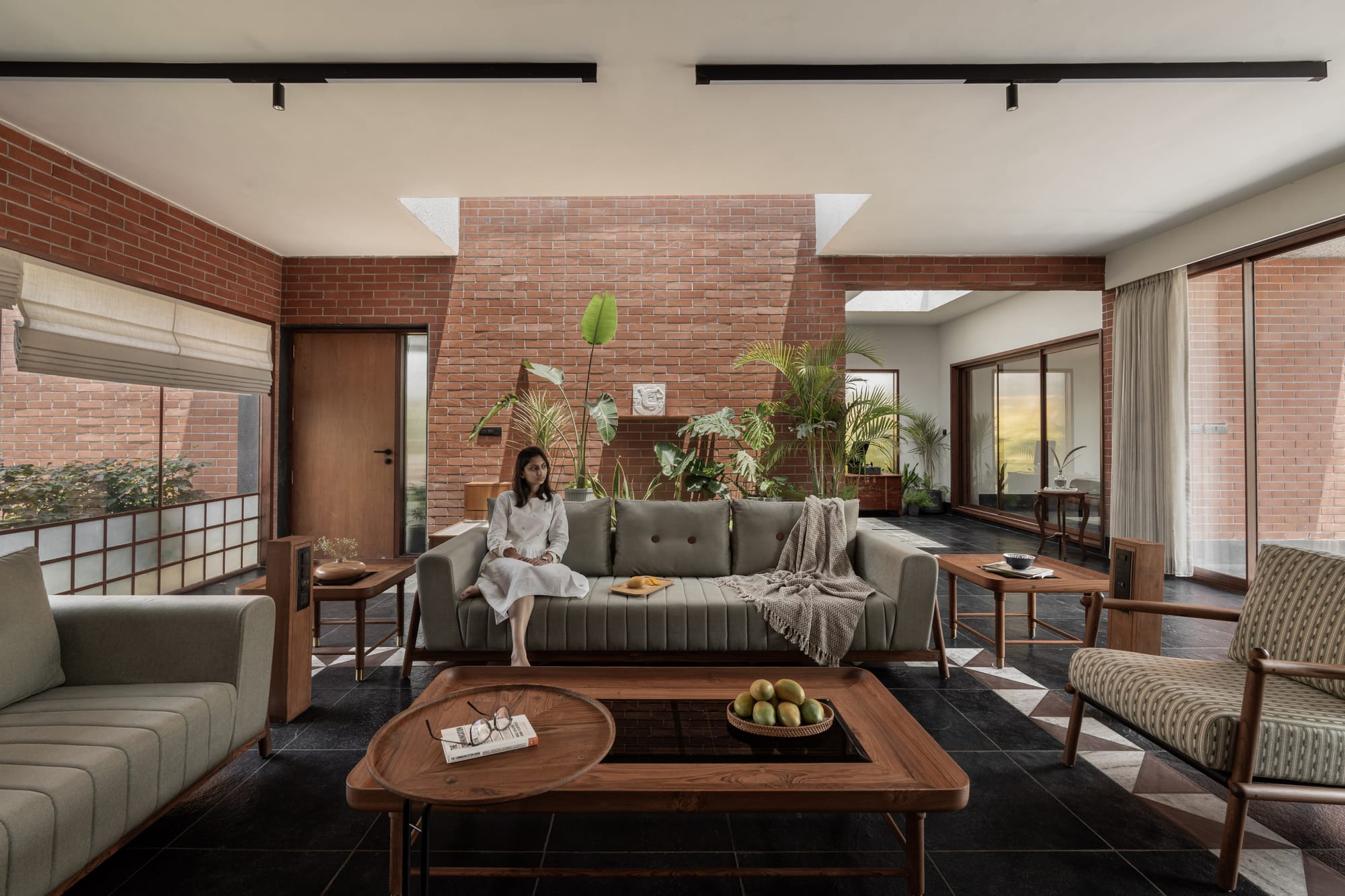
In suffusing Vishram Vadi Nu Ghar with a breath of fresh air, the design team punctured its outer shell with colossal French doors, open-to-air pockets, and skylights. “The main structure is defined by two imposing brick-clad walls, carefully designed to emphasize key axes,” the principal architect points out. “These are complemented by saw-toothed walls with sand-faced plaster, imparting an earthy and grounded aesthetic.” Inside, the home is a labyrinth of open-plan, airy volumes. Rather than adhering to a single design language, the interiors evoke a deft intermingling of cultures. In the living room, a shoji lattice frame, clad in translucent material, comprises the lower opaque section of the riverside verandah glazing, complemented by Scandinavian-style sofas detailed with wooden dowels along the sides and back, and Indian-crafted wall plaques that merge minimalism with devotion. There is an intentional hybridity to the design elements; not overly synchronised, yet copacetic.
Details that Feel both Quaint and Modern
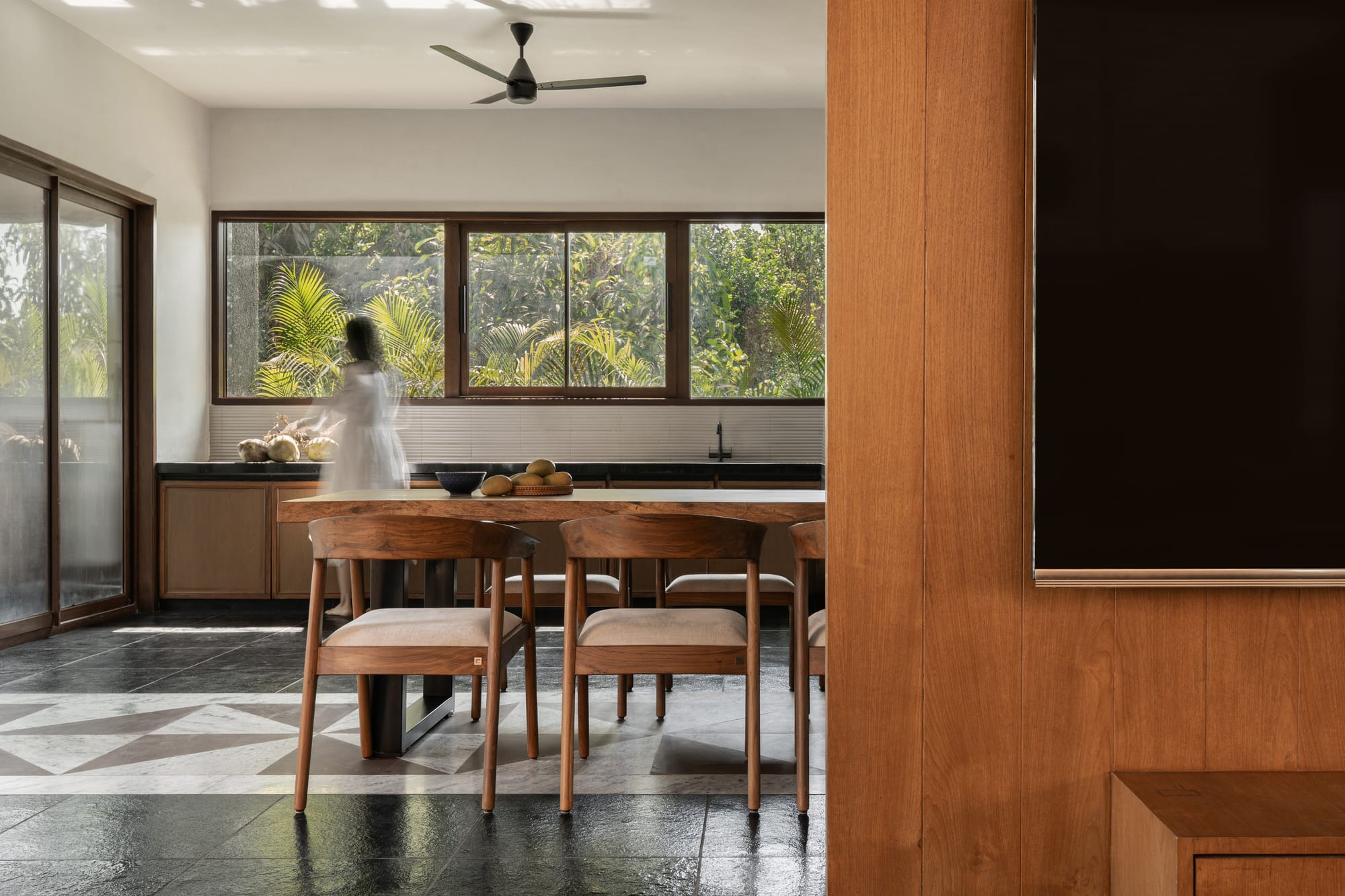
Creamy white walls offer an unassuming backdrop for house plants, collectors’ artefacts, and ergonomic furniture. Predominantly, the flooring in the house is hand-cut, rough-polished Kadappa stone interspersed with a beautiful geometric pattern. Sand-faced plaster walls become a ready canvas for the daylight to paint upon, while teakwood, rattan, and woven fabrics lend homely refinement. The dual-sided open living room is anchored by an industrial-chic cut-out in the ceiling that illuminates the rugged brick walls, while the kitchen and dining areas meld into a distinct unit, with picture windows overlooking a rose garden. Adjacent to this, a cosy enclosed verandah doubles as an intimate corner bar for entertaining.

What the home underplays in colour, it more than compensates for through curated detailing, evident in the Prohibition-era minibar, complete with built-in cabinetry and glass holders that keep essentials neatly organised. Sometimes, the essence of grounded minimalism is not about what is left out, but about letting nature take centre stage. “The interplay of greenery, openness, and warmth transforms this home into a tranquil retreat,” reflects Devansshi.
On the Banks of Tranquility
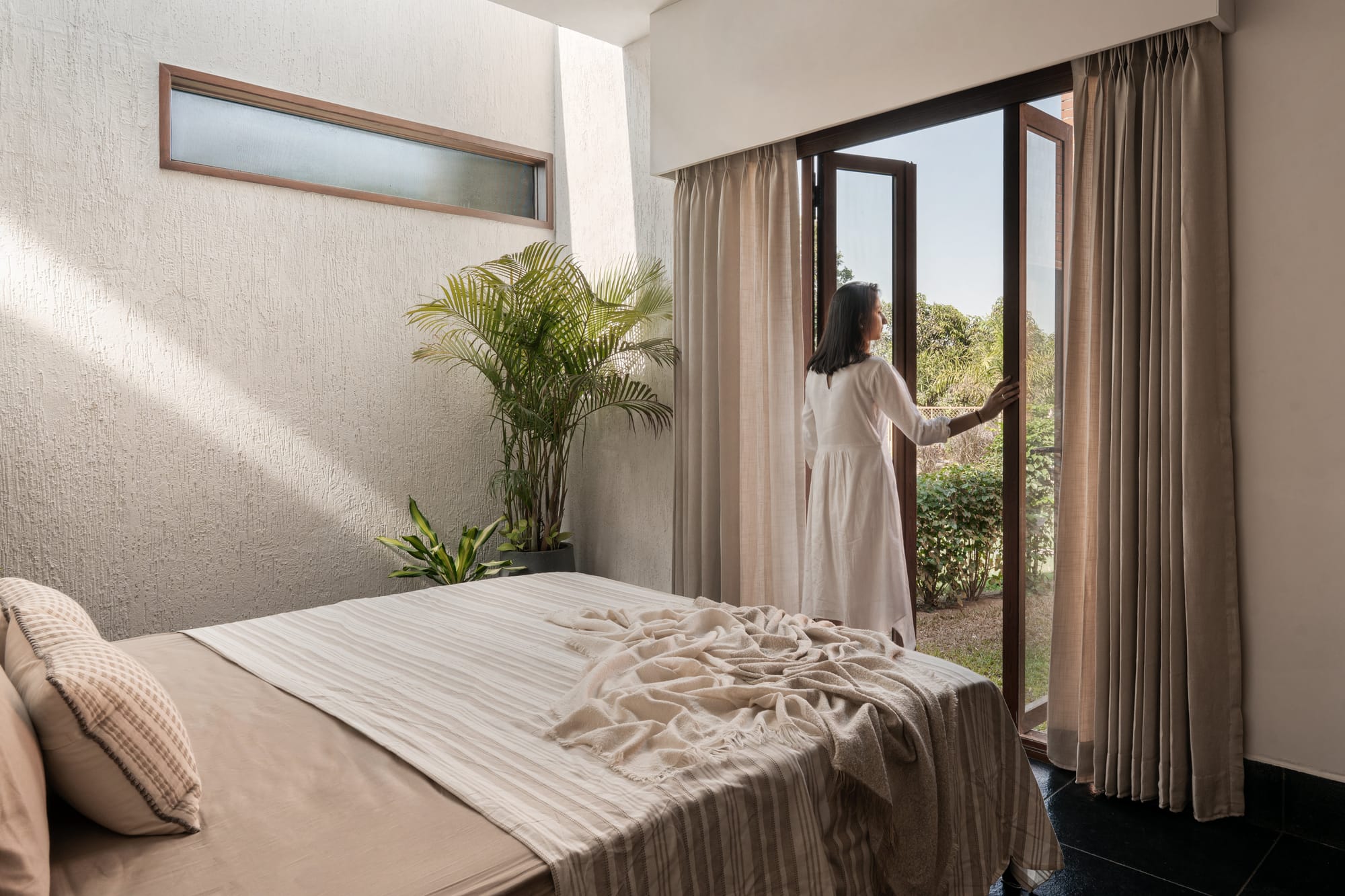
In lockstep with the overarching design rhythm, the bedrooms resonate with warm wooden accents, intermittent rattan flourishes in the headboards, and a proclivity for soft, natural linens. To transform the interiors into lightwells, the architect has incorporated ceiling cut-outs, slit windows, and sliding glazed doors, giving the suites both scale and an unsevered connection with the sun-drenched garden.
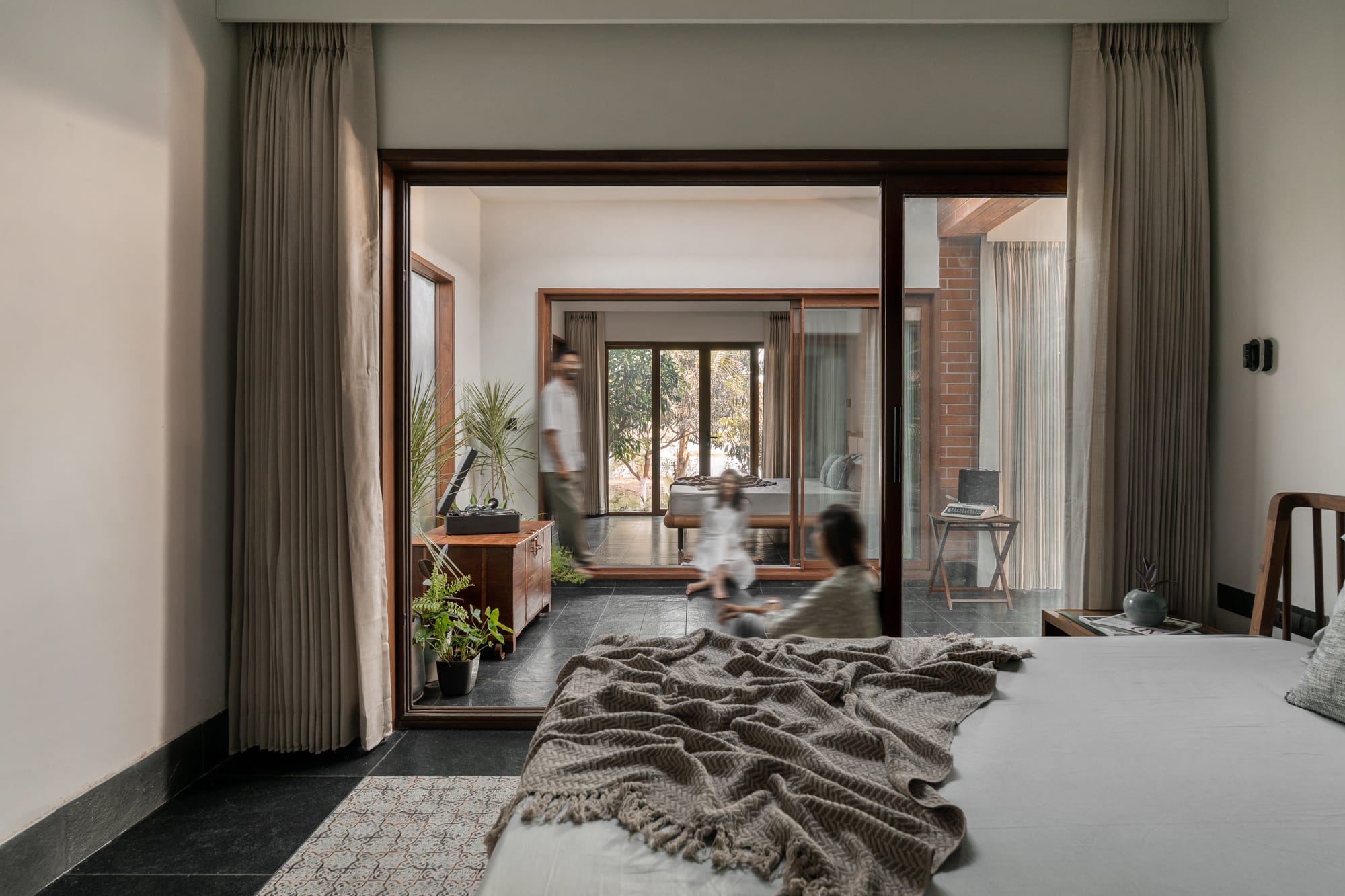
The spatial planning eschews hierarchy in favour of familiarity. Bedrooms face one another with little distinction, facilitating cross-ventilation and a deepening of perspective. The house positions the landscape as its most fundamental force—whether through vivid bougainvillea softening the brutalist edges of exposed concrete, the sound of the river echoing through its open-plan layout, or the wraparound ‘otla’ plinth that masterfully dissolves the indoor–outdoor divide.
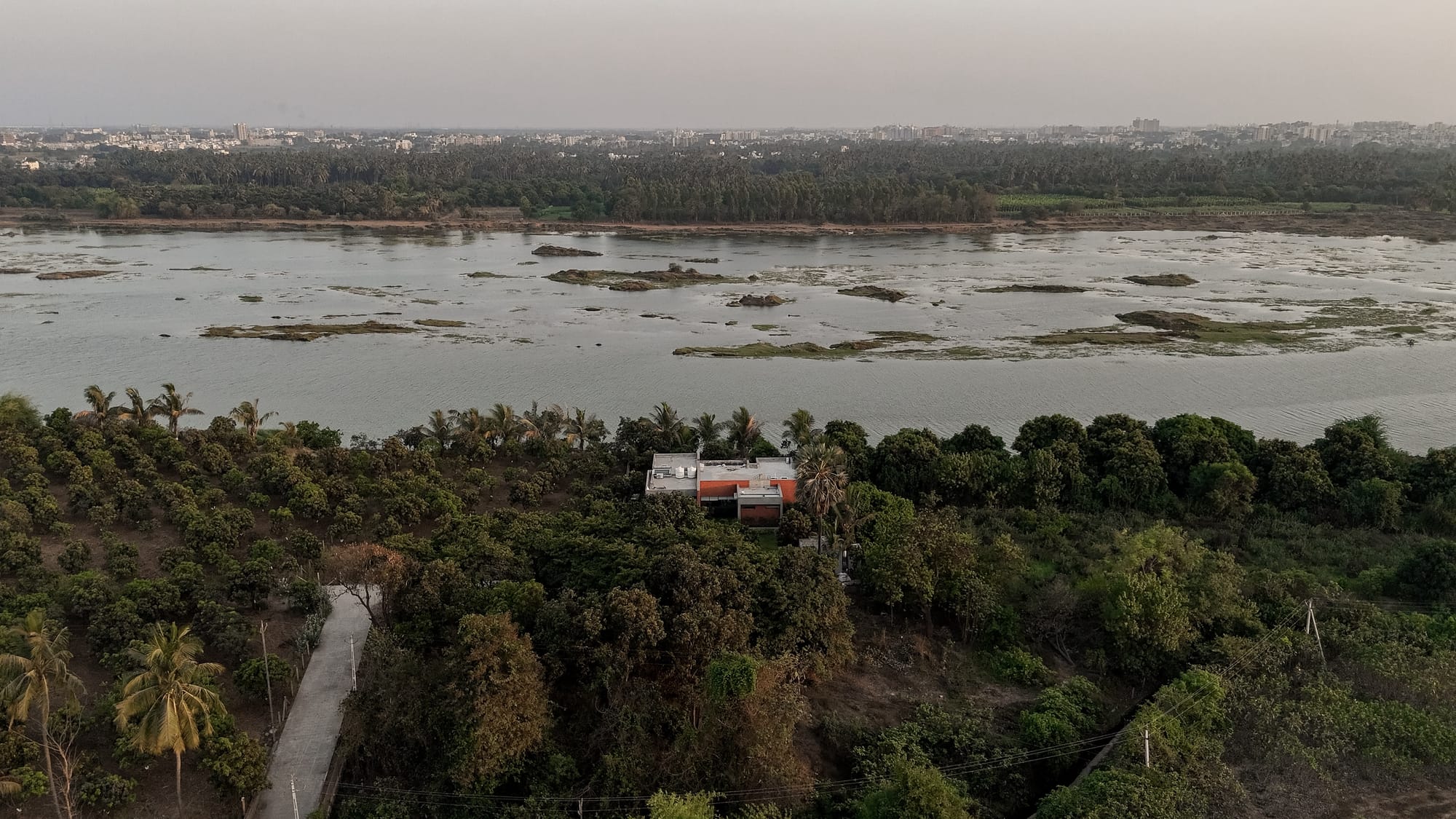
If Devansshi was sentimental about forging a connection with the surrounding terrain, it is most clearly evident in a picturesque gazebo that juts along the broad curves of the Purna River, aglow with shimmering reflections. In the end, Vishram Vadi Nu Ghar is more than a single-storey second home; it is a feeling brought to life—a sense of togetherness, of being in harmony with nature and the vernacular ethos, where every brick wall holds boundless memories in its pores, and where past and present find tranquil repose. It is a space that gazes, experiences, and remembers, affirming that a home can be sentient when thoughtfully planned, lived in, and nurtured with care.